 DACHENG PRECISION MACHINERY

Our products are mainly used in electric motors, covering traditional fields such as machinery manufacturing, automobile industry, medical equipment and various household appliances, and we have also made achievements in emerging fields such as robot bearings.
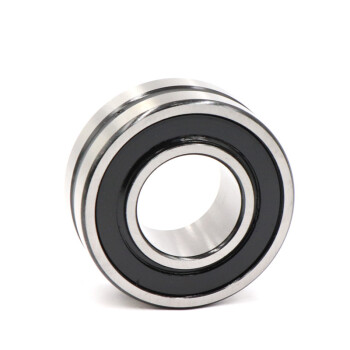
 Description
Elevator bearings are specialized components designed to support the weight and movement of elevator cars. Typically crafted from high-quality materials, they are engineered to withstand heavy loads and ensure durability. Our elevator bearings are tailored to meet the specific demands of vertical transportation systems, offering reliable support, minimal friction, and long-lasting performance across a range of operating conditions.
Elevator Bearing: Reliability and Safety in Vertical Transportation Systems
Elevator bearing technology plays a critical role in ensuring the safe, smooth, and reliable operation of modern vertical transportation systems. As urbanization accelerates and buildings grow taller, elevators are expected to operate with higher load capacity, lower noise, and minimal downtime over extended service lives. For B2B technical readers, procurement managers, and facility decision-makers in Europe and North America, understanding how elevator bearing solutions are designed and evaluated is essential to meeting safety regulations and operational expectations.
The global elevator and escalator market continues to expand due to urban densification, high-rise construction, and infrastructure modernization. At the same time, aging building stock in mature markets requires upgrades and retrofits that improve performance without major structural changes. These trends place increased demands on mechanical components, particularly bearings that must operate continuously under heavy loads and variable speeds.
An elevator bearing must support not only mechanical motion but also passenger comfort and regulatory compliance. Noise, vibration, and unexpected downtime are no longer acceptable, especially in commercial and residential buildings where elevator availability directly affects property value and user experience. As a result, building owners and OEMs increasingly prioritize bearing reliability and lifecycle performance over short-term cost considerations.
An elevator bearing is designed to support rotating or oscillating components within elevator systems, such as traction sheaves, guide rollers, motor shafts, and door mechanisms. Unlike bearings used in intermittent industrial machinery, elevator bearings often operate under continuous or high-duty cycles with strict safety margins.
Key technical concepts include:
High load capacity to handle car weight, counterweights, and dynamic forces
Fatigue resistance under repeated start-stop cycles
Low noise and vibration characteristics for passenger comfort
Long-term lubrication stability to reduce maintenance intervals
Advanced sealing technologies and optimized internal geometry are essential to maintaining consistent performance in elevator environments.
Common bearing types used in elevator systems include deep groove ball bearings, cylindrical roller bearings, spherical roller bearings, and needle roller bearings. Traction systems often rely on roller bearings with high radial load capacity, while guide rollers and door systems use bearings optimized for smooth, low-noise operation.
In gearless traction machines, bearings must support high rotational accuracy and stable torque transmission, making precision manufacturing particularly important.
High-quality bearing steels with controlled composition are typically used to achieve the required hardness and fatigue life. In some applications, stainless steel or specially coated bearings are specified to improve corrosion resistance in humid shafts or coastal environments.
Heat treatment processes such as through-hardening or case hardening are tightly controlled to ensure uniform microstructure and consistent performance across bearing batches.
Elevator bearing manufacturing emphasizes tight dimensional tolerances, roundness control, and surface finish quality. Precision grinding and superfinishing reduce friction and vibration, directly influencing ride comfort and acoustic performance. Automated inspection systems are often used to verify consistency and traceability.
Several factors determine how effectively an elevator bearing performs throughout its service life:
Load Distribution
Uneven loading increases localized stress and accelerates fatigue.
Speed Variability
Elevators experience frequent acceleration and deceleration, affecting lubrication behavior.
Environmental Conditions
Dust, humidity, and temperature fluctuations impact bearing wear and corrosion.
Lubrication Management
Inadequate or degraded lubrication leads to increased friction and noise.
Installation Accuracy
Misalignment during assembly can significantly reduce bearing life.
Careful system-level evaluation is necessary to ensure that bearing specifications align with real operating conditions.
Supplier selection is a strategic decision in elevator manufacturing and maintenance. Reliable suppliers of elevator bearing products typically offer:
Compliance with international quality standards such as ISO 9001
Proven experience in vertical transportation or heavy-duty applications
Consistent production quality and batch traceability
Technical support for application-specific requirements
Long-term supply stability for maintenance and retrofit programs
Given the long service life expected of elevators, supplier continuity and documentation are as important as initial performance.
Despite advances in design, several challenges persist in elevator bearing applications:
Premature noise generation affecting passenger comfort
Increased maintenance frequency due to lubricant degradation
Difficulty sourcing replacement bearings for older installations
Over-specification leading to unnecessary cost increases
Addressing these issues often requires balancing engineering requirements with practical maintenance considerations.
Elevator bearing solutions are used across a wide range of systems, including:
Traction machines in high-rise elevators
Guide roller assemblies for car and counterweight stabilization
Door operator mechanisms requiring smooth, precise motion
Modernization projects upgrading older elevator systems
Freight and service elevators operating under higher loads
In high-rise buildings, bearing performance directly influences system reliability and user perception of safety.
Several trends are shaping the future of elevator bearing technology:
Increased adoption of gearless traction systems requiring higher precision bearings
Demand for low-maintenance or sealed-for-life bearing solutions
Focus on noise and vibration reduction in residential buildings
Integration of condition monitoring to support predictive maintenance
As smart building technologies advance, bearings are increasingly viewed as part of an integrated system rather than isolated components.
How long should an elevator bearing last?
Service life depends on load, usage, and maintenance, but modern designs aim for extended intervals aligned with major service schedules.
Are sealed bearings suitable for elevator applications?
In many cases, yes. Sealed bearings help retain lubrication and reduce contamination.
Does bearing quality affect ride comfort?
Yes. Surface finish, internal geometry, and lubrication directly influence noise and vibration levels.
Elevator bearing technology is fundamental to the safety, comfort, and reliability of vertical transportation systems. As buildings become taller and performance expectations rise, the role of the elevator bearing extends beyond basic motion support to a critical element of system integrity. For B2B buyers and technical decision-makers, informed bearing selection and trusted supplier partnerships are essential to achieving long-term operational success.
High Speed Miniature Ball Bearings
Abrasion Resistant Stainless Steel Ball Bearings
Low-friction Thin Bearings For High-speed Machinery
Precision-grade Stainless Steel Bearings For Exacting Standards
Temperature Resistant Stainless Steel Bearings
Corrosion Resistant Deep Groove Ball Bearings

Vincent Liang

+86 137 5749 2228

liangzexi@cxbearings.cn

No.195, Dongshaobei Road, Jiangbei District, Ningbo City, Zhejiang Province, China


Copyright © Zhejiang Dacheng Precision Machinery Co., Ltd. All Rights Reserved.


