 DACHENG PRECISION MACHINERY

Our products are mainly used in electric motors, covering traditional fields such as machinery manufacturing, automobile industry, medical equipment and various household appliances, and we have also made achievements in emerging fields such as robot bearings.
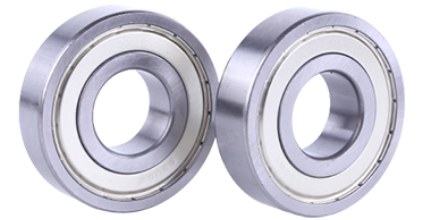
Category:Household Appliance Bearing
 Consult immediately

 Description
Household appliance bearings are precision components designed for use in a wide range of domestic equipment such as washing machines, refrigerators, ar conditioners, and vacuum cleaners. These bearings are engineered to meet the specific demands of such appliances, ensuring smooth operation, reduced noise, and extended service life.
Household Appliance Bearing: Engineering Reliability for Everyday Consumer Systems
Household appliances rely on compact, efficient motion systems that operate quietly, safely, and reliably over years of daily use. At the center of many of these systems is the household appliance bearing, a component that often determines noise levels, energy efficiency, and service life. For B2B technical readers, OEM procurement teams, and product managers serving European and North American markets, understanding bearing design and selection is essential to balancing performance, cost, and durability in competitive consumer products.
The global household appliance industry has evolved rapidly in response to changing consumer expectations and regulatory requirements. Energy efficiency standards, noise reduction regulations, and sustainability goals now shape appliance design as much as functionality. At the same time, consumers expect longer product lifespans with minimal maintenance.
These trends place increasing demands on bearing systems used in appliances such as washing machines, refrigerators, dishwashers, air conditioners, and vacuum cleaners. Bearings must support continuous or cyclic motion, withstand temperature fluctuations and moisture, and operate quietly in residential environments. As appliances become more compact and electronically controlled, bearing tolerances and consistency have become critical design parameters rather than secondary considerations.
A household appliance bearing is engineered to support rotating or oscillating components while minimizing friction, vibration, and wear. Unlike heavy industrial bearings, appliance bearings typically operate under moderate loads but high usage frequency, making fatigue resistance and lubrication stability essential.
Key technical concepts include:
Low noise and vibration performance to meet residential comfort expectations
Energy-efficient operation through reduced friction torque
Long service life under repetitive start-stop cycles
Compact integration into space-constrained appliance designs
Sealed bearing designs, optimized internal geometry, and application-specific lubrication are common technologies used to meet these requirements.
Common bearing types in household appliances include deep groove ball bearings, miniature ball bearings, and sleeve-to-ball bearing hybrid solutions. Washing machines and dryers often use bearings designed for radial loads and moisture exposure, while refrigerator fans and air conditioning blowers prioritize low noise and high-speed stability.
In many appliances, bearings are integrated into modular assemblies such as motors or drum units, making replacement difficult and emphasizing the need for long-term reliability.
Bearing rings and rolling elements are typically manufactured from high-quality bearing steel. In applications exposed to moisture or detergents, stainless steel or coated surfaces may be specified to improve corrosion resistance. Polymer cages are frequently used to reduce noise and accommodate lubrication requirements.
Surface finishing plays a significant role in performance, as smoother raceways reduce friction and vibration, directly affecting appliance noise ratings.
Precision grinding, controlled heat treatment, and automated inspection ensure consistency across high-volume production. Because household appliance bearings are produced in large quantities, process stability and repeatability are critical to maintaining uniform performance and avoiding field failures.
Several factors directly affect the performance of a household appliance bearing in real-world use:
Load and Duty Cycle
Frequent acceleration and deceleration increase fatigue stress.
Noise Sensitivity
Minor surface defects or clearance variation can cause audible noise.
Lubrication Quality
Lubricants must remain stable over long periods without relubrication.
Environmental Exposure
Moisture, heat, and detergents can degrade materials and grease.
Assembly Accuracy
Misalignment during motor or drum assembly reduces bearing life.
OEMs must consider these factors early in the design process to avoid costly warranty issues.
Supplier selection for household appliance bearings is closely tied to production efficiency and brand reputation. Qualified suppliers typically demonstrate:
Consistent high-volume manufacturing capability
Robust quality control and statistical process management
Material traceability and compliance with regional regulations
Engineering support for application-specific optimization
Stable pricing and long-term supply reliability
For appliance manufacturers, supplier reliability often outweighs marginal cost savings due to the high cost of recalls and warranty repairs.
Despite mature technology, several challenges persist:
Excessive noise developing after extended use
Premature bearing failure due to lubricant breakdown
Corrosion in humid or detergent-rich environments
Limited design margins in compact appliances
These issues often stem from underestimating real-world usage conditions or over-optimizing for initial cost rather than lifecycle performance.
Household appliance bearing solutions are widely used in:
Washing machine drums and drive motors
Refrigerator and freezer fan systems
Air conditioner indoor and outdoor units
Dishwashers and circulation pumps
Vacuum cleaners and small motor-driven appliances
In each application, bearing performance directly influences energy consumption, acoustic comfort, and perceived product quality.
Several trends are shaping the future of bearing technology in household appliances:
Increased demand for ultra-low-noise bearing designs
Adoption of sealed-for-life lubrication to reduce maintenance
Use of corrosion-resistant materials for longer appliance lifespan
Integration with high-efficiency brushless motors
Focus on recyclability and environmentally compliant materials
As smart appliances become more common, bearings are expected to support higher precision and longer operating cycles without compromising efficiency.
How long should a household appliance bearing last?
Service life depends on usage and environment, but modern designs target the full expected appliance lifespan.
Are sealed bearings always preferred?
In most appliance applications, sealed bearings help retain lubrication and prevent contamination.
Does bearing quality affect energy efficiency?
Yes. Lower friction bearings reduce motor load and contribute to improved energy ratings.
The household appliance bearing is a small but decisive component in modern consumer products. Its design and quality influence noise, efficiency, reliability, and brand reputation. As appliances continue to evolve toward higher efficiency and longer service life, bearing selection has become a strategic engineering decision. For B2B buyers and technical leaders, aligning bearing performance with real-world operating conditions is essential to delivering durable, competitive household appliances.
High-speed Miniature Ball Bearings For Small Mechanisms
Temperature-resistant Stainless Steel Bearings For Automotive Applications
Low-friction Thin Bearings For High-speed Machinery
Precision-grade Stainless Steel Bearings For Exacting Standards
Temperature Resistant Stainless Steel Bearings
Quiet Running Deep Groove Ball Bearings
Precision Grade Stainless Steel Bearings

Vincent Liang

+86 137 5749 2228

liangzexi@cxbearings.cn

No.195, Dongshaobei Road, Jiangbei District, Ningbo City, Zhejiang Province, China


Copyright © Zhejiang Dacheng Precision Machinery Co., Ltd. All Rights Reserved.

