 DACHENG PRECISION MACHINERY

Our products are mainly used in electric motors, covering traditional fields such as machinery manufacturing, automobile industry, medical equipment and various household appliances, and we have also made achievements in emerging fields such as robot bearings.
 Description
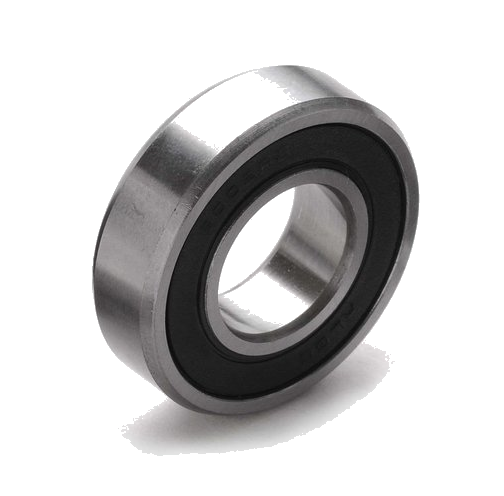
Automotive bearings are essential components in vehicles that are used to support rotating parts, reduce friction, and ensure smooth operation of various vehicle components. Their selection is based on the specific requirements of the application, including load, speed, environment, and expected lifespan.
Automobile Bearing: Engineering Foundations of Modern Vehicle Performance
Automobile bearing technology underpins nearly every moving system within a vehicle, from powertrain rotation to wheel guidance and auxiliary systems. As vehicles evolve toward electrification, higher efficiency, and extended service life, bearings are expected to perform under increasingly complex mechanical and environmental conditions. For B2B technical readers, procurement managers, and automotive decision-makers in Europe and North America, understanding how automobile bearing solutions are engineered and evaluated is essential to ensuring safety, reliability, and lifecycle cost control.
The automotive industry is undergoing structural transformation. Electrified powertrains, lightweight architectures, and intelligent driving systems have redefined performance expectations for mechanical components. At the same time, regulatory pressure on emissions, noise, and durability has intensified. Bearings, once treated as standardized parts, are now application-specific systems requiring precise engineering.
Demand for advanced automobile bearing solutions is driven by several factors: higher vehicle production volumes in emerging markets, longer warranty periods in mature markets, and the rise of electric and hybrid vehicles that introduce new load profiles and operating speeds. OEMs and Tier 1 suppliers increasingly seek bearings that offer low friction, reduced noise, and stable performance across extended operating cycles.
An automobile bearing is designed to support rotating or oscillating motion while minimizing friction and maintaining alignment under load. Unlike general industrial bearings, automotive applications impose frequent start-stop cycles, temperature variation, and exposure to contaminants such as dust, moisture, and road chemicals.
Key technical concepts include:
Load management, including radial, axial, and combined loads
Fatigue resistance under cyclic stress
Low friction torque to improve fuel efficiency or driving range
Noise and vibration control, particularly critical in electric vehicles
Advanced sealing systems, optimized raceway geometry, and application-specific lubrication are central technologies in modern automobile bearing design.
Automotive systems use a wide range of bearing types, including deep groove ball bearings, tapered roller bearings, angular contact bearings, and needle roller bearings. Each is selected based on function and load characteristics.
Wheel hub units integrate bearings, seals, and mounting interfaces into compact modules. Transmission and motor bearings are designed for high-speed operation, while suspension and steering systems prioritize durability and shock resistance.
High-quality bearing steels with controlled chemistry are standard in most automotive applications. For specific environments, stainless steels or coated surfaces may be used to improve corrosion resistance. Heat treatment processes such as carburizing or induction hardening are carefully controlled to achieve uniform hardness and fatigue strength.
Material purity and microstructure consistency directly influence bearing life and reliability.
Automobile bearing manufacturing requires tight tolerances and repeatable processes. Precision grinding, superfinishing, and automated inspection systems ensure consistent geometry and surface quality. Even small deviations can increase noise levels or reduce service life, particularly in high-speed or electric drivetrain applications.
Several factors determine how well an automobile bearing performs in real-world conditions:
Operating Temperature Range
Bearings must maintain dimensional stability across wide temperature fluctuations.
Contamination Control
Effective sealing prevents ingress of dirt, water, and debris.
Lubrication Compatibility
Lubricants must remain stable over long service intervals and varying loads.
Mounting Accuracy
Improper installation can cause misalignment and premature failure.
Dynamic Load Cycles
Urban driving introduces frequent acceleration and braking stresses.
Understanding these variables is critical when specifying bearings for different vehicle systems.
For OEMs and Tier 1 suppliers, bearing selection extends beyond technical specifications. Qualified suppliers of automobile bearing products typically demonstrate:
Compliance with automotive quality standards such as IATF 16949
Robust process control and traceability systems
Long-term supply stability and capacity planning
Engineering collaboration during product development
Proven performance data from comparable applications
Supplier reliability directly impacts production continuity and warranty risk.
Despite advanced design tools, several challenges persist:
Premature bearing noise in electric vehicles due to higher sensitivity
Lubricant degradation over extended service intervals
Trade-offs between low friction and long-term durability
Increasing complexity of integrated bearing units
Addressing these issues often requires application-specific validation rather than reliance on catalog ratings alone.
Automobile bearing solutions are critical across multiple vehicle systems:
Wheel hubs and axle assemblies
Electric motor and gearbox systems in EVs
Internal combustion engine auxiliaries
Steering columns and suspension joints
HVAC and accessory drive systems
In electric vehicles, bearings play a particularly important role in managing high rotational speeds and reducing acoustic emissions, directly influencing perceived vehicle quality.
Several trends are shaping the future of automobile bearing technology:
Increased demand for low-noise, low-friction designs for electric drivetrains
Integration of sensors for condition monitoring and predictive maintenance
Use of advanced coatings to reduce wear and corrosion
Lightweight bearing assemblies to support vehicle mass reduction
As vehicles transition toward electrification and autonomy, bearings will continue to evolve from standardized components into highly engineered system elements.
Are automobile bearings different for electric vehicles?
Yes. Electric vehicles require bearings optimized for higher speeds, lower noise, and different load profiles.
How does bearing design affect fuel efficiency or range?
Lower friction bearings reduce energy losses, contributing directly to improved efficiency.
Is higher bearing cost always linked to better performance?
Not necessarily. Proper application matching is more important than over-specification.
Automobile bearing technology is a critical enabler of modern vehicle performance, safety, and efficiency. As automotive systems become more complex, the role of the automobile bearing expands beyond basic motion support to a strategic component influencing durability and customer experience. For B2B buyers and technical leaders, informed bearing selection and supplier collaboration are essential to meeting current demands and future mobility challenges.
Temperature-resistant Stainless Steel Bearings For Automotive Applications
Low-friction Thin Bearings For High-speed Machinery
High Precision Deep Groove Ball Bearings
Abrasion Resistant Stainless Steel Ball Bearings

Vincent Liang

+86 137 5749 2228

liangzexi@cxbearings.cn

No.195, Dongshaobei Road, Jiangbei District, Ningbo City, Zhejiang Province, China


Copyright © Zhejiang Dacheng Precision Machinery Co., Ltd. All Rights Reserved.


