 DACHENG PRECISION MACHINERY

Our products are mainly used in electric motors, covering traditional fields such as machinery manufacturing, automobile industry, medical equipment and various household appliances, and we have also made achievements in emerging fields such as robot bearings.
Category:Chemical Machinery Bearing
 Consult immediately

 Description
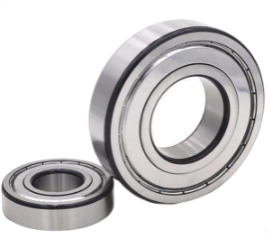
Chemical machinery bearings are specialized components designed to withstand the harsh and corosive environments commonly found in chemical processing facilities. These bearings are essential for equipment such as mixers, agitators, pumps, and conveyors that operate under challenging conditions. The use of corrosion-resistant materials and effective sealing is crucial in chemical working conditions. Our bearings are crafted from high-quality stainless steel imported from Japan, ensuring smooth operation of chemical machinery across various working environments.
Chemical Machinery Bearing: Reliability Under Corrosive and Continuous Operating Conditions
Chemical processing equipment operates in some of the most demanding industrial environments. High temperatures, corrosive media, continuous operation, and strict safety requirements place exceptional stress on rotating components. Within this context, the Chemical Machinery Bearing plays a critical role in ensuring operational stability, containment integrity, and long-term asset performance. For B2B technical readers, procurement leaders, and plant decision-makers in Europe and North America, bearing selection is not a commodity decision but a core element of risk and lifecycle management.
The chemical industry supports a wide range of downstream sectors, including pharmaceuticals, energy, plastics, agriculture, and specialty materials. As global demand for chemical products grows, production facilities are under pressure to operate continuously with minimal downtime while meeting increasingly strict environmental and safety regulations.
Chemical machinery such as pumps, compressors, agitators, reactors, and mixers relies on bearings that must withstand corrosive fluids, aggressive cleaning processes, and prolonged duty cycles. Failures often result in costly shutdowns, contamination risks, or safety incidents. These realities have driven demand for Chemical Machinery Bearing solutions engineered specifically for harsh chemical environments rather than adapted from general industrial applications.
A Chemical Machinery Bearing is designed to support rotating motion while maintaining performance in the presence of chemical exposure, thermal stress, and contamination. Unlike bearings used in controlled environments, these bearings must retain dimensional stability and surface integrity despite constant exposure to aggressive substances.
Key technical concepts include:
Corrosion resistance against acids, alkalis, solvents, and process media
Fatigue strength under continuous or high-load operation
Sealing effectiveness to prevent media ingress and lubricant loss
Thermal stability under fluctuating process temperatures
Advanced bearing solutions often combine material engineering with sealing and lubrication strategies tailored to specific chemical processes.
Chemical machinery commonly employs deep groove ball bearings, cylindrical roller bearings, spherical roller bearings, and angular contact bearings. The choice depends on load direction, shaft speed, and alignment requirements. Pumps and compressors typically demand bearings with high radial load capacity, while agitators and mixers often require bearings capable of handling combined loads and misalignment.
In many applications, bearing housings and seals are designed as integrated systems to provide additional protection against chemical exposure.
Material selection is central to performance. Common options include:
Stainless steels for corrosion resistance in moderate load applications
High-alloy bearing steels with protective coatings for improved durability
Ceramic or hybrid designs where chemical compatibility and low friction are critical
Surface treatments such as passivation, specialized coatings, or plasma-enhanced finishes may be applied to improve resistance to chemical attack and reduce wear.
Precision machining, controlled heat treatment, and rigorous inspection are essential. In chemical applications, even minor surface defects can become initiation points for corrosion or fatigue. Manufacturing processes emphasize consistency, traceability, and repeatability to ensure predictable performance across long operating cycles.
Several factors determine whether a Chemical Machinery Bearing performs reliably in service:
Chemical Compatibility
Bearing materials must resist degradation from process media and cleaning agents.
Operating Temperature
Elevated temperatures affect material hardness and lubricant stability.
Sealing and Contamination Control
Ineffective seals allow media ingress, accelerating wear and corrosion.
Lubrication Strategy
Lubricants must withstand chemical exposure without breaking down or reacting.
Installation and Alignment
Misalignment increases stress and reduces bearing life under continuous operation.
A system-level approach is essential when evaluating these factors.
Supplier selection is particularly critical in chemical processing environments. Reliable suppliers of Chemical Machinery Bearing solutions typically demonstrate:
Proven experience in chemical or process industries
Material traceability and chemical compatibility documentation
Compliance with international quality standards such as ISO 9001
Engineering support for application-specific challenges
Long-term supply continuity for maintenance planning
Given the long service life expected of chemical equipment, supplier stability and technical support are often more important than short-term cost advantages.
Despite careful specification, several recurring challenges affect bearing performance in chemical machinery:
Premature corrosion due to underestimated chemical exposure
Lubricant failure caused by incompatible process fluids
Seal degradation leading to contamination ingress
Over-engineering that increases cost without improving reliability
Addressing these issues requires close collaboration between design engineers, maintenance teams, and bearing suppliers from early project stages.
Chemical Machinery Bearing solutions are widely used in:
Centrifugal and positive displacement pumps
Process compressors and blowers
Agitators and mixers in reactors
Filtration and separation equipment
Dosing and metering systems
In continuous-process plants, bearing reliability directly influences production stability and safety compliance.
Several trends are shaping the future of bearing technology in chemical machinery:
Increased adoption of corrosion-resistant alloys and hybrid bearing designs
Growing use of sealed or lubrication-free solutions to reduce maintenance
Integration of condition monitoring for early fault detection
Emphasis on lifecycle cost reduction rather than initial component price
As chemical plants pursue higher efficiency and safer operations, bearings are increasingly viewed as strategic assets rather than replaceable parts.
Can standard industrial bearings be used in chemical machinery?
In many cases, no. Chemical exposure and continuous operation require specialized materials and sealing.
How important is lubricant selection?
Critical. Incompatible lubricants can fail rapidly when exposed to process media.
Do corrosion-resistant bearings reduce maintenance costs?
When properly specified, they significantly reduce unplanned downtime and replacement frequency.
The Chemical Machinery Bearing is a foundational component in process industries where reliability, safety, and uptime are paramount. Its performance depends on careful alignment of material selection, manufacturing quality, sealing, and lubrication with real operating conditions. For B2B buyers and technical decision-makers, informed bearing selection and trusted supplier partnerships are essential to achieving stable, efficient, and compliant chemical processing operations.
Surgical Stainless Steel Bearings For Medical Equipment
Corrosion Resistant Deep Groove Ball Bearings For Medical Devices
Medical stainless steel bearings
High-precision Deep Groove Ball Bearings For Precision Instruments
Precision-grade Stainless Steel Bearings For Exacting Standards
Quiet-running Deep Groove Ball Bearings For Noise-sensitive Areas
Food Machinery Bearings

Vincent Liang

+86 137 5749 2228

liangzexi@cxbearings.cn

No.195, Dongshaobei Road, Jiangbei District, Ningbo City, Zhejiang Province, China


Copyright © Zhejiang Dacheng Precision Machinery Co., Ltd. All Rights Reserved.

