 DACHENG PRECISION MACHINERY

Industrial systems operating in harsh environments face a distinct set of mechanical challenges. Exposure to moisture, corrosive chemicals, abrasive dust, temperature extremes, and continuous load cycles places significant stress on rotating components. In sectors such as mining, marine engineering, chemical processing, energy production, and outdoor automation, bearing failure remains one of the most common causes of equipment downtime.
As industrial operators prioritize reliability, safety, and lifecycle cost reduction, bearing solutions must perform beyond conventional expectations. Abrasion Resistant Stainless Steel Ball Bearings have gained attention as a response to these conditions, offering a balance between wear resistance, corrosion protection, and mechanical stability. Their adoption reflects a broader market shift toward components designed specifically for environmental resilience rather than short-term cost savings.
Harsh environments accelerate bearing degradation through combined mechanisms of abrasive wear, corrosion, and surface fatigue. Abrasive particles can damage raceways, while moisture and chemicals compromise surface integrity and lubrication effectiveness. Over time, these factors interact, leading to premature failure even under moderate loads.
Abrasion resistance in ball bearings is achieved by controlling surface hardness, microstructure, and contact geometry. Stainless steel alloys used in these applications are selected not only for corrosion resistance but also for their ability to maintain hardness under operational stress. Compared to standard Stainless Steel Ball Bearings, abrasion-resistant variants are engineered with tighter process control to minimize surface defects that can act as wear initiation points.
Sealing technology and lubricant compatibility are also critical. Effective barriers against contamination and stable lubrication films reduce metal-to-metal contact, significantly slowing wear progression in aggressive operating conditions.
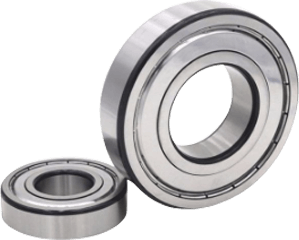
The fundamental structure of a stainless steel ball bearing includes inner and outer rings, rolling elements, a cage, and seals or shields. For harsh environments, martensitic or precipitation-hardened stainless steels are commonly used due to their capacity for higher hardness after heat treatment.
Manufacturing begins with precision machining of rings and balls, followed by controlled heat treatment to achieve the desired balance between hardness and toughness. Raceway grinding and superfinishing are essential steps, as surface roughness directly influences friction, wear rate, and lubricant retention.
Advanced manufacturing facilities employ dimensional inspection, material traceability, and non-destructive testing to ensure consistency. In bearings classified as High Durability Bearings, these controls are especially important, as even minor deviations can significantly reduce service life under abrasive or corrosive exposure.
Performance in harsh environments depends on multiple interrelated factors:
Material composition: Alloy selection affects corrosion resistance, hardness, and fatigue strength.
Heat treatment precision: Variations can lead to brittleness or insufficient wear resistance.
Surface finish: Smoother raceways reduce friction and abrasive interaction.
Sealing effectiveness: Inadequate sealing allows contaminants to negate material advantages.
Operating conditions: Load, speed, temperature, and lubrication quality must align with bearing design.
Ignoring any of these variables can compromise even well-designed bearings, highlighting the importance of system-level evaluation rather than isolated component selection.
In harsh-environment applications, supplier reliability is as critical as product specification. Buyers should evaluate manufacturers based on process control, quality documentation, and application engineering support. Consistent metallurgy, repeatable heat treatment, and validated testing protocols are indicators of long-term performance reliability.
Supply chain resilience has also become a key consideration. Predictable lead times, transparent sourcing, and the ability to support customization or small-batch production add value for OEMs and maintenance teams operating in demanding industries.
One of the most common challenges is underestimating environmental severity. Bearings selected primarily for corrosion resistance may lack sufficient abrasion resistance, leading to unexpected wear. Conversely, overly hard materials without adequate toughness can fail through cracking under shock loads.
Installation and maintenance practices also contribute to failure. Improper handling, misalignment, or incompatible lubricants can rapidly degrade performance, regardless of bearing quality. These issues underline the need for technical guidance alongside product selection.
Abrasion-resistant stainless steel bearings are widely used in marine equipment, where saltwater exposure combines corrosion with particulate contamination. In chemical processing plants, they support pumps and mixers exposed to aggressive fluids and cleaning agents.
Mining and bulk material handling systems rely on these bearings in conveyors and screening equipment, where dust and debris are unavoidable. Outdoor automation systems, such as wind energy components and environmental monitoring equipment, also benefit from their stability under fluctuating weather conditions.
The bearing industry is moving toward application-specific engineering, with increased emphasis on environmental modeling and lifecycle prediction. Sensor integration and condition monitoring are becoming more common, allowing operators to track bearing health in real time.
Materials research continues to explore improved stainless alloys and surface treatments that enhance wear resistance without sacrificing corrosion performance. Sustainability considerations are also driving designs that extend service life and reduce replacement frequency, aligning with broader industrial efficiency goals.
Are abrasion-resistant stainless bearings suitable for extreme temperatures?
Performance depends on alloy selection and lubrication. Temperature limits should be evaluated during the design phase.
Do these bearings eliminate corrosion entirely?
They significantly reduce corrosion risk, but proper sealing and maintenance remain essential.
Is higher hardness always better for harsh environments?
Not necessarily. Excessive hardness can reduce toughness, increasing the risk of cracking under impact or vibration.

Vincent Liang

+86 137 5749 2228

liangzexi@cxbearings.cn

No.195, Dongshaobei Road, Jiangbei District, Ningbo City, Zhejiang Province, China


Copyright © Zhejiang Dacheng Precision Machinery Co., Ltd. All Rights Reserved.

