 DACHENG PRECISION MACHINERY

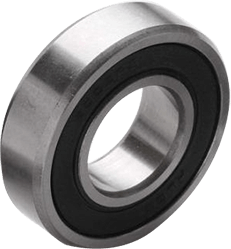
The rapid miniaturization of mechanical systems has reshaped expectations for bearing performance. From compact electric motors to precision medical devices, engineers increasingly require components that can operate reliably at very high rotational speeds while occupying minimal space. Within this context, High Speed Miniature Ball Bearings have become a critical enabling technology, supporting both performance gains and new product designs across multiple industries.
Global demand for smaller, faster, and more energy-efficient equipment continues to grow. Automation, robotics, medical instruments, and semiconductor manufacturing all rely on compact rotating systems with strict tolerances. Traditional bearing solutions often struggle to balance speed capability, stability, and lifespan at miniature scales. As a result, the market for Miniature Ball Bearings designed specifically for high-speed operation has expanded steadily, driven by higher RPM requirements and tighter accuracy standards.
At their core, high-speed miniature bearings are rolling-element bearings optimized to reduce friction, heat generation, and vibration at elevated rotational speeds. Compared with standard designs, these bearings emphasize precision geometry, controlled internal clearance, and advanced lubrication strategies. Speed capability is often defined by limiting speed or DN value (bearing bore diameter multiplied by RPM), a key metric for engineers evaluating suitability in demanding applications.
High-speed miniature bearings typically consist of thin-section inner and outer rings, precision-ground balls, and a lightweight cage. Material selection plays a decisive role:
Bearing rings: Chrome steel is common for general applications, while stainless steel is preferred for corrosion resistance or clean environments.
Rolling elements: Ceramic balls, such as silicon nitride, are frequently used in hybrid designs to reduce mass and centrifugal force.
Cages: Polymer or phenolic cages help minimize friction and heat at high speeds.
Manufacturing processes include ultra-precision grinding, superfinishing of raceways, and strict dimensional inspection. These steps are essential to meet the requirements of High Precision Bearings operating at high RPM.
Several variables directly influence bearing performance:
Internal clearance: Incorrect clearance can lead to excessive heat or instability at speed.
Lubrication: Oil or specialized low-torque grease must match operating speed and temperature.
Balance and runout: Even minor geometric deviations can amplify vibration at high RPM.
Thermal management: Materials and lubrication must accommodate thermal expansion without preload loss.
Understanding these factors allows engineers to predict bearing behavior more accurately in real-world conditions.
For B2B buyers, supplier capability is as important as product specification. Reliable manufacturers demonstrate consistent quality control, traceable materials, and documented testing procedures. Technical support—such as assistance with bearing selection, lubrication advice, and failure analysis—adds long-term value beyond unit price. In regulated sectors like medical or aerospace, compliance with ISO or industry-specific standards is often mandatory.
One frequent issue is premature failure caused by unsuitable lubrication or contamination during installation. Another challenge lies in balancing speed with load capacity, especially in compact designs where space limits bearing size. Engineers also face difficulties sourcing bearings with stable lead times and consistent quality, particularly for custom or low-volume applications.
High-speed miniature bearings are widely used in:
Dental and surgical handpieces requiring quiet, smooth operation
High-speed spindles in optical and semiconductor equipment
Compact motors for robotics and automation
Precision measurement instruments with strict accuracy demands
In these applications, even marginal improvements in bearing performance can significantly enhance system reliability and efficiency.
Looking ahead, advancements in material science and surface engineering are expected to further improve speed limits and service life. Hybrid and full-ceramic solutions are gaining traction, especially where low weight and electrical insulation are beneficial. Additionally, digital monitoring and predictive maintenance are influencing bearing design, with tighter tolerances and more consistent performance becoming standard expectations.
What differentiates high-speed miniature bearings from standard ones?
They are optimized for higher RPM through precision geometry, specialized materials, and tailored lubrication.
Are ceramic balls always necessary?
Not always. Ceramic balls offer advantages at very high speeds, but steel balls remain suitable for many applications.
How important is supplier technical support?
Extremely important, especially when applications involve high speed, low tolerance for failure, or regulatory requirements.

Vincent Liang

+86 137 5749 2228

liangzexi@cxbearings.cn

No.195, Dongshaobei Road, Jiangbei District, Ningbo City, Zhejiang Province, China


Copyright © Zhejiang Dacheng Precision Machinery Co., Ltd. All Rights Reserved.

