 DACHENG PRECISION MACHINERY

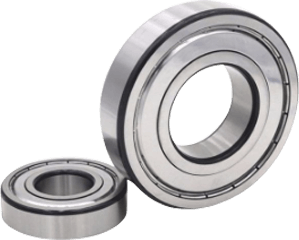
As industrial systems continue to miniaturize, bearings with very small bore sizes have become critical components in precision assemblies. Thin walled bearings in the 5mm–20mm range are widely used in applications where space, weight, and rotational accuracy must be tightly controlled. These sizes are especially common in medical devices, optical instruments, compact robotics, sensors, and miniature automation modules serving European and North American OEM markets.
Compared with standard miniature bearings, thin section designs allow engineers to maintain stiffness and accuracy while reducing the overall envelope of the assembly. This capability is increasingly important as equipment designers seek to integrate more functions into limited installation space.
Thin walled bearings in the 5mm–20mm range are defined by a reduced radial cross section that remains relatively constant across different bore diameters. This geometry enables predictable integration into compact housings without redesigning surrounding components.
Because of their small size, these bearings are commonly classified as Precision Bearings, requiring tight control over dimensional tolerance, raceway geometry, and surface finish. Even minimal deviation can influence torque, noise, and service life in miniature systems.
In small bore thin walled bearings, performance expectations extend beyond basic load support:
Low Rotational Torque: Essential for sensitive motion systems and low-power drives
High Rotational Accuracy: Supports precise positioning and repeatable motion
Stable Preload Behavior: Maintains stiffness without excessive friction
Smooth Surface Interaction: Reduces wear and vibration in continuous operation
These characteristics are particularly relevant in High Precision Thin Walled Bearings, where accuracy is achieved through manufacturing discipline rather than material mass.
Material selection is critical at small diameters due to reduced structural margin.
Common Materials
Bearing-grade carbon steel for controlled environments
Stainless steel grades such as 304 or 316 for corrosion resistance, hygiene, or cleanroom use
Manufacturing Challenges
Thin raceways are sensitive to heat treatment distortion
Grinding accuracy must be maintained at micrometer scale
Surface finish directly affects friction and noise
Advanced CNC grinding, controlled heat treatment, and high-resolution inspection are required to ensure consistent quality across production batches.
Thin walled bearings in the 5mm–20mm range are particularly sensitive to external conditions:
Housing Accuracy: Small deviations can deform the bearing ring
Fit Selection: Incorrect fits can increase friction or reduce bearing life
Clean Assembly Conditions: Contamination has a greater impact at small sizes
Lubrication Control: Over- or under-lubrication can affect torque stability
Addressing these factors early in the design phase is essential for reliable operation.
Common application areas include:
Medical and diagnostic equipment
Optical and measuring instruments
Miniature motors and actuators
Compact robotic end-effectors
Precision sensors and positioning modules
In these systems, Thin Walled Bearings support compact mechanical design while maintaining motion quality.
Demand for small-size thin section bearings continues to grow as precision equipment becomes more compact. Trends include tighter tolerance requirements, increased use of stainless materials, and greater emphasis on noise and torque consistency rather than load capacity alone.

Vincent Liang

+86 137 5749 2228

liangzexi@cxbearings.cn

No.195, Dongshaobei Road, Jiangbei District, Ningbo City, Zhejiang Province, China


Copyright © Zhejiang Dacheng Precision Machinery Co., Ltd. All Rights Reserved.

