 DACHENG PRECISION MACHINERY

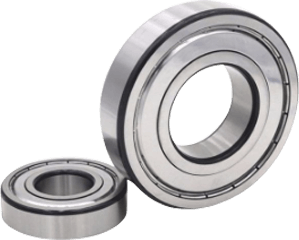
OEM equipment across automation, medical technology, electronics, and compact machinery continues to evolve toward higher integration and smaller footprints. As systems shrink, the mechanical tolerances within them tighten, placing greater emphasis on bearing accuracy, consistency, and reliability. Small deep groove bearings are widely used in these designs because they can accommodate radial loads, moderate axial loads, and high rotational speeds within limited space.
In parallel, stainless steel has become a preferred material in many OEM specifications due to its corrosion resistance, cleanliness, and stable performance in controlled or semi-aggressive environments. These factors have driven sustained demand for small deep groove Precision Grade Stainless Steel Bearings that support predictable motion and long service life in critical equipment.
Deep groove ball bearings are characterized by continuous raceway grooves on both the inner and outer rings. This geometry enables smooth rolling motion, low friction, and efficient load distribution. When produced to precision grades, these bearings exhibit tightly controlled runout, reduced vibration, and consistent torque behavior—attributes that are essential for OEM equipment where motion accuracy affects overall system performance.
Stainless steel introduces additional considerations. Unlike standard bearing steel, stainless alloys must balance corrosion resistance with mechanical strength. Precision-grade manufacturing compensates for these differences through controlled heat treatment, refined surface finishing, and selective assembly, ensuring performance aligns with demanding OEM requirements.
A small deep groove stainless bearing typically consists of inner and outer rings, steel balls, and a cage designed to guide rolling elements evenly. While the structure is straightforward, performance is defined by execution at the micron level.
Martensitic stainless steels are commonly selected because they can be hardened to levels suitable for rolling contact fatigue while retaining resistance to moisture and mild chemicals. Manufacturing begins with precision machining or forging, followed by heat treatment to achieve uniform hardness. Raceway grinding and superfinishing are then applied to reduce surface roughness and improve contact conditions.
For small sizes, component variation has a proportionally greater effect on performance. As a result, manufacturers often use selective assembly methods, pairing rings and balls based on measured dimensions to achieve target internal clearance. These processes distinguish Stainless Steel Ball Bearings designed for precision applications from standard catalog products.
Several factors directly influence the reliability of small deep groove bearings in OEM equipment:
Geometric accuracy: Roundness and concentricity of raceways affect vibration and noise levels.
Internal clearance: Clearance must be matched to operating temperature and speed to avoid preload or instability.
Surface finish: Fine finishes reduce friction and support consistent lubrication.
Material consistency: Variations in microstructure or hardness can shorten fatigue life.
OEM engineers often evaluate these parameters during validation testing, as nominal load ratings alone do not fully describe real-world performance.
Selecting a bearing supplier for OEM programs requires a focus on process capability rather than price alone. Key evaluation criteria include manufacturing specialization in small-bore bearings, inspection methods for vibration and runout, and the ability to maintain consistency across production batches.
Traceability of materials and heat treatment processes is increasingly important, particularly in regulated industries such as medical devices. Suppliers that can document process controls and inspection results provide OEMs with greater confidence in long-term supply stability and predictable performance, which is critical when sourcing High Quality Bearings for global equipment platforms.
One common challenge is noise development over time. In many cases, this is linked to surface finish degradation or lubricant breakdown rather than immediate material failure. Another issue is misapplication—using a bearing designed for general use in a high-precision environment can result in vibration or shortened service life.
Thermal effects also pose challenges. Small bearings have limited capacity to dissipate heat, making correct clearance and lubrication selection essential. Failure to account for operating temperature can lead to premature wear or loss of accuracy.
Small deep groove precision stainless bearings are widely used in OEM equipment such as:
Compact electric motors for automation and control systems
Medical devices requiring quiet operation and clean materials
Precision measuring instruments and optical assemblies
Small gearboxes and drive units in industrial electronics
In these applications, bearing stability directly affects system accuracy, efficiency, and maintenance intervals. Precision-grade execution ensures that performance remains consistent across operating cycles.
OEM demand is trending toward lower noise, tighter tolerances, and longer service intervals. This is driving advancements in grinding accuracy, superfinishing technology, and inspection methods. At the same time, design engineers are increasingly integrating bearing performance data into digital simulations, requiring suppliers to provide more detailed technical information.
Material research and process optimization continue to improve the balance between corrosion resistance and fatigue strength. As equipment becomes more compact and performance expectations rise, small deep groove stainless bearings will remain a foundational component in precision-driven OEM designs.
Are small deep groove stainless bearings suitable for axial loads?
They can support limited axial loads in both directions, but the load capacity depends on bearing size and clearance.
How does stainless steel affect bearing life?
When properly processed, stainless steel provides reliable fatigue performance along with added corrosion resistance.
Can these bearings operate at high speed?
Yes, provided geometry, lubrication, and clearance are matched to the intended speed range.

Vincent Liang

+86 137 5749 2228

liangzexi@cxbearings.cn

No.195, Dongshaobei Road, Jiangbei District, Ningbo City, Zhejiang Province, China


Copyright © Zhejiang Dacheng Precision Machinery Co., Ltd. All Rights Reserved.

