 DACHENG PRECISION MACHINERY

Industrial equipment is increasingly deployed in environments where moisture, chemicals, temperature fluctuations, and aggressive cleaning processes are unavoidable. Standard bearing solutions often struggle to maintain reliability under such conditions, leading to unplanned downtime, higher maintenance costs, and shortened equipment life. As a result, OEMs and industrial operators are shifting from off-the-shelf components toward engineered solutions tailored to specific operating environments.
This trend has driven growing demand for custom corrosion resistant deep groove ball bearings manufacturing solutions, particularly in sectors such as marine engineering, food processing, pharmaceuticals, chemical handling, renewable energy, and outdoor automation. Customization allows manufacturers to balance corrosion resistance, load capacity, speed performance, and service life more precisely than standardized products.
Deep groove ball bearings are valued for their simple design, low friction, and ability to support both radial and axial loads. Custom corrosion-resistant designs build on this foundation by integrating material science, surface engineering, and sealing technologies to address environment-specific risks.
Corrosion resistance is not achieved through a single design choice. It is the result of coordinated decisions involving alloy composition, heat treatment, surface condition, lubrication strategy, and contamination control. Custom manufacturing enables engineers to adjust these variables based on real operating conditions rather than generalized assumptions.
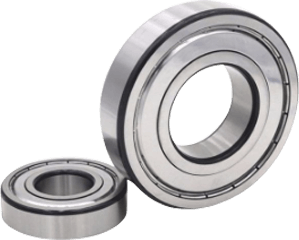
Structurally, custom corrosion-resistant deep groove ball bearings follow the same basic architecture as standard designs: inner ring, outer ring, rolling elements, cage, seals, and lubricant. The differentiation lies in how each component is specified and produced.
Material selection is often the starting point. Stainless steel grades are commonly used, with martensitic alloys offering higher hardness and load capacity, while austenitic grades provide enhanced resistance to chlorides and aggressive cleaning agents. In certain applications, hybrid configurations using ceramic rolling elements are adopted to reduce wear, improve corrosion resistance, and enhance electrical insulation.
Manufacturing precision plays a decisive role. Controlled heat treatment ensures consistent microstructure and mechanical properties without compromising corrosion performance. Advanced grinding and superfinishing processes minimize surface roughness, which helps maintain stable lubricant films and reduces corrosion initiation sites. Passivation and other surface treatments are often applied to strengthen protective oxide layers on metallic components.
Seal and shield design is another critical aspect of customization. Depending on exposure levels, manufacturers may specify contact seals, non-contact shields, or multi-lip sealing systems made from elastomers compatible with chemicals, temperature ranges, and cleaning agents used in service.
The performance of custom corrosion-resistant bearings depends on several interrelated factors:
Operating environment: Presence of salt, chemicals, humidity, or washdown processes
Load and speed requirements: Balancing corrosion resistance with mechanical performance
Lubrication strategy: Selection of greases or oils resistant to washout, oxidation, and chemical attack
Tolerance and internal clearance control: Ensuring stable operation under thermal and load variations
Even within the category of Corrosion Resistant Bearings, inadequate alignment between these factors and the application can lead to premature failure. Custom manufacturing reduces this risk by tailoring specifications to real operating data.
Choosing the right manufacturing partner is essential for successful customization. Buyers should evaluate suppliers based on their ability to provide material traceability, process control documentation, and evidence of corrosion and performance testing. Experience across multiple industries with harsh environments is a strong indicator of practical engineering competence.
Equally important is technical collaboration. Suppliers capable of supporting design reviews, prototype validation, and application-specific testing add value beyond component supply. Consistent quality systems and stable global logistics are critical for OEMs operating across multiple markets.
One common challenge is over-specification. Selecting the highest corrosion resistance grade without considering load, speed, or cost constraints can result in unnecessary expense or compromised mechanical performance. Custom solutions aim to optimize rather than maximize individual parameters.
Another frequent issue is assuming corrosion resistance eliminates maintenance requirements. While customized designs significantly extend service intervals, lubrication condition, seal integrity, and installation practices remain critical to achieving expected service life.
Custom corrosion-resistant deep groove ball bearings are widely used where standard designs fail to deliver acceptable reliability. In food and beverage processing, customized seals and stainless steel materials support frequent washdowns and hygiene compliance. Marine equipment manufacturers rely on tailored bearing solutions for pumps, fans, and auxiliary systems exposed to salt spray and high humidity.
Chemical processing facilities benefit from customized materials and lubricants that withstand aggressive vapors and cleaning agents. Outdoor automation and renewable energy applications, such as tracking systems and auxiliary drives, also use custom designs to ensure consistent performance under weather exposure.
In all these cases, customization allows Deep Groove Ball Bearings to meet both environmental and mechanical demands without excessive compromise.
The future of custom corrosion-resistant bearing manufacturing is increasingly data-driven. Application-specific testing, digital simulation, and field feedback are being used to refine designs before full-scale production. Hybrid bearing technologies and advanced surface treatments continue to expand performance envelopes.
Sustainability is also influencing design priorities. Longer service life, reduced maintenance frequency, and optimized material use contribute to lower environmental impact and improved total cost of ownership. As industrial systems become more specialized, demand for customized bearing solutions is expected to grow steadily.
When is a custom corrosion-resistant bearing necessary?
Customization is recommended when standard products cannot meet environmental, load, or lifecycle requirements simultaneously.
Does customization significantly increase lead time?
While initial development may take longer, established manufacturing processes often allow repeat orders with stable lead times.
Are custom designs always more expensive?
Upfront costs may be higher, but optimized performance and longer service life often reduce overall operating costs.
By aligning materials, manufacturing processes, and application requirements, custom corrosion-resistant deep groove ball bearings manufacturing solutions provide a practical and reliable approach for industries operating in demanding environments.

Vincent Liang

+86 137 5749 2228

liangzexi@cxbearings.cn

No.195, Dongshaobei Road, Jiangbei District, Ningbo City, Zhejiang Province, China


Copyright © Zhejiang Dacheng Precision Machinery Co., Ltd. All Rights Reserved.

