 DACHENG PRECISION MACHINERY

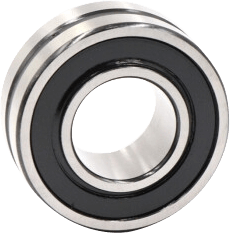
Industrial equipment is increasingly expected to operate reliably in environments where moisture, chemicals, and aggressive cleaning processes are unavoidable. Sectors such as food processing, marine engineering, chemical handling, pharmaceuticals, and outdoor automation place bearings under constant exposure to corrosive media. In these conditions, standard carbon steel bearings often fail prematurely due to surface degradation, lubricant breakdown, and accelerated fatigue.
As lifecycle cost and operational continuity become higher priorities, engineers are paying closer attention to material selection. Stainless steel has emerged as a critical option for Corrosion Resistant Deep Groove Ball Bearings, offering a balance between mechanical performance and environmental durability. Understanding the differences among stainless steel grades is essential for selecting bearings that meet both technical and economic requirements.
Deep groove ball bearings are valued for their versatility, compact design, and ability to handle radial and moderate axial loads at relatively high speeds. When corrosion resistance is required, the bearing material must maintain surface integrity under exposure to water, chemicals, and temperature fluctuations.
Stainless steel achieves corrosion resistance through the formation of a passive chromium oxide layer on its surface. This layer acts as a barrier against oxidation and chemical attack. However, not all stainless steels perform the same. Variations in alloy composition directly affect corrosion resistance, hardness, load capacity, and wear behavior. Selecting the appropriate grade is therefore a core engineering decision rather than a generic upgrade.
Several stainless steel options are commonly used for corrosion-resistant bearing applications, each with distinct advantages and limitations.
Martensitic stainless steel (e.g., AISI 440C)
This is one of the most widely used bearing materials due to its high hardness and good wear resistance after heat treatment. It offers moderate corrosion resistance, suitable for humid environments, light chemical exposure, and intermittent washdowns. Martensitic stainless steels are often chosen when higher load capacity and fatigue strength are required.
Austenitic stainless steel (e.g., AISI 304, 316)
Austenitic grades provide superior resistance to corrosion, particularly against chlorides and aggressive cleaning agents. Grade 316, with added molybdenum, performs especially well in marine and food processing environments. However, these steels cannot be hardened to the same degree as martensitic grades, resulting in lower load ratings and reduced fatigue life under high mechanical stress.
Precipitation-hardening stainless steel (e.g., 17-4 PH)
These alloys offer a compromise between corrosion resistance and mechanical strength. Through controlled heat treatment, they achieve higher strength than austenitic grades while maintaining better corrosion resistance than martensitic steels in certain environments. Their use is more specialized and typically application-driven.
Structurally, stainless steel bearings retain the same basic configuration as conventional designs: inner and outer rings, rolling elements, cage, seals, and lubricant. Performance differences arise from how stainless steel behaves during manufacturing and operation.
Heat treatment processes must be carefully controlled to achieve consistent hardness without compromising corrosion resistance. Precision grinding and superfinishing are particularly important for stainless steel components, as surface roughness can accelerate corrosion initiation and disrupt lubricant films.
Passivation treatments are often applied after machining to enhance the protective oxide layer on stainless steel surfaces. Seal design also plays a critical role, as effective sealing prevents corrosive media from entering the bearing and protects internal components regardless of material choice.
These manufacturing considerations are central to producing reliable Corrosion Resistant Bearings rather than simply substituting materials.
Choosing a stainless steel option involves balancing several interrelated factors:
Environmental exposure: Salt spray, cleaning chemicals, humidity, and immersion conditions
Mechanical demands: Load magnitude, speed, and duty cycle
Surface finish quality: Influences friction, wear, and corrosion initiation
Lubrication compatibility: Interaction between stainless steel surfaces and selected lubricants
Austenitic steels may excel in chemical resistance but underperform under high loads. Martensitic steels offer stronger mechanical performance but require careful evaluation in highly corrosive environments. The optimal choice depends on application-specific priorities rather than generalized material rankings.
Selecting a supplier capable of producing stainless steel bearings to consistent quality standards is essential. Buyers should look for documented material traceability, controlled heat treatment processes, and evidence of corrosion and performance testing. Experience across multiple corrosive applications is often more valuable than broad product catalogs.
Technical support is another key consideration. Suppliers who assist with material selection, seal configuration, and lubrication strategy help ensure that stainless steel bearings perform as intended over their service life.
A frequent misconception is that higher corrosion resistance automatically means longer bearing life. In practice, improper material selection can reduce load capacity or fatigue performance, leading to mechanical failure even in corrosion-free conditions.
Another challenge is over-reliance on material choice alone. Even high-grade stainless steel cannot compensate for inadequate sealing, poor lubrication, or improper installation. Effective corrosion resistance requires a system-level approach that integrates materials, design, and maintenance practices.
Stainless steel deep groove ball bearings are widely used in food and beverage processing equipment, where hygiene requirements and frequent washdowns are standard. Marine applications benefit from grades such as 316 stainless steel to withstand salt-laden environments. Chemical processing equipment relies on stainless steel bearings to resist aggressive vapors and cleaning agents.
Outdoor automation systems, including material handling and auxiliary drives, also use stainless steel options to maintain reliability under weather exposure. In these applications, Deep Groove Ball Bearings made from appropriate stainless steel grades help balance durability and mechanical performance.
Ongoing development in stainless steel bearing technology focuses on improving fatigue life while maintaining high corrosion resistance. Advances in alloy design, surface finishing, and hybrid configurations are expanding performance limits. Improved seal materials and lubricant formulations further enhance bearing reliability in aggressive environments.
As industries place greater emphasis on lifecycle cost and sustainability, stainless steel bearings with optimized service intervals are expected to see continued adoption.
Is stainless steel always necessary for corrosion resistance?
Not always. Protective coatings or sealed carbon steel bearings may suffice in mildly corrosive environments.
Which stainless steel grade offers the best overall performance?
There is no universal answer; the best grade depends on the balance between corrosion exposure and mechanical demands.
Do stainless steel bearings require special maintenance?
They reduce corrosion-related issues but still require proper lubrication, sealing, and inspection.
By understanding stainless steel options and their trade-offs, engineers can make informed decisions when specifying corrosion-resistant deep groove ball bearings for demanding industrial applications.

Vincent Liang

+86 137 5749 2228

liangzexi@cxbearings.cn

No.195, Dongshaobei Road, Jiangbei District, Ningbo City, Zhejiang Province, China


Copyright © Zhejiang Dacheng Precision Machinery Co., Ltd. All Rights Reserved.

