 DACHENG PRECISION MACHINERY

Corrosion-resistant deep groove ball bearings are widely used in chemical, marine engineering, food and pharmaceutical, electroplating and other industries, and the common characteristics of these scenarios are:Highly corrosive media (acids, alkalis, salt spray), high humidity or special hygiene requirements。 Compared with ordinary deep groove ball bearings, they not only require corrosion resistance from the material itself (such as 316L stainless steel, ceramics or special coatings), but also have more stringent requirements for lubricants.Lubricants must be corrosion-resistant, resistant to media attack, compatible with bearing materials, and maintain stable performance in extreme environments。
Statistics show that in corrosive environments,About 70% of corrosion-resistant deep groove ball bearing failures are directly related to improper lubrication (such as lubricant being contaminated by corrosive media and failing, insufficient lubrication accelerates wear). This article will focus on this type of special bearing and share 5 core lubrication tips to extend its life, and provide practical solutions that can be directly implemented.
Lubricant selection logic in different corrosion scenarios:
| Corrosive environment type | Typical medium | Recommended lubricant type | Key requirements |
|---|---|---|---|
| Weak acid-alkali environment (e.g. weak corrosion at pH 5-9) | Tap water, low-concentration detergents | Lithium-based grease (e.g., compound lithium-based grease) + anti-corrosion additives | Base oils need to be resistant to hydrolysis, thickeners to resist water washout, and rust inhibitors (e.g., barium dinonylnaphthalene sulfonate) |
| Strong acid and alkali environment (e.g., sulfuric acid, hydrochloric acid, NaOH solution) | Chemical reactors, electroplating tanks | Fluorine grease (PFPE-based) | Base oils are chemically inert (acid/alkali/organic solvent resistant), compatible with stainless steel/ceramic bearing materials, and non-corrosive |
| Salt spray/marine environment | Seawater, salt spray (e.g. ships, coastal equipment) | Polyurea-based grease or composite calcium sulfonate-based grease | Strong water resistance (dropping point>260℃), resistance to salt corrosion, added with rust inhibitors (such as benzotriazole derivatives) |
| Food/pharmaceutical hygienic environment | Sterile water, detergents (e.g. CIP cleaning) | NSF H1 certified food-grade synthetic oil-based grease | Meet food safety standards (non-toxic), high-temperature steam disinfection, anti-emulsification (no emulsification and failure when exposed to water) |
Practical points:
✅ Chemical reactor bearings: Fluorine grease (such as DuPont Krytox series) is preferred, which can withstand 98% sulfuric acid and 30% sodium hydroxide;
✅ Offshore platform equipment: Using polyurea-based grease (such as Mobil SHC 007), the salt spray resistance is more than 3 times higher than that of ordinary lithium-based grease;
✅ Food machinery bearings: NSF H1 certified greases (such as Kluber BIO LUBE) must be selected to avoid contaminating the product.
Case: After an electroplating plant changed ordinary lithium-based grease to fluorine grease, the service life of corrosion-resistant deep groove ball bearings in the hydrochloric acid mist environment was extended from 3 months to 18 months.
The amount of lubrication of corrosion-resistant deep groove ball bearings needs to be considered at the same time Corrosion protection needs (sufficient lubricating film to isolate the medium) and Lubricant stability (Excessive adsorption of corrosive media).
Recommended filling criteria:
Standard working conditions (medium and low speed, temperature <80℃): Filling the internal space of the bearing1/3~1/2(Lower limit at high speed, slightly more at low speed);
Highly corrosive environments (e.g., strong acid and alkali mist): The filling volume can be slightly increased to3/5(Ensure that the lubricating film continuously covers the raceway, but avoid lubricant leakage caused by seal failure);
Sealed bearings (e.g. double lip seals): No need for frequent refilling, the first filling volume is strictly according to the manufacturer's recommendation (usually 1/2 of the bearing space).
Danger Warning:
⚠️ Excessive lubrication: Too much grease will stir and heat up, accelerate the oxidation and failure of the lubricant, and may squeeze the seal and cause the intrusion of corrosive media.
⚠️ Insufficient lubrication: The raceway is in direct contact with the rolling element, and the corrosive medium (such as acid mist) will accelerate the pitting of the metal surface, forming microcracks.
Hands-on tools: Use a graduated grease injection gun (such as SKF LAGD series) to ensure accurate filling volume each time; After the sealing bearing is filled, check whether the sealing ring is compressed in place (about 10-15% compression).
In corrosive environments, lubricants fail 2-3 times faster than ordinary environments, so they are required Shorten maintenance intervals and focus on "lubricant contamination"。
Recommended Maintenance Strategies:
🔧 Check frequency:
Weakly corrosive environment (such as clean water mist): inspect once a month;
Strong corrosive environment (such as acid and alkali spray, salt spray): check once every 2 weeks;
High temperature environment (>80℃): Check the grease condition every week.
🔧 Key inspection items:
Color changes: Normal grease should be homogeneous fiber (such as lithium-based grease is light yellow fiber); If it turns black (oxidation), turns white (moisture intrusion) or particles (impurities/corrosion products) appear, it needs to be replaced immediately;
Leak traces: Whether there is corrosive media infiltration (such as salting, acid-base crystallization) or grease loss at the sealing area;
Bearing temperature:If you touch the bearing seat (not the high-temperature part) and feel it is obviously hot (>60℃, adjust according to the working conditions), it may be insufficient lubrication or lubricant failure.。
🔧 Replacement standard:
General working conditions: replace every 6-12 months (adjust according to inspection results);
Strong corrosive environment: mandatory replacement every 3-6 months (even if there is no obvious abnormality in appearance);
Grease replenishment: When the remaining amount is less than 1/3 (through the observation window or disassembly inspection), the same type of lubricant needs to be added.
Case: A chemical plant found that the grease of a reactor bearing changed from light yellow to dark brown (moisture + acid mist erosion) by checking the grease color of the sealed bearing every week.
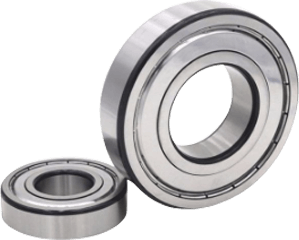
The sealing design of corrosion-resistant deep groove ball bearings directly affects the lubricant life——Seal failure = lubricant contamination = rapid corrosion and wear of the bearing。
Sealing Solution Selection Guide:
| Seal type | Protective capabilities | Suitable for corrosive environments | Maintenance attention |
|---|---|---|---|
| Double lip contact seal | High (dust + liquid media) | Weak acid and alkali mist, clean water mist | Regularly check the sealing lip for wear (adjust if compression is insufficient) |
| Maze + dust cover | Medium (mainly dustproof) | Low-corrosive dust environments (e.g. dry salt spray) | Corrosion resistance required in conjunction with grease (cannot rely on sealing alone) |
| Fluoroelastomer (FKM) seals | Extremely high (acid and alkali resistance + high temperature) | Strong acid and alkali mist, organic solvent environment | Avoid high temperature aging (long term >200℃ will cause brittle failure) |
| Ceramic/PTFE composite seals | Special (strong corrosion resistance + low friction) | High temperature and strong acid (such as fuming sulfuric acid), aqua regia environment | The cost is high and requires professional selection |
Special Notes:
❗ The bearing chamber must be thoroughly cleaned before lubrication (residual cutting fluid, hand sweat will accelerate the emulsification or corrosion of the lubricant);
❗ Regularly check the wear of seals (such as whether the rubber lip of the double lip seal is cracked, whether the labyrinth ring is displaced), and replace it in time after wearing;
❗ For frequently disassembled equipment, preferential choice is given to the removable sealing structure (to avoid violent disassembly and damage to the seal).
Case: After a seawater desalination equipment changed the ordinary nitrile rubber seal to a fluoroelastomer seal, the sealing life in the salt spray environment was extended from 6 months to 2 years.
For critical equipment such as chemical reactor spindle bearings, it can be passed Real-time monitoring of lubrication statusIdentify potential issues in advance:
Application of monitoring technology:
Vibration analysis: When the lubrication is insufficient, the friction between the bearing rolling element and the raceway will produce high-frequency vibration (frequency range: 1-10kHz), and the abnormal signal is detected by the acceleration sensor;
Temperature monitoring:Lubricant failure can lead to frictional heat generation. A sudden increase in the bearing temperature >20°C (compared to historical data) may indicate a lubrication problem.
Oil analysis (for lubricants):Detect the metal particle content (such as iron, chromium), water content (>0.5% indicates seal failure) and pH changes in the lubricant。
Digital tool recommendation:
wireless vibration/temperature sensors (e.g., Emerson CSI 2140) that transmit data to monitoring systems in real time;
Intelligent lubrication systems (e.g. SKF LubriLean) that automatically dosing grease on demand, avoiding over- or under-dose.
Case: A pharmaceutical factory discovered an abnormal high-frequency signal on the bearing of a sterilization equipment through vibration monitoring, and replaced the grease 3 weeks in advance to avoid production line downtime.
Lubricant: fluorine grease containing molybdenum disulfide (antioxidant + wear resistance) is used to avoid ordinary grease being decomposed by nitric acid;
Bearing material: Prefer the combination of ceramic ball (Si3N4) + stainless steel ferrule to reduce the risk of metal corrosion.
Lubricant: Choose high-temperature resistant synthetic oil-based grease (such as polyalphaolefin PAO base oil), with a dropping point > 280°C and resistance to water vapor erosion;
Maintenance: Check the seal for condensation after each shutdown (dry and replenish grease in time).
✅ Daily inspections
Are there traces of corrosive media infiltration (salting, acid-base crystallization) in the seal?
Is the grease color normal (uniform fibrous, no blackening/whitish)?
Bearing temperature Is it abnormal (hot to the touch or >20°C higher than historical data)??
✅ Regular maintenance
Replenish/replace lubricants on a regular basis (mandatory replacement every 3-6 months in highly corrosive environments);
clean the bearing chamber and then add new grease (to avoid residual media pollution);
Check seal wear (double lip seal compression is sufficient).
✅ Emergency treatment
If the grease is discolored/leaked, stop the machine immediately and replace it;
When the bearing temperature suddenly rises above 40°C, start the backup equipment and check the lubrication system.
By implementing these 5 key tips, corrosion-resistant deep groove ball bearings can:
🔧 The life span is extended by 3-5 times(Compared with ordinary lubrication management);
🔧 Maintenance costs are reduced by more than 40%(Reduction of unplanned downtime and replacement costs);
🔧 Improved equipment reliability(Avoid chain failures caused by the intrusion of corrosive media).
Recommendations for immediate action:
Complete a factory-wide inspection of the lubricant type and sealing status of corrosion-resistant bearings within this week;
Establish a "corrosive environment bearing lubrication file" (record the lubricant model, cycle, and environmental parameters of each maintenance);
Operators are trained specifically (focusing on identifying early signs of lubricant failure).
"In a corrosive environment, proper lubrication is not a multiple-choice question, but a mandatory question - it directly determines whether a bearing is 'short-lived' or 'long-term'."

Vincent Liang

+86 137 5749 2228

liangzexi@cxbearings.cn

No.195, Dongshaobei Road, Jiangbei District, Ningbo City, Zhejiang Province, China


Copyright © Zhejiang Dacheng Precision Machinery Co., Ltd. All Rights Reserved.

