 DACHENG PRECISION MACHINERY

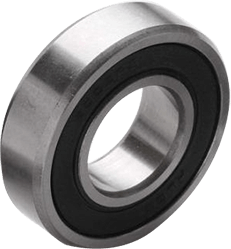
In industrial equipment design and procurement, total cost of ownership (TCO) has become as important as initial purchase price. In environments subject to moisture, chemical exposure, or frequent washdowns—such as marine platforms, food processing lines, and chemical plants—bearing failure driven by corrosion can dominate lifecycle costs. Traditional carbon steel solutions often require frequent replacement, driving interest toward Corrosion Resistant Deep Groove Ball Bearings that are engineered to withstand aggressive conditions with lower long-term operating costs.
Understanding pricing and cost drivers for these bearings enables engineers, purchasers, and asset managers to make more informed decisions that balance performance, maintenance, and uptime across complex systems.
Deep groove ball bearings are designed to support radial loads and moderate axial forces efficiently. In typical duty cycles, these bearings deliver low friction and long fatigue life when properly matched to application conditions. When corrosion risks are introduced—such as salt-laden air or chemical contaminants—standard designs can experience surface degradation, pitting, and accelerated fatigue, which shortens service life.
Corrosion-resistant designs are not merely material substitutions; they integrate metallurgy, sealing, and surface treatments to defend against environmental attack. The resulting improvements in service life, while advantageous, introduce additional manufacturing complexity and material cost. A thorough cost analysis examines how these factors interact with performance expectations.
Structurally, corrosion-resistant deep groove systems mirror traditional bearings with inner and outer rings, rolling elements, a cage, and retention features. Distinguishing factors include material choice and ancillary treatments.
Standard bearings typically use through-hardened carbon steel. This material provides excellent fatigue resistance and cost-efficiency under benign conditions but is vulnerable in corrosive environments. By contrast, Corrosion Resistant Bearings often employ stainless steels—such as martensitic or austenitic grades—with inherent resistance to oxidation and chloride attack. Martensitic alloys balance strength and corrosion resistance, whereas austenitic alloys offer enhanced chemical stability at the expense of lower hardness and load capacity.
Manufacturing such bearings involves precision heat treatment to achieve the necessary mechanical properties without compromising corrosion resistance, as well as fine grinding and superfinishing to minimize surface roughness. Additional surface conditioning, such as passivation, further promotes resistance to aggressive agents.
These material and process choices raise production costs compared to conventional bearings. However, their resistance to environmental degradation can reduce downtime, maintenance interventions, and unexpected replacements.
Several variables influence the pricing of corrosion-resistant deep groove solutions:
Material Costs: Stainless steels and specialty alloys are significantly more expensive than carbon steels due to alloying elements and processing expenses.
Manufacturing Complexity: Additional finishing steps and corrosion-specific quality control increase labor and machine costs.
Sealing Systems: Advanced seals designed to exclude fluids and particulates contribute to higher unit costs but protect performance reliability.
Lubrication Requirements: Specialty greases that resist washout or chemical interaction can raise life-cycle costs but extend service life.
While the initial purchase price may be higher, a full cost analysis must account for extended maintenance intervals and reduced failure-related downtime.
For organizations specifying corrosion-resistant bearings, supplier capabilities significantly affect both pricing and performance assurance. Key attributes to consider include material traceability, documented corrosion testing procedures, and adherence to international quality standards. Experience supplying challenging sectors such as offshore, chemical, or food processing equipment suggests an ability to match product characteristics with real-world demands rather than theoretical specifications.
Suppliers that offer engineering support—such as bearing selection assistance based on environmental exposure, load profiles, and maintenance strategy—can help optimize bearing life and control total lifecycle cost. Transparent communication on lead times, customization options, and quality documentation is especially valuable in global procurement scenarios.
One pervasive mistake in cost analysis is focusing narrowly on purchase price without quantifying long-term operational impacts. Corrosion-related failures often manifest as surface deterioration, increased friction, vibration, and ultimately fatigue cracking. When these failure modes occur prematurely, unplanned downtime, expedited freight charges, and emergency replacements add substantial indirect costs.
Another challenge is misunderstanding the impact of sealing and lubrication on bearing life. Corrosion-resistant materials alone do not guarantee extended service life if contaminants infiltrate internal spaces or lubricant films break down under environmental stressors. Cost models should incorporate realistic maintenance practices and environmental factors rather than assume optimal conditions.
Corrosion-resistant bearings are particularly beneficial for equipment subject to intermittent fluid exposure. For example, coastal power generation equipment must contend with salt spray and high humidity; stainless steel solutions in pump and fan applications extend maintenance intervals significantly. In food and beverage processing, frequent sanitizing procedures expose bearings to caustic solutions and moisture, making corrosion-resistant designs more cost-effective over the machine lifecycle despite higher upfront costs.
Mining conveyors, chemical dosing pumps, and outdoor automation systems also benefit from corrosion resistance, especially in regions where environmental control is limited.
A growing trend in industries with aggressive environments is the adoption of hybrid bearing solutions that integrate corrosion-resistant rings with non-ferrous rolling elements or advanced polymer cages to further reduce friction and wear. These innovations aim to enhance both environmental resistance and service life, which can improve the TCO equation.
Advances in lubricant technology are likewise significant, with formulations increasingly tailored to resist washout, oxidation, and chemical interaction. Condition monitoring tools, such as vibration analysis and lubricant health assessments, provide additional data for optimizing maintenance strategies and justifying higher initial investments in corrosion-resistant components.
Why do corrosion-resistant bearings cost more than standard bearings?
Higher costs reflect premium materials, additional finishing processes, and specialized sealing systems that collectively enhance environmental durability.
Does investing in corrosion-resistant bearings always save money long-term?
In environments that actively promote corrosion, extended service life and reduced maintenance can offset higher upfront costs. In benign environments, standard bearings remain appropriate.
Can material choice alone ensure corrosion resistance?
No. Successful performance also depends on sealing, lubrication, and appropriate integration with the system’s operating conditions.
A comprehensive pricing and cost analysis balances material, manufacturing, maintenance, and downtime factors to determine the most cost-effective bearing strategy for specific industrial applications.

Vincent Liang

+86 137 5749 2228

liangzexi@cxbearings.cn

No.195, Dongshaobei Road, Jiangbei District, Ningbo City, Zhejiang Province, China


Copyright © Zhejiang Dacheng Precision Machinery Co., Ltd. All Rights Reserved.

