 DACHENG PRECISION MACHINERY

In sectors such as marine engineering, food processing, chemical manufacturing, and renewable energy, equipment reliability directly affects operational costs and safety. Bearings, as critical motion components, are often the first line of defense against mechanical failure. Standard ball bearings have served general industry needs for decades; however, increasingly aggressive environmental conditions have exposed limitations in conventional designs.
This trend has elevated interest in Corrosion Resistant Deep Groove Ball Bearings, which are engineered specifically to withstand environments that promote oxidation, pitting, and material degradation. In global markets where downtime carries significant penalties, the comparison between corrosion-resistant designs and standard options has become a fundamental part of machine specification discussions.
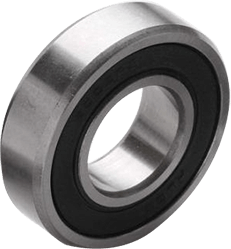
Deep groove ball bearings are among the simplest and most versatile rolling-element bearings. They consist of two concentric rings with a set of balls running in deep raceways, enabling smooth rotation with low friction and the ability to support radial loads and moderate axial forces.
Standard ball bearings typically use high-carbon chromium steel, which provides excellent strength and fatigue resistance under moderate conditions but becomes vulnerable when exposed to moisture, salt, or chemical contaminants. Corrosion-resistant designs modify this basic system by incorporating materials, finishes, and sealing strategies that inhibit chemical attack and extend service life in challenging environments.
Understanding these distinctions requires attention to how materials perform at the microstructural level and how environmental stressors interact with bearing surfaces during operation.
Standard deep groove bearings are widely manufactured from through-hardened carbon steel. The material choice prioritizes high load capacity and fatigue strength, attributes essential for many industrial applications with controlled environments.
By contrast, Corrosion Resistant Bearings often use stainless steel alloys—either martensitic or austenitic grades. Martensitic stainless steels balance strength and corrosion resistance, making them suitable for applications where moderate loads coincide with exposure to moisture or mild chemicals. Austenitic stainless steels provide superior resistance to aggressive chemical agents and saline environments but exhibit lower hardness, which can limit maximum load capacity.
Production quality is also a differentiating factor. Corrosion-resistant variants typically receive additional surface treatments, such as passivation, to fortify protective oxide layers. Advanced finishing techniques reduce surface roughness, which minimizes sites where corrosive agents can concentrate. Seals and shields are often made from advanced elastomers or engineered plastics designed to resist environmental contaminants without compromising rotational performance.
Several key factors determine whether a bearing will meet performance expectations in service:
Material composition and heat treatment, impacting both corrosion resistance and mechanical strength
Surface finish quality, which influences friction and the initiation of corrosion pits
Seal design and integrity, critical for keeping contaminants out and lubricant in
Lubricant selection, particularly resistance to washout and ability to maintain hydrodynamic films under varying loads
While standard bearings may perform adequately in dry, clean environments, failure often originates at the interface between lubricant, material, and environment—especially when corrosion accelerates surface degradation.
B2B buyers must consider supplier capabilities when sourcing corrosion-resistant components. Essential criteria include documented quality control protocols, material traceability, corrosion testing results, and adherence to recognized standards. Partners with experience supplying marine, offshore, or chemical processing sectors are better positioned to guide material choices and recommend appropriate sealing solutions.
Lead times, customization options, and global distribution networks are also important for OEMs and aftermarket suppliers operating across multiple regions. Clear communication regarding expected operating conditions ensures that bearings are specified correctly for long-term reliability.
A persistent challenge is misapplication: specifying standard bearings in environments that actively promote corrosion often leads to accelerated wear, unexpected downtime, and increased maintenance costs. Conversely, over-specifying highly corrosion-resistant designs for benign conditions can result in unnecessary expense and compromised load capacity.
Another common issue is insufficient attention to seals and lubrication. Even corrosion-resistant materials cannot perform effectively if contaminants infiltrate the bearing or if the lubricant is incompatible with environmental conditions. These oversights frequently result in premature failure that is mistakenly attributed to material choice alone.
Corrosion-resistant deep groove ball bearings find extensive use in seawater pumps, coastal conveyor systems, food and beverage processing lines, and environments subject to frequent washdowns or chemical exposure. In contrast, standard bearings remain suitable for controlled indoor environments such as machine tools, HVAC systems in dry climates, and general-purpose industrial drives.
For example, in offshore wind turbine nacelles, corrosion-resistant bearings help maintain rotational accuracy in the presence of salt-laden air. In enclosed factory equipment with minimal environmental exposure, standard bearings continue to provide high performance at lower cost.
Emerging trends emphasize hybrid solutions that integrate corrosion-resistant rings with ceramic rolling elements to combine chemical stability with reduced wear and electrical resistance. Advances in seal technology and lubricant chemistries are also expanding the usable range of corrosion-resistant systems.
Condition monitoring tools, including vibration analysis and lubricant condition sensors, are being adopted more widely to detect early signs of degradation, allowing preventive maintenance before catastrophic failure.
Given the growing importance of sustainable operation and asset uptime, the selection between corrosion-resistant and standard bearings will continue to be driven by environmental risk assessment and lifecycle cost analysis.
Is a corrosion-resistant bearing always necessary in outdoor environments?
Not always. The decision depends on specific exposure levels and the presence of moisture, chemical agents, or abrasive contaminants.
Can standard bearings be retrofitted with seals to improve corrosion resistance?
Improved seals can help but do not substitute for the intrinsic material advantages of corrosion-resistant designs.
Do corrosion-resistant bearings always have lower load capacity?
Some corrosion-resistant materials may exhibit lower hardness than carbon steel, but design optimizations and hybrid solutions can mitigate load limitations.
By comprehensively evaluating environmental conditions, material properties, and maintenance expectations, engineering teams can make more informed decisions when choosing between corrosion-resistant and conventional bearing solutions for industrial applications.

Vincent Liang

+86 137 5749 2228

liangzexi@cxbearings.cn

No.195, Dongshaobei Road, Jiangbei District, Ningbo City, Zhejiang Province, China


Copyright © Zhejiang Dacheng Precision Machinery Co., Ltd. All Rights Reserved.

