 DACHENG PRECISION MACHINERY

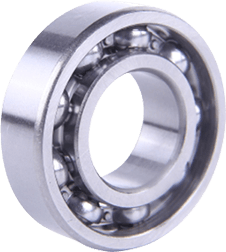
High-speed rotation in compact mechanical systems has become a defining requirement across many modern industries. From precision medical tools to compact automation modules, engineers are expected to deliver higher performance within shrinking envelopes. In this environment, Miniature Ball Bearings designed for high-speed operation play a central role in ensuring reliability, efficiency, and long-term stability.
The push toward miniaturization has accelerated across sectors such as electronics manufacturing, medical technology, robotics, and aerospace instrumentation. Equipment designers face growing pressure to increase rotational speed while maintaining accuracy and minimizing energy loss. Conventional bearing solutions often reach their limits when size constraints and high RPM intersect. This has led to sustained market demand for specialized High Speed Miniature Ball Bearings that can operate consistently under demanding conditions without excessive heat or wear.
At a fundamental level, a ball bearing reduces friction by converting sliding motion into rolling contact. In high-speed applications, this principle must be refined to manage centrifugal forces, thermal expansion, and dynamic balance. Bearing speed capability is influenced by multiple interacting variables, including bore size, ball mass, lubrication method, and internal geometry.
Rather than focusing solely on maximum RPM, engineers evaluate limiting speed based on thermal equilibrium and vibration behavior. This systems-level perspective is essential when selecting bearings intended for continuous high-speed duty cycles.
Although miniature bearings share a common structural layout—inner ring, outer ring, rolling elements, and cage—their performance at high speed depends heavily on execution quality.
Bearing rings are typically manufactured from high-purity bearing steel or stainless steel, with controlled heat treatment to ensure dimensional stability.
Rolling elements may be steel or ceramic. Ceramic balls reduce centrifugal force and are often used where higher speed margins are required.
Cages are designed to guide the balls smoothly while minimizing friction, commonly using engineered polymers or reinforced phenolic materials.
Manufacturing involves precision grinding, superfinishing of raceways, and rigorous dimensional inspection. Surface finish and roundness are controlled at micron or sub-micron levels to support smooth rotation at speed.
Several parameters directly affect bearing behavior in high-speed environments:
Internal clearance: Must be carefully specified to balance heat generation and running stability.
Lubrication: Oil lubrication offers superior cooling at very high speeds, while specialty greases are used for sealed or maintenance-free designs.
Dynamic balance: Even minor mass variation can lead to vibration at elevated RPM.
Thermal response: Materials must expand predictably to prevent preload loss or excessive friction.
When these factors are not properly aligned, service life and reliability can be significantly reduced.
For engineering and procurement teams, selecting a bearing supplier is a technical decision rather than a purely commercial one. Qualified suppliers demonstrate consistent process control, traceable raw materials, and documented inspection standards. The ability to support engineering validation—such as advising on clearance selection or lubrication strategy—adds tangible value, particularly in high-speed or regulated applications.
Long-term availability and batch-to-batch consistency are also critical, especially for OEMs managing extended product lifecycles.
One frequent misconception is that any small bearing can operate reliably at high speed if the catalog RPM rating appears sufficient. In reality, installation accuracy, contamination control, and lubrication cleanliness often determine success or failure. Noise and vibration are also common concerns, particularly in compact systems where structural damping is limited.
Another challenge lies in balancing speed capability with load requirements, as increasing speed margins often reduces allowable load capacity.
High-speed miniature bearings are widely used in dental handpieces, optical scanning systems, micro spindles, and compact electric motors. In semiconductor equipment, they support rapid positioning with minimal vibration. In laboratory instruments, they enable repeatable motion critical to measurement accuracy. Across these applications, High Performance Bearings directly influence system output, efficiency, and user experience.
Ongoing development focuses on extending speed limits while improving durability and energy efficiency. Hybrid designs using ceramic rolling elements continue to gain acceptance, particularly where thermal stability and low inertia are priorities. Advances in lubrication chemistry and surface engineering are also contributing to longer service intervals.
At the same time, digital simulation and advanced metrology are allowing manufacturers to refine designs earlier in the development cycle, reducing reliance on trial-and-error testing. As performance expectations rise, High Speed Miniature Ball Bearings will remain a key enabler of compact, high-efficiency mechanical systems.
What differentiates bearings designed for high-speed use?
Optimized geometry, controlled clearance, suitable materials, and tailored lubrication distinguish them from general-purpose designs.
Are ceramic balls always required for high-speed applications?
Not always. Ceramic offers advantages at extreme speeds, but steel remains effective in many applications.
Why does supplier capability matter so much?
High-speed performance depends on consistency and process control, not just nominal dimensions.
A clear understanding of how miniature bearings behave at high rotational speeds allows engineers and buyers to make informed decisions. When correctly specified and applied, High Performance Bearings support reliable, efficient operation in some of today’s most demanding compact systems.

Vincent Liang

+86 137 5749 2228

liangzexi@cxbearings.cn

No.195, Dongshaobei Road, Jiangbei District, Ningbo City, Zhejiang Province, China


Copyright © Zhejiang Dacheng Precision Machinery Co., Ltd. All Rights Reserved.

