 DACHENG PRECISION MACHINERY

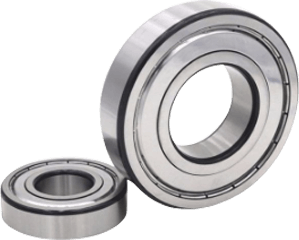
Stainless steel thin walled bearings are widely specified in industries where corrosion resistance, hygiene, and dimensional stability are as critical as mechanical accuracy. In Europe and North America, OEM manufacturers in medical equipment, food processing, robotics, semiconductor machinery, and precision automation often face a key material decision at the early design stage: whether to use 304 or 316 stainless steel.
Both materials are commonly applied in High Precision Thin Walled Bearings, yet their performance characteristics differ in ways that can significantly affect bearing life, reliability, and total cost of ownership. Understanding these differences is essential for engineers and sourcing teams who must balance performance requirements with budget constraints.
Thin walled bearings, also known as thin section bearings, are defined by their reduced radial cross section. This design minimizes weight and installation space, but it also leaves less margin for material-related variability. As a result, material selection has a more pronounced impact on performance than in standard bearing designs.
In precision systems, bearings must maintain geometry under load, resist environmental exposure, and operate smoothly over long duty cycles. Material properties such as corrosion resistance, hardness response to heat treatment, and resistance to surface damage all influence whether a bearing performs as intended. This is especially true for Thin Walled Bearings used in compact or sealed assemblies where replacement is costly.
The most fundamental difference between 304 and 316 stainless steel lies in their chemical composition.
304 stainless steel contains chromium and nickel, providing good general corrosion resistance in most indoor and dry industrial environments. It performs well in applications with limited exposure to moisture or chemicals and is widely used in standard industrial equipment.
316 stainless steel includes the addition of molybdenum, which significantly improves resistance to pitting and crevice corrosion. This makes 316 more suitable for environments involving chlorides, cleaning agents, or high humidity. In cleanroom, medical, or food-related applications, 316 is often specified to ensure long-term stability and compliance with hygiene standards.
From a structural standpoint, both 304 and 316 can be manufactured into thin section bearings with high dimensional accuracy. However, subtle differences in mechanical behavior become important in precision applications.
304 stainless steel typically offers slightly higher hardness potential after heat treatment, which can be beneficial for wear resistance in controlled environments. For applications with stable temperature and minimal chemical exposure, 304-based bearings can deliver reliable performance at a lower material cost.
316 stainless steel, while marginally softer in some conditions, provides better stability when exposed to fluctuating environments. For bearings operating in wash-down areas, vacuum systems, or chemically active settings, 316 helps maintain surface integrity over time, reducing the risk of micro-pitting that can affect precision motion. In this sense, both materials support the requirements of Precision Bearings, but under different operating assumptions.
Manufacturing thin walled bearings from stainless steel presents unique challenges regardless of material grade. Reduced wall thickness amplifies the effects of machining stress, heat treatment distortion, and surface finishing quality.
For 304 stainless steel, process control focuses on achieving consistent hardness while maintaining dimensional accuracy. For 316 stainless steel, additional attention is required to manage grinding behavior and surface finish, as the material’s corrosion-resistant properties influence machinability.
In both cases, precision grinding, controlled heat treatment, and thorough inspection are essential. Manufacturers supplying OEM programs must demonstrate repeatable process capability to ensure that material differences do not translate into performance variation across production batches.
Choosing between 304 and 316 stainless steel thin walled bearings should be driven by application environment rather than material preference alone.
304 stainless steel is typically suitable for:
Indoor automation equipment
Robotics operating in dry environments
Precision instruments with limited environmental exposure
316 stainless steel is preferred for:
Medical and laboratory equipment
Food and packaging machinery with frequent cleaning
Semiconductor and cleanroom systems
Coastal or high-humidity industrial environments
In many cases, OEMs specify 316 not because of higher mechanical load, but because environmental reliability outweighs the marginal increase in material cost.
One frequent issue is over-specification. Using 316 stainless steel where 304 would perform adequately can increase cost without delivering meaningful benefits. Conversely, under-specifying material can lead to premature bearing degradation, especially in environments involving moisture or chemicals.
Another common challenge involves assuming that material choice alone guarantees performance. Even the correct stainless grade cannot compensate for improper mounting, insufficient housing stiffness, or incorrect preload. Thin walled designs magnify these issues, making system-level engineering just as important as material selection.
For OEM customers, selecting a bearing supplier capable of producing both 304 and 316 thin section bearings is a strategic advantage. Key evaluation factors include:
Experience with stainless thin-section manufacturing
Ability to control tolerances across different materials
Material traceability and certification
Engineering support during design validation
Consistency across global supply programs
A supplier that understands how material behavior interacts with thin section geometry can help prevent costly redesigns later in the project lifecycle.
As equipment becomes more compact and specialized, demand for application-specific bearing materials continues to grow. Hybrid solutions, surface treatments, and improved inspection technologies are helping manufacturers optimize performance regardless of whether 304 or 316 is selected.
At the same time, OEMs are increasingly data-driven in material selection, evaluating lifecycle cost rather than initial price. This approach reinforces the importance of understanding how material choice affects long-term performance in High Precision Thin Walled Bearings.
Is 316 stainless steel always better than 304 for thin walled bearings?
No. 316 is better for corrosive or hygienic environments, but 304 is often sufficient for dry, controlled conditions.
Does material choice affect bearing accuracy?
Indirectly. Material influences surface stability and wear resistance, which can affect accuracy over time.
Can the same bearing design be produced in both materials?
Yes, but manufacturing parameters may need adjustment to maintain consistent performance.
By carefully comparing 304 and 316 stainless steel in the context of thin section bearing design, OEM engineers can make informed decisions that balance performance, reliability, and cost—ensuring long-term success in precision industrial applications.

Vincent Liang

+86 137 5749 2228

liangzexi@cxbearings.cn

No.195, Dongshaobei Road, Jiangbei District, Ningbo City, Zhejiang Province, China


Copyright © Zhejiang Dacheng Precision Machinery Co., Ltd. All Rights Reserved.

