 DACHENG PRECISION MACHINERY

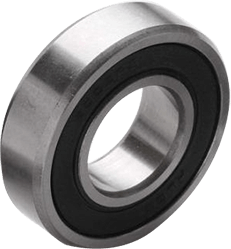
In industrial environments where corrosion resistance, cleanliness, and dimensional stability are critical, standard bearing materials often fail to meet long-term performance requirements. This is particularly true in sectors such as medical equipment, food processing, semiconductor manufacturing, and advanced automation.
As a result, demand for 316 stainless steel High Precision Thin Walled Bearings has grown steadily in the European and North American markets. OEM manufacturers increasingly specify 316 stainless material not only for corrosion resistance, but also for reliability under strict hygiene, chemical exposure, and controlled-environment conditions.
Thin walled bearing designs further support modern equipment trends by enabling compact structures without compromising motion accuracy.
Thin walled bearings, also known as thin section bearings, are characterized by a reduced radial cross section relative to the bore diameter. Unlike conventional bearings, their cross section remains nearly constant across different sizes, allowing engineers to scale designs without increasing system envelope dimensions.
When manufactured from 316 stainless steel, these bearings provide enhanced resistance to:
Corrosive media
High humidity
Cleaning chemicals
Mild acids and chlorides
Compared with 304 stainless steel, 316 offers improved pitting resistance due to its molybdenum content, making it a preferred material for demanding industrial applications.
316 stainless thin walled bearings are designed to minimize weight and inertia while maintaining sufficient load capacity. This is especially important in rotating assemblies where dynamic response and energy efficiency are critical.
As part of the Precision Bearings category, these bearings are manufactured with tight control over:
Raceway geometry
Radial and axial runout
Internal clearance or preload
Such control ensures smooth rotation, stable torque, and repeatable positioning, even in compact assemblies.
Depending on configuration, thin walled bearings can support:
Radial loads
Axial loads
Combined loads using angular contact designs
This flexibility allows integration into a wide range of OEM systems.
316 stainless steel provides:
Excellent corrosion resistance
Good mechanical strength
Stable performance across a wide temperature range
Material selection is particularly important for thin section designs, where wall thickness leaves less margin for material inconsistency.
Producing high-precision thin walled bearings requires specialized manufacturing capabilities:
CNC grinding of inner and outer raceways
Controlled heat treatment to balance hardness and toughness
Superfinishing to reduce friction and wear
Dimensional inspection using high-accuracy measuring equipment
Consistent process control is essential to ensure repeatability across production batches, especially for OEM supply programs.
Several factors directly influence the performance and service life of 316 stainless thin walled bearings:
Dimensional Accuracy: Even minor deviations can affect preload and system stiffness.
Surface Finish: Smooth raceways reduce friction and noise while improving fatigue life.
Internal Clearance Control: Incorrect clearance can lead to overheating or reduced accuracy.
Housing and Shaft Fit: Thin sections are more sensitive to deformation caused by improper mounting.
Understanding these factors is critical for successful application in precision equipment.
For industrial OEM applications, common bore sizes typically range from 5mm to 50mm, covering:
Small precision instruments
Compact automation modules
Robotic joints and rotary systems
Beyond standard sizes, customization is often required for:
Non-standard dimensions
Special tolerance classes
Specific lubrication or sealing requirements
Thin walled bearings are frequently customized to match exact system constraints rather than adapted from catalog designs.
Used in imaging systems, diagnostic devices, and surgical equipment where cleanliness and corrosion resistance are mandatory.
Preferred for wafer handling systems and precision stages operating in controlled environments.
Suitable for applications exposed to frequent wash-downs and aggressive cleaning agents.
Integrated into compact joints and motion modules where corrosion resistance and accuracy must coexist.
In these sectors, Thin Walled Bearings enable compact design while supporting high-performance motion control.
Choosing a manufacturer for 316 stainless thin walled bearings requires evaluation beyond basic specifications. OEM customers typically assess:
Experience with stainless thin-section manufacturing
Capability for small-batch and mass production
Material traceability and quality documentation
Engineering support during design and validation phases
Stable export and logistics processes for EU and US markets
A qualified manufacturer acts as a long-term technical partner rather than a simple component supplier.
As industrial systems continue to evolve toward higher precision and compactness, the use of stainless thin walled bearings is expected to expand. Trends include:
Increased customization for specific operating environments
Tighter tolerance requirements driven by automation and robotics
Greater emphasis on material traceability and process transparency
Within this context, High Precision Thin Walled Bearings manufactured from 316 stainless steel are positioned as a key enabling component for next-generation equipment.
Is 316 stainless steel always better than 304 for thin walled bearings?
Not always. 316 is preferred in corrosive or cleanroom environments, while 304 may be sufficient for general industrial use.
Are thin walled bearings suitable for high-speed operation?
Yes, when correctly designed and lubricated, they can operate reliably at high speeds.
What is the most common application issue?
Improper mounting or insufficient housing stiffness is a frequent cause of performance problems.

Vincent Liang

+86 137 5749 2228

liangzexi@cxbearings.cn

No.195, Dongshaobei Road, Jiangbei District, Ningbo City, Zhejiang Province, China


Copyright © Zhejiang Dacheng Precision Machinery Co., Ltd. All Rights Reserved.

