 DACHENG PRECISION MACHINERY

Industrial equipment is increasingly expected to operate in environments that combine precision requirements with exposure to moisture, chemicals, or frequent wash-down cycles. This is particularly true in sectors such as food processing, medical equipment, packaging, laboratory automation, and certain clean manufacturing environments. In these applications, corrosion resistance is no longer a secondary consideration; it is a core design requirement.
As a result, demand has grown for stainless steel bearings that can deliver both durability and dimensional accuracy. Among available material options, 304 stainless steel has become a widely specified choice when moderate corrosion resistance must be combined with stable performance. When manufactured to high tolerance grades, 304 stainless bearings extend the application range of High Precision Deep Groove Ball Bearings into environments where traditional chrome steel solutions are unsuitable.
Selecting a 304 high precision deep groove ball bearing involves balancing material properties with precision requirements. Type 304 stainless steel is an austenitic alloy known for its corrosion resistance, good formability, and non-magnetic characteristics in most conditions. However, it has lower hardness and fatigue strength compared to bearing-grade chrome steel.
Precision grades such as P5 or P4 compensate for some of these limitations by tightening dimensional tolerances, reducing runout, and improving surface geometry. Within the broader category of Deep Groove Ball Bearings, high-precision stainless variants are typically chosen for applications where environmental resistance and smooth operation are more critical than maximum load capacity.
Understanding this trade-off is essential. 304 stainless precision bearings are not intended as direct replacements for chrome steel bearings in heavily loaded or shock-prone systems, but rather as optimized solutions for specific operating conditions.
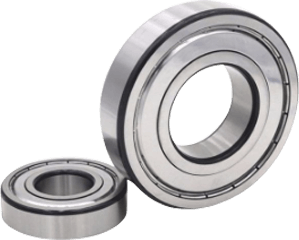
Structurally, 304 high precision deep groove ball bearings follow the same fundamental design as standard bearings: inner ring, outer ring, rolling elements, cage, and optional seals or shields. The key differences lie in material processing and finishing.
The use of 304 stainless steel requires careful control during machining and heat treatment. Unlike martensitic stainless steels, 304 cannot be hardened through conventional heat treatment, so achieving dimensional stability depends heavily on process control and cold working techniques. Precision grinding and superfinishing are therefore critical to achieving the required surface roughness and raceway geometry.
Balls are typically produced from stainless steel of compatible composition to minimize galvanic effects. Cage materials are selected based on operating temperature and cleanliness requirements, with polymer cages often preferred in hygienic environments. These manufacturing practices align stainless variants with the expectations placed on Precision Ball Bearings, even though material properties differ from traditional bearing steels.
Several factors should be evaluated when selecting 304 high precision bearings:
Load conditions: Lower fatigue strength limits suitability for high-load or shock applications.
Operating speed: Precision grades support smooth rotation, but speed limits may be lower than chrome steel equivalents.
Lubrication compatibility: Grease selection must consider wash-down resistance and chemical exposure.
Internal clearance: Correct clearance is essential to avoid excessive heat or instability.
Surface finish quality: Poor finishing has a greater impact in stainless bearings due to lower material hardness.
Ignoring these factors can result in premature wear or unexpected performance degradation, even when corrosion resistance is adequate.
Not all bearing suppliers have equivalent experience with precision stainless steel production. Selecting a suitable supplier involves assessing process capability rather than relying solely on material declarations. Buyers should look for documented control of grinding accuracy, runout measurement, and cleanliness standards.
Traceability and material certification are particularly important in regulated industries such as food processing or medical equipment. Suppliers capable of providing inspection data and consistent batch quality are better positioned to support long-term programs. From a supply chain perspective, stable availability of 304 stainless raw material and repeatable manufacturing processes reduce the risk of performance variation over time.
A frequent question is whether 304 stainless bearings can fully replace chrome steel precision bearings. In practice, the answer depends on operating conditions. While corrosion resistance is significantly improved, load ratings are typically lower, and service life under high stress may be reduced.
Another common challenge involves sealing choices. Open bearings offer lower friction but limited protection, while sealed designs improve contamination resistance at the cost of higher torque. Selecting the right balance is essential, particularly in high-speed applications.
There is also occasional confusion between 304 and 440 stainless steels. While 440 offers higher hardness, it provides less corrosion resistance in certain environments, making 304 preferable in applications involving moisture or aggressive cleaning agents.
304 high precision deep groove ball bearings are widely used in food and beverage processing equipment, where resistance to water and cleaning chemicals is critical. In medical and laboratory devices, their smooth operation and corrosion resistance support reliable performance in sterile environments.
Packaging machinery and pharmaceutical production lines also benefit from stainless precision bearings, particularly in components exposed to frequent cleaning cycles. In these cases, the combination of dimensional accuracy and environmental durability directly contributes to reduced downtime and maintenance effort.
These examples demonstrate how High Precision Deep Groove Ball Bearings made from 304 stainless steel serve niche but essential roles in modern industrial systems.
Looking ahead, demand for corrosion-resistant precision bearings is expected to grow alongside stricter hygiene regulations and increased automation in sensitive industries. Manufacturers are investing in improved surface finishing techniques and advanced lubrication solutions to extend the service life of stainless bearings under demanding conditions.
At the same time, system-level design is becoming more data-driven. Engineers increasingly rely on accurate bearing performance data to support predictive maintenance and reliability modeling. This places greater emphasis on consistency and transparency throughout the supply chain.
As industrial environments continue to diversify, the ability to correctly select and apply 304 high precision deep groove ball bearings will remain an important engineering skill. Success depends on understanding material limitations, precision requirements, and real operating conditions rather than relying on nominal specifications alone.

Vincent Liang

+86 137 5749 2228

liangzexi@cxbearings.cn

No.195, Dongshaobei Road, Jiangbei District, Ningbo City, Zhejiang Province, China


Copyright © Zhejiang Dacheng Precision Machinery Co., Ltd. All Rights Reserved.

