 DACHENG PRECISION MACHINERY

Across industrial automation, medical devices, robotics, and compact drive systems, equipment designers are under constant pressure to reduce size while maintaining or improving performance. Space constraints have become a defining factor in modern mechanical design, particularly in applications where multiple functional components must be integrated into limited volumes. Within this context, thin-walled bearings have emerged as a practical solution, allowing engineers to achieve high rotational accuracy without increasing envelope dimensions.
Stainless steel further expands the applicability of these bearings in environments that demand corrosion resistance, cleanliness, or stable performance under varying operating conditions. As a result, demand continues to grow for thin-walled Precision Grade Stainless Steel Bearings that support compact design strategies without compromising reliability.
Thin-walled bearings are defined by a reduced cross-sectional thickness relative to their bore diameter. This geometry minimizes radial space requirements while maintaining functional load capacity. However, thinner sections also reduce structural rigidity, making precision manufacturing essential.
Precision grade bearings are produced to tighter tolerance classes, controlling parameters such as roundness, raceway geometry, and radial runout. In thin-walled designs, these parameters become even more critical. Small deviations can lead to deformation under load, increased friction, or unstable rotation. Stainless steel adds complexity due to its different elastic and thermal properties compared to conventional bearing steels, requiring careful control throughout the production process.
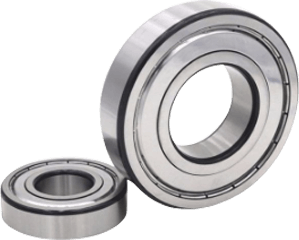
The basic structure of a thin-walled bearing includes inner and outer rings, rolling elements, and a cage, similar to standard deep groove designs. The difference lies in the reduced wall thickness of the rings, which demands high material integrity and dimensional accuracy.
Martensitic stainless steels are commonly used because they can be heat-treated to achieve sufficient hardness and fatigue resistance while offering corrosion protection. Manufacturing begins with precision machining or cold forming, followed by controlled heat treatment to ensure uniform hardness across thin sections. Raceway grinding and superfinishing are critical steps, as surface quality directly affects friction and wear.
Assembly often involves selective matching of components to achieve target internal clearance. This process helps compensate for the reduced stiffness inherent in thin-walled designs. When executed correctly, these Stainless Steel Ball Bearings deliver smooth rotation and consistent performance in compact assemblies.
Several factors have a pronounced impact on thin-walled bearing performance:
Ring rigidity: Thin sections are more sensitive to housing and shaft tolerances, making system-level fit critical.
Internal clearance: Clearance must account for thermal expansion and mounting interference.
Surface finish: Fine finishes reduce stress concentrations and improve lubrication stability.
Cage design: Lightweight, stable cages help maintain rolling element guidance at higher speeds.
For compact equipment, these factors must be considered during the early design phase rather than treated as secondary details.
OEMs sourcing thin-walled bearings typically prioritize suppliers with demonstrated experience in precision manufacturing and small cross-section designs. Process control capability is a key differentiator, particularly in grinding, heat treatment, and inspection.
Advanced measurement systems for roundness, wall thickness uniformity, and vibration are essential to ensure consistent quality. In regulated industries, traceability of materials and process parameters also plays a significant role in supplier evaluation. Reliable suppliers of High Quality Bearings support design validation and long-term production stability.
A frequent challenge with thin-walled bearings is sensitivity to mounting conditions. Excessive press fits or housing distortion can significantly reduce bearing life or increase running torque. Engineers must carefully specify tolerances and assembly methods to avoid unintended preload.
Another common issue is misalignment. Because thin rings are less forgiving, shaft and housing alignment becomes more critical than in standard bearings. Lubrication selection also requires attention, as inadequate lubrication can quickly lead to wear in compact, high-speed environments.
Thin-walled precision stainless bearings are widely applied in:
Medical imaging and diagnostic equipment with strict space constraints
Robotics and automation joints requiring compact, accurate motion
Aerospace and instrumentation systems where weight and size are limited
Compact electric motors and gear units in industrial electronics
In these applications, bearing accuracy directly influences system efficiency, noise levels, and operational stability.
The push toward higher integration and multifunctional components continues to shape bearing design. Thin-walled bearings are increasingly specified alongside lightweight housings and advanced materials to reduce overall system mass. At the same time, inspection technology and digital quality control are enabling tighter tolerances and better predictability.
Material development and surface treatment innovations are expected to further enhance fatigue performance and corrosion resistance. As compact design remains a priority across industries, thin-walled precision stainless bearings will play an expanding role in enabling efficient and reliable mechanical systems.
Are thin-walled bearings suitable for heavy loads?
They are best suited for moderate loads where space constraints outweigh maximum load capacity requirements.
Do thin-walled bearings require special mounting practices?
Yes. Careful control of fits and alignment is essential to avoid distortion and maintain performance.
Can stainless thin-walled bearings operate at high speed?
With appropriate clearance, lubrication, and cage design, they can perform reliably in high-speed compact applications.

Vincent Liang

+86 137 5749 2228

liangzexi@cxbearings.cn

No.195, Dongshaobei Road, Jiangbei District, Ningbo City, Zhejiang Province, China


Copyright © Zhejiang Dacheng Precision Machinery Co., Ltd. All Rights Reserved.

