 DACHENG PRECISION MACHINERY

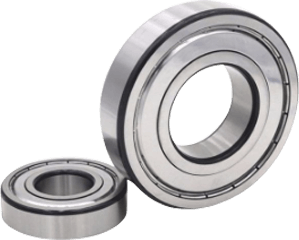
Industrial equipment manufacturers are under constant pressure to deliver higher efficiency, longer service life, and predictable performance while controlling total system cost. In sectors such as automation, material handling, power transmission, and process equipment, bearings are no longer treated as interchangeable commodities. Instead, they are increasingly engineered as functional elements within a broader mechanical system. This shift has driven growing demand for OEM-specific solutions, particularly High Precision Deep Groove Ball Bearings designed to meet defined operating conditions rather than generic catalog values.
For OEMs serving European and North American markets, equipment reliability and lifecycle consistency are critical. Warranty exposure, downtime costs, and compliance with international standards all influence bearing selection. As a result, customized precision bearings have become an integral part of industrial equipment design strategies.
OEM high precision deep groove ball bearings differ from standard products primarily in tolerance control, internal geometry, and application-specific optimization. Precision grades such as P5 or P4 reduce dimensional variation, radial runout, and axial runout, directly influencing vibration behavior and thermal stability.
Within the family of Deep Groove Ball Bearings, precision OEM variants are valued for their versatility. They can accommodate radial loads and moderate axial loads while maintaining low friction and compact design. For industrial equipment that operates continuously or under variable speed conditions, this balance simplifies mechanical layouts and reduces sensitivity to alignment errors.
The OEM approach emphasizes system integration. Bearings are specified in relation to shaft fits, housing materials, lubrication methods, and expected load spectra rather than as isolated components.
Structurally, OEM precision bearings retain the classic deep groove configuration: inner ring, outer ring, rolling elements, cage, and optional sealing. Performance differentiation arises from material selection and manufacturing discipline.
High-grade chrome steel is widely used due to its fatigue resistance and ability to maintain dimensional stability after heat treatment. In environments with moisture, chemicals, or strict hygiene requirements, stainless steel alternatives may be selected. Heat treatment processes are tightly controlled to ensure uniform hardness and minimal residual stress, both of which are critical for long-term stability.
Manufacturing involves multi-stage grinding and superfinishing of raceways to achieve low surface roughness and minimal waviness. Ball diameter variation is controlled at micron levels, and cage designs are chosen based on speed, load, and lubrication strategy. These processes place OEM products within the broader category of Precision Ball Bearings, where consistency and predictability are as important as nominal accuracy.
Several key factors determine whether an OEM precision bearing performs as intended in industrial equipment:
Internal clearance or preload: Must be matched to operating temperature and fit conditions.
Lubrication compatibility: Grease type or oil system must align with speed and duty cycle.
Surface integrity: Raceway finish affects noise, vibration, and lubricant film formation.
Mounting conditions: Shaft and housing tolerances influence bearing geometry under load.
Environmental exposure: Contamination, humidity, and electrical currents can accelerate wear.
OEMs often conduct system-level validation to ensure that these variables are controlled throughout the equipment lifecycle.
Selecting a bearing supplier for OEM programs involves more than verifying product dimensions. Manufacturers typically evaluate process capability, quality management systems, and long-term consistency. The ability to maintain tight tolerances across large production volumes is essential.
Documentation and traceability are also critical. OEM customers often require material certificates, inspection reports, and change management procedures. Engineering support plays an important role, particularly during the design and validation phases, where bearing parameters may be adjusted to optimize system performance.
Reliable logistics and stable lead times are equally important, as industrial equipment production schedules depend on predictable component availability. Suppliers that understand OEM workflows and can support phased product launches are better positioned for long-term partnerships.
One recurring challenge in OEM projects is balancing precision with cost targets. Over-specifying bearing accuracy can increase cost without delivering proportional performance benefits. Conversely, insufficient precision may lead to vibration, noise, or early failure in service.
Another common issue is misalignment between design assumptions and real operating conditions. Bearings selected based on nominal loads may experience higher dynamic stresses due to transient events or installation variability. This underscores the importance of realistic application data during the specification process.
OEM high precision deep groove ball bearings are widely used in industrial motors, gear units, conveyors, pumps, compressors, and automated handling systems. In motor-driven equipment, improved runout control reduces noise and enhances energy efficiency. In automation systems, precision bearings support repeatable positioning and smooth motion over extended duty cycles.
In process industries, such as packaging or material handling, OEM-specific bearing designs help extend maintenance intervals and reduce unplanned downtime. These examples highlight how tailored bearing solutions contribute to overall equipment effectiveness rather than acting as standalone components.
The future of OEM precision bearings is closely linked to broader industrial trends. Increased automation and digitalization are driving demand for predictable mechanical behavior that supports condition monitoring and predictive maintenance. Bearings with consistent vibration signatures and thermal characteristics are essential for reliable data interpretation.
Sustainability considerations are also influencing design choices. Lower friction, longer service life, and optimized lubrication contribute to reduced energy consumption and material waste. Advances in surface finishing, cleaner steel production, and simulation-based design are enabling further performance gains.
As industrial equipment continues to evolve, OEM-focused High Precision Deep Groove Ball Bearings are expected to play an increasingly strategic role. Their value lies not only in dimensional accuracy, but in their ability to integrate seamlessly into complex systems and support long-term operational reliability.

Vincent Liang

+86 137 5749 2228

liangzexi@cxbearings.cn

No.195, Dongshaobei Road, Jiangbei District, Ningbo City, Zhejiang Province, China


Copyright © Zhejiang Dacheng Precision Machinery Co., Ltd. All Rights Reserved.

