 DACHENG PRECISION MACHINERY

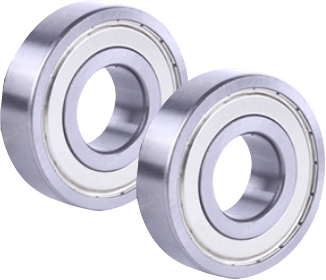
Over the past two decades, China has evolved from a volume-driven bearing supplier to a critical manufacturing base for precision components serving global industrial markets. This shift has been driven by rising demand from Europe and North America for cost-efficient yet technically reliable bearings used in automation, electric motors, machine tools, and industrial equipment. Within this context, Chinese manufacturers of High Precision Deep Groove Ball Bearings have become increasingly relevant to OEMs and engineering procurement teams seeking scalable production without compromising performance requirements.
The market demand is shaped by several converging factors: higher operating speeds, tighter tolerances, energy efficiency regulations, and the need for stable long-term supply. As equipment becomes more compact and performance-sensitive, buyers are no longer focused solely on unit price but on consistency, traceability, and engineering capability across the supply chain.
A high-precision deep groove ball bearing is defined not by its basic geometry, but by its tolerance class, surface quality, and internal consistency. Precision grades such as P5 and P4 impose strict limits on dimensional variation, runout, and raceway geometry. Achieving these standards requires more than conventional mass production methods.
Chinese manufacturers operating in this segment have invested heavily in advanced grinding, superfinishing, and inspection technologies. Precision control of raceway waviness, ball diameter variation, and internal clearance is essential to meet the expectations associated with Precision Ball Bearings used in demanding industrial systems. These capabilities allow manufacturers to support applications where vibration, noise, and thermal behavior are tightly specified.
From a structural standpoint, deep groove ball bearings produced in China follow international standards for dimensions and load ratings. The differentiation lies in materials, process stability, and quality control. High-purity chrome steel remains the dominant material due to its fatigue resistance and suitability for high-speed operation. For specialized environments, such as corrosive or clean-room applications, stainless steel variants are also produced.
Manufacturing typically involves precision forging, controlled heat treatment, and multi-stage grinding. Raceway surfaces are superfinished to achieve low roughness and minimal waviness, enabling stable lubricant films during operation. Cage designs are selected based on speed and load conditions, with options including pressed steel, machined brass, and engineered polymers.
Advanced manufacturers integrate in-process measurement systems and post-production inspection for runout, noise, and vibration. These steps are critical in ensuring that bearings classified as high precision perform consistently once installed.
Several factors determine whether a Chinese-made precision bearing meets international performance expectations:
Material cleanliness: Inclusion control in steel directly affects fatigue life.
Heat treatment stability: Variations can lead to dimensional drift under operating temperatures.
Grinding accuracy: Raceway geometry has a direct impact on vibration and noise.
Clean assembly conditions: Contamination at micron level can negate precision benefits.
Internal clearance control: Incorrect clearance selection affects preload and thermal behavior.
Buyers evaluating Chinese suppliers increasingly focus on these technical aspects rather than nominal specifications alone.
Choosing a reliable manufacturer in China requires a structured evaluation process. Beyond catalog data, OEMs and distributors typically assess process capability, quality management systems, and inspection methods. Certifications such as ISO 9001 are often considered baseline requirements rather than differentiators.
Equally important is supply chain transparency. Consistent sourcing of raw materials, documented production batches, and traceability systems support long-term cooperation. For global customers, communication capability, engineering support, and responsiveness to technical inquiries are also key selection criteria.
Manufacturers that can demonstrate stable batch-to-batch performance and provide detailed quality documentation are better positioned to support long-term OEM programs involving Deep Groove Ball Bearings for precision applications.
One common concern among international buyers is variability between production batches. While first samples may meet specifications, long-term consistency is critical for industrial applications. This highlights the importance of statistical process control and continuous monitoring.
Another challenge is aligning tolerance expectations. Differences between ISO, DIN, and customer-specific standards can lead to misunderstandings if not clearly defined at the quotation stage. Logistics and lead time stability are also recurring topics, particularly in projects with tight production schedules.
High-precision deep groove ball bearings manufactured in China are widely used in electric motors, industrial automation equipment, pumps, compressors, and auxiliary spindle systems. In motor applications, improved runout control reduces noise and energy loss. In automation, precision bearings contribute to repeatable motion and reduced maintenance intervals.
Some manufacturers also support customized solutions for robotics, medical devices, and precision instruments, where compact design and smooth operation are essential. These use cases demonstrate the expanding role of Chinese suppliers beyond commodity production.
The future development of China’s precision bearing manufacturing sector is closely tied to global industrial trends. Increased automation within factories, adoption of digital quality monitoring, and cleaner steel production are all contributing to higher consistency and performance. Manufacturers are also investing in simulation and testing capabilities to better align bearing design with application-specific requirements.
As global equipment standards continue to rise, Chinese manufacturers capable of producing High Precision Deep Groove Ball Bearings to international expectations are likely to play an increasingly important role in global supply chains. The focus is shifting from price-driven sourcing toward partnerships based on engineering competence, reliability, and long-term value.

Vincent Liang

+86 137 5749 2228

liangzexi@cxbearings.cn

No.195, Dongshaobei Road, Jiangbei District, Ningbo City, Zhejiang Province, China


Copyright © Zhejiang Dacheng Precision Machinery Co., Ltd. All Rights Reserved.

