 DACHENG PRECISION MACHINERY

In many industrial sectors, bearing selection has become a strategic engineering decision rather than a routine purchasing task. Medical equipment, food and pharmaceutical machinery, marine systems, and chemical processing installations are all exposed to moisture, aggressive cleaning agents, or corrosive media. At the same time, these systems increasingly demand compact designs, low vibration, and stable rotational accuracy.
This combination of environmental and performance requirements has driven growing interest in 316L stainless steel bearings with enhanced dimensional precision. Compared with conventional bearing steel, 316L offers superior corrosion resistance, while precision manufacturing ensures predictable motion behavior. For global B2B engineers and technical buyers, understanding how to select the right 316L bearing is essential to balancing reliability, compliance, and total lifecycle cost.
316L stainless steel is a low-carbon austenitic alloy containing molybdenum, which improves resistance to pitting and crevice corrosion. The low carbon content reduces the risk of carbide precipitation, making the material suitable for frequent washdown, sterilization, and chloride-rich environments. These characteristics explain its widespread use in regulated industries where surface integrity and cleanliness are critical.
From a mechanical perspective, deep groove geometry allows bearings to support radial loads efficiently while accommodating moderate axial loads in both directions. When manufactured as High Precision Deep Groove Ball Bearings, tighter tolerances on raceway geometry, ball roundness, and internal clearance result in reduced runout, lower vibration, and smoother rotation. This precision is particularly valuable in applications where positioning accuracy, noise control, or repeatability directly affect system performance.
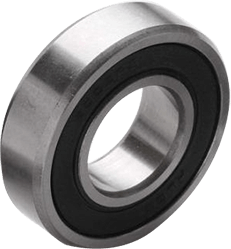
The basic structure includes inner and outer rings, rolling elements, and a cage to guide motion and maintain spacing. In 316L bearings, rings and balls are typically produced from the same stainless alloy to ensure uniform corrosion resistance. Cage materials may vary depending on speed, lubrication method, and cleanliness requirements, with designs optimized to promote stable lubricant flow.
Manufacturing precision bearings from 316L requires strict process control. Unlike traditional bearing steel, 316L does not achieve very high hardness, so dimensional stability and surface quality become even more important. Heat treatment is carefully managed to balance toughness and wear resistance without introducing distortion. Raceway grinding and superfinishing are applied to achieve low surface roughness, supporting stable lubrication films and consistent torque characteristics. Each production stage is verified through dimensional inspection and rotational testing to ensure compliance with specified tolerance classes.
Several interdependent factors influence how 316L precision bearings perform in service. Internal clearance selection is critical, as it affects load distribution, friction, and thermal behavior. Insufficient clearance can lead to elevated temperatures, while excessive clearance may result in vibration or reduced positioning accuracy.
Surface finish quality directly impacts wear resistance and lubrication behavior, particularly in high-speed or low-noise environments. Lubrication choice is equally important; many applications require food-grade, medical-grade, or cleanroom-compatible lubricants. Even well-manufactured Precision Ball Bearings can experience premature failure if lubrication is mismatched to operating conditions.
Installation accuracy also plays a decisive role. Improper fits, housing deformation, or misalignment can distort bearing rings and compromise precision performance. Controlled mounting procedures and alignment checks are therefore essential parts of the selection process.
When sourcing 316L precision bearings, buyers should look beyond dimensional specifications. Supplier evaluation should include material traceability, documented quality control systems, and inspection capabilities such as vibration and rotational accuracy testing. Consistent manufacturing processes and batch-to-batch repeatability are especially important for industries with long validation cycles.
Engineering support is another key consideration. Suppliers who can advise on clearance selection, lubrication compatibility, and installation practices reduce design risk and shorten development timelines. Long-term availability and specification stability are also critical, as many systems using Deep Groove Ball Bearings remain in service for extended periods with limited design changes.
A frequent misconception is that corrosion resistance alone determines bearing suitability. While 316L performs well in aggressive environments, it may not be ideal for very high loads or extreme speeds, where hardened bearing steel or hybrid designs offer better fatigue performance. Another common issue is underestimating the influence of housing stiffness and shaft tolerances on bearing behavior, particularly in compact assemblies.
In regulated industries, documentation and cleanliness requirements can present additional challenges. Variations in surface finish, lubricant specification, or packaging cleanliness may lead to extended qualification or revalidation efforts if not addressed early in the selection process.
316L precision deep groove bearings are widely used in medical imaging systems, laboratory automation, and surgical devices, where smooth motion and corrosion resistance are essential. In food and pharmaceutical processing equipment, these bearings support rotating components exposed to frequent washdown without compromising hygiene standards. Marine instrumentation and chemical handling systems also benefit from the alloy’s resistance to saltwater and corrosive agents.
In each case, the combination of material suitability and precision manufacturing enables reliable operation, reduced maintenance, and predictable service life.
As industries place greater emphasis on hygiene, sustainability, and equipment uptime, demand for corrosion-resistant precision bearings is expected to increase. Advances in surface finishing, lubrication technology, and manufacturing automation are improving the consistency and performance of stainless steel bearings. There is also growing interest in integrating precision bearings with condition monitoring systems to support predictive maintenance strategies.
Looking ahead, continued miniaturization and stricter regulatory requirements will further highlight the importance of systematic bearing selection as part of overall system engineering.
Is 316L always the optimal material choice?
316L offers excellent corrosion resistance, but material selection should also consider load, speed, and fatigue requirements.
Can 316L precision bearings operate at higher speeds?
They are suitable for moderate to high speeds when internal clearance and lubrication are correctly specified.
What most commonly limits bearing service life?
Installation accuracy and lubrication selection typically have a greater impact than material choice alone.
By applying a structured evaluation of operating conditions, material properties, manufacturing quality, and supplier capability, engineers and decision-makers can confidently select 316L precision bearings that meet both performance and compliance requirements in demanding industrial applications.

Vincent Liang

+86 137 5749 2228

liangzexi@cxbearings.cn

No.195, Dongshaobei Road, Jiangbei District, Ningbo City, Zhejiang Province, China


Copyright © Zhejiang Dacheng Precision Machinery Co., Ltd. All Rights Reserved.

