 DACHENG PRECISION MACHINERY

Across modern industries, equipment is expected to operate faster, quieter, and with greater energy efficiency than ever before. Electric motors, automation modules, medical instruments, and household appliances are all subject to stricter requirements for vibration control and acoustic comfort. At the same time, manufacturers must reduce maintenance costs and improve service life to remain competitive in global markets.
Within this context, bearing performance has become a decisive engineering factor. Even small variations in friction or noise can affect system efficiency, user experience, and long-term reliability. As a result, many OEMs are moving toward Low Friction Bearings specifically designed to reduce mechanical losses and suppress vibration in deep groove ball bearing applications. These solutions are increasingly specified during the design phase rather than treated as interchangeable commodity parts.
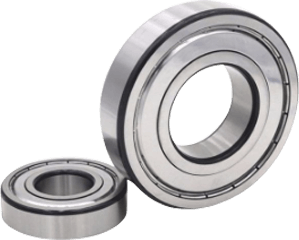
Deep groove ball bearings are widely used because of their versatility, ability to support radial and moderate axial loads, and relatively simple design. However, standard versions may generate noise or torque variation under high-speed or precision conditions.
Low-friction variants address these issues through optimized contact mechanics. By refining raceway geometry, controlling surface finish, and selecting suitable lubrication, engineers reduce sliding and micro-slip between balls and raceways. The outcome is lower running torque, less heat generation, and more stable rotational behavior.
For applications sensitive to sound or vibration, these improvements also translate into quieter operation. Bearings engineered for minimal friction often overlap in design philosophy with Low Noise Bearings, where reduced internal excitation limits vibration transmission to surrounding structures.
A typical deep groove ball bearing consists of an inner ring, outer ring, rolling elements, and a cage. For low-friction performance, each component is optimized beyond standard industrial tolerances.
Bearing rings are commonly produced from high-carbon chrome steel due to its fatigue strength and dimensional stability. In corrosive or hygienic environments, stainless steel is preferred. Rolling elements may be precision steel or ceramic; ceramic balls reduce mass and centrifugal forces, which can help maintain lower friction at higher speeds.
Manufacturing methods are equally critical. Raceway grinding and super-finishing reduce microscopic roughness that contributes to energy loss and noise. Tight control of roundness, waviness, and radial runout ensures consistent torque characteristics. Cage materials, often engineered polymers or lightweight metals, are selected to minimize drag while maintaining stability.
When these design and process controls are combined, the result is a deep groove bearing with measurable reductions in friction and acoustic output.
Several variables determine real-world performance:
Internal clearance and preload: Excess clearance may cause vibration, while excessive preload increases friction and temperature.
Lubrication strategy: Grease viscosity, oil film thickness, and additive selection directly affect torque and wear.
Surface integrity: Poor finishing or contamination increases noise and accelerates fatigue.
Installation accuracy: Misalignment or housing distortion can negate precision manufacturing benefits.
These factors demonstrate that achieving quiet and efficient operation depends not only on the bearing design but also on system integration.
From a procurement perspective, deep groove bearings are widely available, but low-friction, low-noise variants require specialized expertise. Supplier evaluation should include process capability, quality control procedures, and material traceability.
Consistent torque testing, vibration measurement, and life-cycle validation are indicators of a mature manufacturing process. Engineering support during design stages is also valuable, particularly when custom clearances, seals, or lubrication are required. For long-term OEM programs, stable production capacity and documented quality systems reduce operational risk.
Selecting a supplier solely on price may lead to variability in performance, which can ultimately increase maintenance or warranty costs.
One common issue is assuming that all deep groove bearings perform similarly. In practice, small differences in surface finish or lubrication can significantly affect noise and friction. Systems designed for quiet operation may suffer if standard components are substituted.
Another challenge involves balancing low friction with durability. Reducing grease viscosity or preload can lower torque but may compromise load capacity or fatigue life. Engineers must evaluate trade-offs carefully rather than optimizing a single parameter.
Contamination is also a frequent source of premature failure, especially in clean environments where particle generation must be minimized.
In electric motors and fans, low-friction designs reduce energy consumption and operating temperature, extending motor life. In medical or laboratory equipment, smoother rotation improves measurement accuracy and lowers audible noise. Automation systems benefit from predictable torque, which enhances servo control stability.
In such use cases, Low Friction Thin Bearings or compact deep groove solutions are often selected to meet both space and performance constraints. Their reduced resistance contributes directly to system responsiveness and reliability.
Market trends point toward hybrid materials, advanced coatings, and specialized lubricants aimed at further reducing friction and extending service intervals. Digital monitoring technologies are also emerging, allowing operators to track vibration and temperature in real time for predictive maintenance.
As machines become quieter and more energy efficient, demand for Low Friction Bearings tailored to deep groove configurations is expected to increase. Continuous improvements in manufacturing precision will likely further reduce variability and enhance consistency across production batches.
Do low-friction bearings always run quieter?
Not automatically. Proper lubrication, mounting accuracy, and system design are also essential for noise reduction.
Are ceramic rolling elements necessary?
They can improve high-speed or low-friction performance, but may not be required for moderate operating conditions.
Can standard bearings be upgraded easily?
Replacement is possible, but performance gains depend on compatibility with existing loads, lubrication, and housing design.
By understanding how friction, noise, and manufacturing quality interact, engineers and buyers can select bearing solutions that support reliable, quiet, and efficient operation in demanding deep groove ball bearing applications.

Vincent Liang

+86 137 5749 2228

liangzexi@cxbearings.cn

No.195, Dongshaobei Road, Jiangbei District, Ningbo City, Zhejiang Province, China


Copyright © Zhejiang Dacheng Precision Machinery Co., Ltd. All Rights Reserved.

