 DACHENG PRECISION MACHINERY

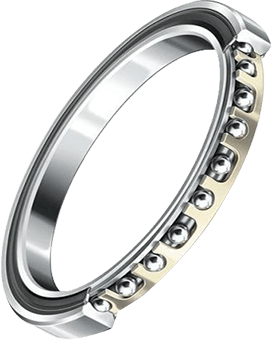
Across Europe and North America, electric motor manufacturers are facing increasing pressure to reduce operational noise while maintaining efficiency and service life. Regulatory limits on workplace noise, stricter appliance standards, and higher expectations from end users have made acoustic performance a key design parameter rather than a secondary consideration. In this context, Quiet Running Deep Groove Ball Bearings have become a critical component in low noise electric motors used in HVAC systems, household appliances, automation equipment, and medical devices.
Unlike traditional designs where vibration and sound were tolerated within broad limits, modern motor platforms require bearing solutions that deliver predictable acoustic behavior under varying speeds, loads, and thermal conditions. This shift has elevated bearing selection from a catalog decision to an engineering-driven process.
Bearing noise in electric motors originates from multiple sources: surface waviness of raceways, ball roundness deviation, internal clearance mismatch, lubricant shear, and resonance between bearing and housing. Deep groove ball bearings are widely used because of their simple geometry and ability to carry both radial and moderate axial loads. However, achieving low noise performance requires optimization far beyond standard dimensional tolerances.
Low noise bearing design focuses on micro-geometry control, optimized internal clearance (often C3 for motor applications), and stable lubrication films at operating speed. These measures are what differentiate engineered solutions from conventional Deep Groove Ball Bearings intended for general-purpose machinery.
Structurally, deep groove ball bearings consist of an inner ring, outer ring, rolling elements, cage, seals or shields, and lubricant. For quiet operation, each component must meet tighter specifications:
Materials: High-purity chrome steel such as GCr15 or SAE 52100 is commonly used for rings and balls due to its fatigue strength and consistent microstructure. In corrosive environments, stainless steel variants may be selected with careful trade-offs in noise behavior.
Raceway finishing: Superfinishing and controlled honing reduce surface waviness, directly lowering vibration excitation.
Ball quality: Higher-grade balls with minimal diameter variation and surface roughness are essential for stable rolling.
Cage design: Polyamide cages are often preferred in low noise motors because of their damping characteristics compared to steel cages.
Lubrication: Low noise greases with controlled base oil viscosity and thickener structure minimize shear noise and maintain consistency across temperature ranges.
Manufacturing processes emphasize cleanliness, process stability, and in-line inspection. Even minor contamination during assembly can translate into measurable acoustic defects in finished motors.
Several variables determine whether a bearing will meet low noise requirements in real-world motor applications:
Internal clearance selection aligned with operating temperature and shaft fit.
Sealing configuration (ZZ metal shields versus 2RS rubber seals), balancing noise, speed capability, and grease retention.
Housing and shaft tolerances, which can amplify or dampen bearing vibration.
Installation practices, including press-fit methods and alignment accuracy.
These factors explain why nominally identical bearings may perform very differently once installed.
For OEM motor manufacturers, choosing a bearing supplier is as much about process capability as product specification. Reliable suppliers of Deep Groove Ball Bearings for low noise applications typically demonstrate:
Documented acoustic testing methods and acceptance criteria
Traceability of raw materials and heat treatment batches
Consistent production lots with low variation
Engineering support for application-specific optimization
Long-term supply stability and quality consistency are often more critical than marginal unit cost differences.
Why does a motor become noisy after several months of operation?
In many cases, lubricant degradation or contamination leads to increased friction noise, even if the bearing itself remains structurally intact.
Is higher precision grade always quieter?
Not necessarily. Precision grades such as ABEC-5 improve dimensional accuracy but must be matched with appropriate clearance and lubrication to achieve low noise results.
Can low noise bearings operate at high speed?
Yes, provided the grease formulation, cage design, and thermal conditions are correctly engineered.
These questions highlight recurring pain points in motor noise troubleshooting.
Low noise bearing solutions are widely applied in brushless DC motors for ventilation fans, inverter-driven pumps, and precision actuators. In household appliances such as washing machines and refrigerators, Low Noise Ball Bearings contribute directly to perceived product quality. In medical and laboratory equipment, quiet operation is not only a comfort factor but a functional requirement.
The industry is moving toward integrated noise control, where bearings, housings, and motor electromagnetic design are optimized as a system. Digital vibration analysis and AI-assisted quality monitoring are increasingly used during production to detect micro-defects before assembly. At the same time, demand for energy-efficient motors is driving interest in lower friction bearing designs without compromising acoustic performance.
Looking ahead, advances in surface engineering, lubricant chemistry, and predictive testing will further refine Low Noise Ball Bearings for next-generation electric motors, supporting quieter, more efficient, and more reliable machines across global markets.

Vincent Liang

+86 137 5749 2228

liangzexi@cxbearings.cn

No.195, Dongshaobei Road, Jiangbei District, Ningbo City, Zhejiang Province, China


Copyright © Zhejiang Dacheng Precision Machinery Co., Ltd. All Rights Reserved.

