 DACHENG PRECISION MACHINERY

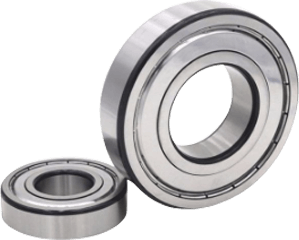
Across industrial automation, robotics, medical equipment, and semiconductor manufacturing, machine designers face a consistent challenge: achieving higher precision and efficiency within increasingly compact spaces. As systems become smaller and more integrated, traditional bearing solutions often introduce excess friction, heat generation, and energy loss. This has driven growing demand for Low Friction Thin Bearings, which are engineered to support smooth motion while minimizing cross-sectional size and mechanical resistance.
Global OEMs and equipment manufacturers are also under pressure to reduce total energy consumption, extend maintenance intervals, and improve positional accuracy. Bearings, though small relative to the overall system, have a measurable influence on all three. As a result, bearing selection has become a strategic engineering decision rather than a purely mechanical one.
At a fundamental level, thin bearings are rolling-element bearings designed with a very small radial cross section relative to their bore diameter. The defining feature is geometric efficiency: the bearing maintains a consistent cross-sectional height across different sizes, allowing designers to scale bore diameters without increasing envelope space.
Low friction performance is achieved through a combination of optimized raceway geometry, controlled internal clearances, and carefully selected rolling elements. In Low Friction Bearings, the rolling motion is engineered to reduce sliding, micro-slip, and internal drag. This results in lower starting torque, smoother rotation at low speeds, and reduced power loss during continuous operation.
When load is applied, forces are distributed evenly across the rolling elements, which minimizes localized stress and heat buildup. This balance is especially important in applications requiring precise motion control or frequent start-stop cycles.
Thin bearing structures typically consist of inner and outer rings, rolling elements (most commonly balls), and a cage that maintains spacing. Depending on the application, configurations may include deep groove, angular contact, or four-point contact designs.
Material selection plays a critical role in friction behavior. Bearing rings are often manufactured from high-purity chrome steel for load capacity and fatigue resistance, while stainless steel variants are used where corrosion resistance or cleanliness is required. Rolling elements may be steel or ceramic; ceramic balls, in particular, reduce centrifugal forces and are frequently used in high-speed or high-precision systems.
Manufacturing processes emphasize precision grinding, super-finishing of raceways, and strict dimensional control. Surface roughness at the microscopic level has a direct impact on friction and wear, making process consistency essential. Even minor deviations can affect torque stability and service life.
Several variables determine whether a thin bearing achieves low friction in real-world operation:
Internal clearance and preload: Too much clearance can lead to vibration, while excessive preload increases friction and heat.
Lubrication strategy: Grease formulations, oil viscosity, or solid lubricants must match speed, load, and environmental conditions.
Surface finish quality: Poor finishing increases micro-friction and accelerates wear.
Installation accuracy: Misalignment or housing distortion can negate the benefits of a precision bearing.
For engineers, understanding how these factors interact is as important as selecting the bearing type itself.
From a sourcing perspective, thin bearings are not commodity components. Supplier capability directly affects performance consistency. OEM buyers should evaluate manufacturers based on process control, inspection methods, and traceability of materials. Experience with thin-section geometries is particularly important, as tolerances are tighter than in standard bearing production.
Long-term supply stability, technical support during design phases, and the ability to customize clearances or lubrication are also key criteria. These considerations help reduce risk during product ramp-up and lifecycle management.
One frequent issue is underestimating operating conditions. Thin bearings are sometimes selected solely on size constraints, without sufficient analysis of load combinations or duty cycles. This can lead to premature wear or unstable torque behavior.
Another challenge involves lubrication compatibility. In clean-room or vacuum environments, conventional lubricants may outgas or degrade, compromising bearing performance. Addressing these constraints early in the design phase is essential.
Thin bearings are widely used in rotary tables, robotic joints, medical imaging systems, and precision positioning stages. In such systems, Thin Bearings allow designers to maintain structural stiffness while reducing overall mass and inertia. This directly improves responsiveness and control accuracy.
In semiconductor equipment, low friction designs contribute to smoother wafer handling and reduced particle generation. In medical devices, they support quiet operation and reliable performance under repeated sterilization cycles.
Looking ahead, demand is shifting toward hybrid designs, advanced coatings, and application-specific lubrication solutions. Digital monitoring and condition-sensing technologies are also being integrated into high-end bearing systems, enabling predictive maintenance.
As equipment continues to evolve toward higher precision and lower energy consumption, the role of Low Friction Thin Bearings will expand. Continued improvements in materials science and manufacturing accuracy are expected to further reduce friction while extending service life.
How do thin bearings differ from standard bearings?
They prioritize reduced cross section and optimized geometry, enabling compact designs without sacrificing rotational accuracy.
Are low friction designs suitable for heavy loads?
Yes, when properly specified. Load capacity depends on bearing type, material, and contact geometry.
Do ceramic rolling elements always reduce friction?
They reduce centrifugal effects and wear at high speeds, but benefits depend on operating conditions.

Vincent Liang

+86 137 5749 2228

liangzexi@cxbearings.cn

No.195, Dongshaobei Road, Jiangbei District, Ningbo City, Zhejiang Province, China


Copyright © Zhejiang Dacheng Precision Machinery Co., Ltd. All Rights Reserved.

