 DACHENG PRECISION MACHINERY

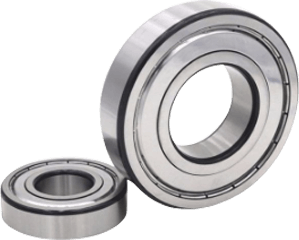
In modern mechanical and electromechanical systems, designers are under constant pressure to reduce size, weight, energy consumption, and friction—while maintaining or even increasing performance and reliability. As a result, low friction thin bearings have become a critical component in a wide range of high-precision and space-constrained applications.
From robotics and medical devices to semiconductor equipment and aerospace systems, thin section bearings with optimized friction characteristics enable smoother motion, higher efficiency, and longer service life. However, selecting the right low friction thin bearing is not a simple task. Engineers and procurement professionals must consider geometry, materials, lubrication, load conditions, manufacturing tolerances, and long-term reliability.
This guide provides a comprehensive technical and commercial overview of low friction thin bearings, designed specifically for:
Mechanical and design engineers
OEM project managers
Industrial procurement and sourcing teams
Equipment manufacturers and system integrators
Whether you are designing a new system or sourcing bearings for an existing application, this article will help you make informed decisions based on engineering principles and real-world manufacturing practices.
Low friction thin bearings—often referred to as thin section bearings—are rolling bearings characterized by a very small cross-sectional height relative to their bore diameter, combined with optimized internal design to minimize friction and torque.
Unlike standard deep groove ball bearings, thin section bearings maintain a constant cross-section across different bore sizes. This allows designers to increase shaft diameter and system stiffness without increasing the overall envelope size.
Low friction versions of thin bearings are specifically engineered to:
Reduce rolling resistance
Minimize startup and running torque
Improve motion accuracy
Lower energy consumption
These bearings are typically available in:
Deep groove thin section bearings
Angular contact thin bearings
Four-point contact thin section bearings
In high-speed or continuously operating systems, bearing friction directly translates into energy loss. Even small reductions in friction can result in:
Lower power consumption
Reduced heat generation
Improved overall system efficiency
This is particularly important in automation, robotics, and semiconductor equipment where energy efficiency is a key performance metric.
Low friction is essential for applications requiring:
Smooth, repeatable motion
Accurate positioning
Minimal hysteresis
Thin bearings with optimized friction are widely used in servo systems, direct drive motors, optical equipment, and precision measurement devices.
Lower friction reduces contact stress and surface wear, which:
Extends bearing service life
Reduces maintenance requirements
Improves long-term reliability
For OEMs supplying equipment with long warranty periods, this directly impacts total cost of ownership (TCO).
Precision-ground raceways with optimized curvature reduce sliding and micro-slip between rolling elements and raceways. Proper geometry ensures:
Stable rolling motion
Lower friction torque
Uniform load distribution
Most low friction thin bearings use precision-grade steel or ceramic balls. Ceramic balls offer:
Lower density
Reduced centrifugal force
Lower friction at high speeds
Hybrid thin bearings (steel rings + ceramic balls) are common in high-speed and high-precision applications.
The cage plays a critical role in friction performance. Advanced cage materials and designs:
Reduce ball-to-cage friction
Improve lubricant distribution
Enhance stability at high speeds
Common cage materials include polymer, phenolic resin, and precision-machined metal.
Chrome steel (GCr15 / 52100)
Excellent load capacity and fatigue resistance, widely used in industrial applications.
Stainless steel (440C, 304, 316)
Suitable for corrosive environments, medical devices, and clean room applications.
Steel balls
Cost-effective, reliable, and suitable for most applications.
Ceramic balls (Si₃N₄)
Lower friction, higher speed capability, electrically insulating, and longer life.
Advanced coatings such as DLC (diamond-like carbon) or special surface finishing processes further reduce friction and improve wear resistance.
Proper lubrication is essential to achieving low friction performance.
Common for sealed thin bearings
Provides long service life with minimal maintenance
Available in low-torque and clean room-compatible formulations
Preferred for very high-speed applications
Better heat dissipation
Lower friction compared to grease in some cases
Used in:
Vacuum environments
Aerospace and space applications
Extreme temperature conditions
The choice of lubricant must align with speed, temperature, load, and environmental requirements.
Low friction and low noise
Suitable for radial loads and moderate axial loads
Widely used in automation and medical equipment
Designed for combined radial and axial loads
Can be mounted in pairs for higher rigidity
Common in precision machinery and robotics
Support axial loads in both directions
Ideal for compact designs with limited space
Used in turntables, rotary tables, and indexing systems
Low friction thin bearings enable:
Smooth joint movement
Accurate repeatability
Reduced motor size and power consumption
In surgical equipment, imaging systems, and laboratory devices, thin bearings provide:
Quiet operation
High precision
Cleanliness and corrosion resistance
Thin bearings with ultra-low friction are essential for:
Wafer handling systems
Clean room environments
High-speed, high-accuracy positioning
Weight reduction and reliability are critical. Thin bearings help:
Reduce system mass
Improve efficiency
Operate under extreme conditions
Engineers and buyers should evaluate the following parameters:
Load type and magnitude (radial, axial, moment load)
Operating speed and acceleration
Required friction torque
Installation space and bearing cross-section
Environmental conditions (temperature, corrosion, vacuum)
Expected service life and maintenance strategy
Working closely with an experienced bearing manufacturer during the design phase can significantly reduce risk and development time.
High-performance low friction thin bearings require:
Precision grinding and super-finishing
Tight dimensional and geometric tolerances
Strict material traceability
Comprehensive inspection and testing
Key quality checks include:
Radial and axial runout
Torque testing
Noise and vibration analysis
Load and fatigue testing
OEM buyers should always evaluate a supplier’s manufacturing capability and quality system.
Many applications require:
Customized dimensions or tolerances
Special lubrication or sealing
Material or coating modifications
A professional low friction thin bearing manufacturer should offer:
Design consultation
Prototype development
Small-batch and mass production
Long-term supply support
While low friction thin bearings may have a higher unit cost than standard bearings, they often deliver:
Lower system energy costs
Reduced maintenance and downtime
Longer service life
For OEM projects, the focus should be on total cost of ownership, not just initial purchase price.
Selecting bearings based solely on size without friction analysis
Ignoring lubrication compatibility
Underestimating installation accuracy
Choosing suppliers without thin bearing experience
Avoiding these mistakes can prevent costly redesigns and performance issues.
Increased use of ceramic and hybrid designs
Advanced surface treatments and coatings
Smart bearings with condition monitoring
Higher integration with direct drive systems
As equipment becomes more compact and efficient, demand for low friction thin bearings will continue to grow.
Low friction thin bearings are a key enabling technology for modern precision equipment. By understanding their design principles, material options, lubrication strategies, and application requirements, engineers and buyers can select bearings that deliver optimal performance, reliability, and value.
Partnering with an experienced manufacturer that offers engineering support, customization, and consistent quality is essential for long-term success in OEM and industrial projects.

Vincent Liang

+86 137 5749 2228

liangzexi@cxbearings.cn

No.195, Dongshaobei Road, Jiangbei District, Ningbo City, Zhejiang Province, China


Copyright © Zhejiang Dacheng Precision Machinery Co., Ltd. All Rights Reserved.

