 DACHENG PRECISION MACHINERY

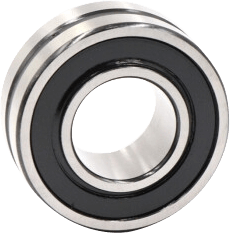
Modern industrial systems increasingly operate under conditions that push mechanical components beyond conventional limits. Higher processing speeds, compact equipment design, and demanding thermal environments have made heat resistance a core requirement rather than a niche specification. Within this context, temperature resistant stainless steel bearings play a critical role in maintaining reliability, safety, and lifecycle performance across multiple industries.
Industry Background and Market Demand
Industries such as food processing, metallurgy, chemical manufacturing, power generation, and advanced automation routinely expose rotating components to elevated temperatures. Traditional bearing solutions—often designed around standard carbon or chrome steels—tend to suffer from lubricant degradation, dimensional instability, or premature fatigue when temperatures rise above typical operating ranges. As equipment uptime expectations increase and maintenance windows shrink, engineers and procurement teams are seeking bearing solutions that can withstand sustained heat without compromising performance. This demand has driven the broader adoption of high temperature bearings made from stainless steel and engineered for thermal stability.
Core Concepts and Technical Principles
At elevated temperatures, bearing performance is influenced by more than just load capacity. Thermal expansion, material hardness retention, oxidation resistance, and lubricant compatibility all become decisive factors. Stainless steel bearings designed for high heat applications leverage alloy compositions that maintain mechanical integrity under thermal stress while resisting corrosion and scaling. Unlike standard bearings, these designs prioritize predictable behavior across a wide temperature spectrum rather than peak performance at ambient conditions.
Product Structure, Materials, and Manufacturing
The performance of stainless steel bearings in high heat environments depends heavily on material selection and manufacturing precision. Commonly used grades include martensitic and austenitic stainless steels, selected based on required hardness, corrosion resistance, and operating temperature limits. In some cases, specialized heat-resistant alloys or hybrid designs incorporating ceramic rolling elements are employed to extend temperature capability.
Manufacturing processes such as controlled heat treatment, precision grinding, and surface finishing are essential to achieving dimensional stability. Tight tolerances are particularly important because thermal expansion can alter internal clearance, affecting friction and wear. Advanced manufacturing also focuses on surface integrity, as microstructural defects can accelerate fatigue when combined with thermal cycling.
Key Factors Affecting Quality and Performance
Several variables determine whether a bearing will perform reliably under high heat:
Material stability: The ability of the steel to retain hardness and strength at elevated temperatures.
Internal clearance design: Bearings for high heat often require modified clearances to compensate for thermal expansion.
Lubrication strategy: Standard greases may break down at high temperatures, making solid lubricants or high-temperature oils necessary.
Surface finish and geometry: Smooth raceways and accurate ball geometry reduce friction and localized heat buildup.
Environmental exposure: Corrosive atmospheres or contaminants can compound thermal stress and accelerate failure.
Ignoring any of these factors can significantly reduce service life, even if the bearing is nominally rated for high temperatures.
Supply Chain and Supplier Selection Considerations
Selecting a supplier for temperature resistant stainless steel bearings involves more than comparing catalog specifications. Engineering buyers often evaluate suppliers based on material traceability, heat treatment control, and consistency across production batches. The ability to provide application-specific guidance—such as clearance selection or lubrication compatibility—is also a critical differentiator. For OEM projects, suppliers capable of customization and long-term supply stability are typically favored over generic distributors.
Common Industry Challenges and Pain Points
A frequent issue in high heat applications is unexpected bearing failure caused by lubricant breakdown rather than material fatigue. Another common challenge is misalignment or improper housing design, which becomes more problematic as temperatures rise and tolerances shift. Additionally, engineers sometimes underestimate the cumulative effect of thermal cycling, where repeated heating and cooling gradually degrade bearing performance. These challenges highlight the importance of system-level design rather than treating the bearing as an isolated component.
Application Scenarios and Use Cases
High temperature bearings are widely used in conveyor systems passing through ovens, continuous furnaces in metal processing, drying equipment in food and pharmaceutical production, and rotating components in power generation systems. In these applications, stainless steel bearings offer a balance of heat resistance, corrosion protection, and mechanical reliability. Their use often results in longer maintenance intervals and more predictable equipment behavior under thermal load.
Current Trends and Future Development
The development of high temperature bearing technology is increasingly focused on hybrid designs, advanced coatings, and lubrication-free solutions. Ceramic rolling elements combined with stainless steel races are gaining traction for extreme heat scenarios. At the same time, digital monitoring and predictive maintenance are influencing bearing design, as manufacturers adapt products for integration with condition monitoring systems. Future solutions are likely to emphasize not only higher temperature limits but also greater efficiency and sustainability.
Frequently Asked Questions
How do stainless steel bearings compare to standard steel bearings at high temperatures?
Stainless steel bearings generally offer better oxidation resistance and more stable mechanical properties under heat, making them more suitable for sustained high temperature use.
Are high temperature bearings always more expensive?
Initial cost may be higher, but extended service life and reduced downtime often result in lower total cost of ownership.
Can standard lubrication be used in high heat applications?
In many cases, specialized high-temperature lubricants or solid lubrication systems are required to avoid degradation.
Conclusion
Temperature resistant stainless steel bearings are no longer limited to niche applications. As industrial systems continue to operate under harsher thermal conditions, these bearings provide a technically sound solution that balances durability, precision, and reliability. When properly specified and integrated, stainless steel bearings designed for high heat applications can significantly enhance equipment performance and operational stability.

Vincent Liang

+86 137 5749 2228

liangzexi@cxbearings.cn

No.195, Dongshaobei Road, Jiangbei District, Ningbo City, Zhejiang Province, China


Copyright © Zhejiang Dacheng Precision Machinery Co., Ltd. All Rights Reserved.

