 DACHENG PRECISION MACHINERY

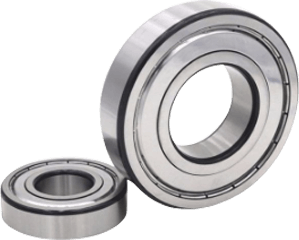
High-speed electric motors are becoming central to modern industrial systems, driven by efficiency targets, compact machine design, and rising automation levels. As rotational speeds increase, so do internal temperatures, frictional forces, and sensitivity to dimensional instability. Bearings, as the primary rotating interface, are directly exposed to these stresses. In this context, temperature resistant stainless steel bearings have become a critical component for ensuring reliable, quiet, and long-lasting motor performance under demanding thermal and mechanical conditions.
Across Europe and North America, high-speed electric motors are widely used in HVAC systems, industrial automation, robotics, medical devices, compressors, and precision manufacturing equipment. These motors often operate continuously at elevated speeds, generating heat not only from electrical losses but also from mechanical friction and compact housing designs.
Traditional bearing solutions, optimized for moderate speed and temperature ranges, are increasingly insufficient. Premature failures caused by lubricant breakdown, loss of internal clearance, or surface fatigue lead to unplanned downtime and higher lifecycle costs. As a result, motor designers and procurement engineers are prioritizing bearing solutions that can tolerate higher operating temperatures while maintaining stability at high rotational speeds.
In high-speed motors, bearing performance is governed by the interaction of speed, load, temperature, and lubrication. As speed increases, centrifugal forces acting on rolling elements rise, while frictional heat accelerates lubricant aging. Temperature rise also causes shaft and housing expansion, directly affecting bearing internal clearance.
Temperature resistant stainless steel bearings are designed to address these challenges by combining thermal stability with corrosion resistance and consistent mechanical properties. Unlike standard carbon steel bearings, stainless steel variants maintain hardness and structural integrity over a wider temperature range, reducing the risk of seizure or excessive wear during prolonged high-speed operation.
From a structural standpoint, these bearings follow the conventional deep groove or angular contact ball bearing architecture commonly used in electric motors. The distinction lies in material selection, heat treatment, and surface finishing.
Stainless steel grades used for high-speed motor bearings are selected for their balance of hardness retention, fatigue strength, and resistance to oxidation. Martensitic stainless steels are often preferred where load capacity and wear resistance are critical, while austenitic grades may be chosen for environments involving moisture or mild corrosive exposure.
Manufacturing precision is essential. Raceway geometry is carefully ground and superfinished to minimize surface roughness, reducing friction and vibration at high speeds. Rolling elements are produced with strict diameter and roundness tolerances to ensure uniform load distribution. Heat treatment processes are tightly controlled to avoid distortion, which could compromise internal clearance and dynamic balance.
Several interrelated factors determine whether a bearing can perform reliably in a high-speed, high-temperature motor environment:
Internal clearance design: Bearings must be specified with clearances that account for thermal expansion during operation.
Surface integrity: Micro-level waviness or defects can amplify vibration and heat generation at high rotational speeds.
Lubrication compatibility: Grease or oil must retain viscosity and lubricity at elevated temperatures without excessive evaporation or oxidation.
Cage stability: Cage material and geometry influence rolling element guidance and heat dissipation.
Balance and concentricity: High-speed motors are sensitive to imbalance, making dimensional accuracy critical.
Failure to optimize any of these factors can significantly reduce bearing life, even if materials are theoretically suitable for high temperatures.
For OEMs and industrial buyers, selecting a bearing supplier for high-speed motor applications requires a technical evaluation rather than a purely commercial one. Suppliers should demonstrate consistent material sourcing, traceable heat treatment processes, and validated inspection methods for dimensional accuracy and vibration performance.
Equally important is application support. Suppliers capable of advising on clearance selection, lubrication strategy, and mounting practices can help reduce design iterations and field failures. Long-term production stability is also critical, as batch-to-batch variation can introduce unwanted noise or performance inconsistencies in finished motors.
One of the most common challenges in high-speed electric motors is lubricant degradation. Even when bearing materials tolerate heat, unsuitable lubrication can lead to increased friction, noise, and early failure. Another frequent issue is incorrect clearance selection, where bearings are specified too tightly in an attempt to reduce vibration, only to experience preload after thermal expansion.
Installation practices also play a role. Excessive interference fits, shaft misalignment, or poor housing surface finish can negate the benefits of temperature-resistant bearing design. These problems highlight the importance of viewing the bearing as part of a complete motor system rather than an isolated component.
Temperature resistant stainless steel bearings are widely used in high-speed motors for ventilation fans, centrifugal pumps, industrial compressors, and automation equipment. In medical and laboratory devices, they support compact motor designs where heat dissipation is limited but reliability is critical. In robotics and precision machinery, they contribute to stable rotational accuracy under continuous high-speed operation.
In many of these applications, bearings must perform quietly while maintaining dimensional stability, making thermal resistance a key factor in achieving both performance and user comfort.
Current development trends focus on extending bearing performance limits through improved materials, advanced surface treatments, and optimized lubrication systems. Hybrid designs incorporating ceramic rolling elements are gaining attention for ultra-high-speed motors, offering reduced centrifugal forces and lower heat generation.
At the same time, predictive maintenance is influencing bearing selection. Bearings that maintain stable vibration signatures over time are better suited for sensor-based monitoring systems, enabling earlier fault detection and more efficient maintenance planning.
Sustainability considerations are also shaping future designs. Longer service life, reduced lubrication consumption, and improved energy efficiency align bearing development with broader environmental and cost-reduction goals.
Why is stainless steel preferred in high-speed, high-temperature motors?
Stainless steel offers better thermal stability and oxidation resistance, helping bearings maintain performance as temperatures rise.
Do these bearings require special lubrication?
Yes. Lubricants must be selected based on both speed and temperature to avoid premature degradation.
Is higher temperature capability always necessary?
Not always, but in compact or continuously operating motors, additional thermal margin improves reliability and service life.
Temperature resistant stainless steel bearings play a vital role in the reliability of high-speed electric motors. When properly specified and integrated, they support stable operation, reduced maintenance, and consistent performance in demanding industrial environments.

Vincent Liang

+86 137 5749 2228

liangzexi@cxbearings.cn

No.195, Dongshaobei Road, Jiangbei District, Ningbo City, Zhejiang Province, China


Copyright © Zhejiang Dacheng Precision Machinery Co., Ltd. All Rights Reserved.

