 DACHENG PRECISION MACHINERY

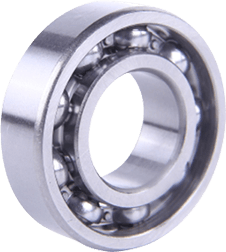
Precision equipment is steadily moving toward smaller footprints, higher operating speeds, and tighter performance tolerances. From medical devices and laboratory instruments to robotics and micro-motors, designers are being asked to achieve more functionality within less space, often under challenging thermal conditions. In this environment, miniature temperature resistant stainless steel bearings have become essential components, enabling reliable motion control where conventional bearing solutions fall short.
Across Europe and North America, demand for compact precision systems continues to rise. Medical diagnostics equipment, semiconductor manufacturing tools, automated inspection systems, and advanced robotics increasingly rely on miniature rotating elements that must operate smoothly and predictably. At the same time, these systems are often exposed to elevated temperatures caused by high rotational speeds, compact housings, sterilization processes, or continuous-duty cycles.
Traditional miniature bearings, while adequate for moderate conditions, can struggle when heat accumulation leads to lubricant degradation, dimensional instability, or accelerated wear. This has driven growing interest in Temperature Resistant Stainless Steel Bearings specifically designed for small form factors and precision applications. Buyers are no longer focused solely on size and load ratings; thermal resilience and long-term stability are now equally important selection criteria.
Miniature bearings typically refer to rolling bearings with very small bore diameters, often starting below 10 mm. At this scale, even minor deviations in geometry, surface finish, or material behavior can have a disproportionate impact on performance. When temperature is added to the equation, the challenge becomes more complex.
Heat affects miniature bearings in several ways. Thermal expansion alters internal clearances, potentially increasing friction or preload. Lubricants thin, oxidize, or evaporate more rapidly. Material hardness and fatigue resistance may decline if alloys are not properly selected. High Temperature Bearings in miniature formats must therefore be engineered with a holistic understanding of thermal, mechanical, and tribological interactions.
Structurally, miniature temperature resistant stainless steel bearings follow the same basic configuration as standard deep groove ball bearings: inner ring, outer ring, rolling elements, cage, and lubricant. However, the margin for error is significantly smaller.
Material selection is critical. Stainless steel grades used in these bearings are chosen for their ability to retain mechanical strength at elevated temperatures while resisting corrosion from moisture, cleaning agents, or process chemicals. Martensitic stainless steels are commonly used where higher hardness and load capacity are required, while austenitic grades may be selected for environments with aggressive media or frequent washdowns.
Manufacturing processes must achieve exceptional precision. Raceway grinding and superfinishing reduce surface roughness and micro-waviness, which are major contributors to vibration and heat generation. Rolling elements are produced with extremely tight diameter and roundness tolerances to ensure even load distribution. Heat treatment is carefully controlled to avoid distortion, which could otherwise compromise clearance and concentricity in such small components.
Several factors determine whether a miniature bearing will perform reliably in a precision, high-temperature environment:
Internal clearance control: Clearance must account for both mounting fits and thermal expansion during operation.
Surface integrity: Microscopic defects can quickly translate into noise, friction, or premature failure.
Lubrication strategy: Lubricants must remain stable at operating temperatures without contaminating sensitive equipment.
Cage design: Cage material and geometry influence rolling element stability and heat dissipation.
Operating environment: Exposure to vibration, contaminants, or thermal cycling can significantly affect service life.
In miniature applications, these factors interact more strongly than in larger bearings, making system-level optimization essential.
Selecting a supplier for miniature temperature resistant bearings is often as much about process capability as it is about product specifications. OEMs and engineering teams typically look for suppliers with proven experience in miniature bearing manufacturing, consistent quality control, and traceable material sourcing.
Supplier evaluation may include audits of grinding and heat treatment processes, noise and vibration testing capability, and long-term batch consistency. Technical support is another key factor. Suppliers who can assist with clearance selection, lubrication choice, and installation guidance help reduce development risk and shorten time to market for precision devices.
One of the most common challenges in miniature high-temperature applications is lubricant failure. Even when bearing materials perform as expected, unsuitable lubrication can lead to increased friction, noise, or contamination of nearby components. Another frequent issue is over-constraining the bearing through tight fits or misalignment, which becomes more problematic as temperature rises.
Engineers also sometimes underestimate the effects of thermal cycling. Repeated heating and cooling can gradually alter internal clearances and accelerate fatigue, particularly in continuously operating precision systems.
Miniature temperature resistant stainless steel bearings are widely used in medical devices such as centrifuges, imaging equipment, and surgical tools, where compact size, cleanliness, and thermal resilience are essential. In robotics and automation, they support joint mechanisms and micro-actuators that operate at high speeds within confined spaces.
Laboratory instruments, optical systems, and semiconductor equipment also rely on these bearings to deliver stable, low-vibration motion under controlled but thermally demanding conditions. In many of these applications, the bearings must perform reliably alongside other Temperature Resistant Bearings within the same assembly, requiring consistent behavior across components.
Future development in this field is focused on extending performance limits without increasing size. Hybrid designs combining stainless steel races with ceramic rolling elements are gaining attention for their reduced heat generation and improved speed capability. Advanced surface coatings and solid lubrication technologies are also being explored to further reduce maintenance needs.
At the same time, the integration of condition monitoring and predictive maintenance is influencing bearing design. Precision bearings that maintain stable vibration signatures over time are better suited for sensor-based diagnostics, which are becoming more common even in compact equipment.
Are miniature stainless steel bearings suitable for continuous high-temperature operation?
Yes, provided materials, clearances, and lubrication are selected specifically for the operating conditions.
Do temperature resistant bearings require special handling during installation?
Careful installation is essential. Excessive force or misalignment can significantly reduce service life, especially in miniature sizes.
What typically limits bearing life in precision applications?
Lubricant degradation and contamination are among the most common limiting factors, often compounded by thermal cycling.
Miniature temperature resistant stainless steel bearings enable precision systems to operate reliably under conditions that challenge conventional designs. By combining advanced materials, precise manufacturing, and application-specific engineering, they support the continued miniaturization and performance evolution of modern industrial and medical equipment.

Vincent Liang

+86 137 5749 2228

liangzexi@cxbearings.cn

No.195, Dongshaobei Road, Jiangbei District, Ningbo City, Zhejiang Province, China


Copyright © Zhejiang Dacheng Precision Machinery Co., Ltd. All Rights Reserved.

