 DACHENG PRECISION MACHINERY

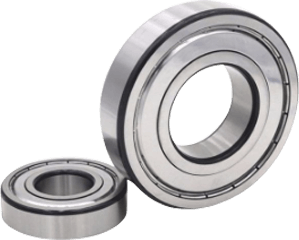
Industrial equipment is increasingly expected to operate under extreme thermal conditions while maintaining reliability, accuracy, and long service life. From continuous furnaces and drying systems to power generation and chemical processing equipment, elevated temperatures place unique demands on rotating components. In these environments, conventional bearing solutions often reach their performance limits. High temperature stainless steel bearings have therefore become a critical element in modern mechanical design, offering a balance of thermal resistance, corrosion protection, and operational stability.
Global manufacturing trends point toward higher process temperatures, compact equipment layouts, and extended operating cycles. Industries such as food processing, metallurgy, energy production, and advanced automation now rely on machinery that runs continuously at temperatures well beyond standard bearing ratings. At the same time, maintenance intervals are being extended to reduce downtime and operational costs.
These factors have driven strong demand for bearing solutions capable of withstanding sustained heat without sacrificing dimensional stability or load capacity. As a result, Temperature Resistant Bearings have moved from specialized applications into mainstream industrial use, particularly where failure risk and safety considerations are high.
At elevated temperatures, bearing performance is governed by more than load and speed. Thermal expansion, oxidation resistance, hardness retention, and lubricant behavior become decisive parameters. High temperature stainless steel bearings are engineered to maintain functional clearances and surface integrity as temperatures rise, reducing the risk of seizure, excessive wear, or premature fatigue.
Unlike standard bearings, which are optimized for ambient conditions, these designs account for predictable material expansion and changes in lubrication properties. This makes them suitable for both steady-state high heat and applications involving frequent thermal cycling.
Structurally, high temperature stainless steel bearings follow the same basic configuration as conventional rolling bearings: inner ring, outer ring, rolling elements, cage, and lubricant. The difference lies in material selection and process control.
Stainless steel alloys used in these bearings are chosen for their ability to retain mechanical strength at elevated temperatures while resisting corrosion and scaling. Martensitic and austenitic grades are commonly employed, depending on the required balance between hardness and corrosion resistance. In some cases, hybrid designs combine stainless steel races with ceramic rolling elements to further improve thermal performance.
Manufacturing processes are equally critical. Controlled heat treatment ensures uniform hardness and minimizes distortion. Precision grinding and superfinishing reduce surface roughness, which helps limit frictional heat generation during operation. Assembly is typically carried out under tightly controlled conditions to preserve internal clearances designed specifically for high temperature use.
Several factors determine whether a high temperature stainless steel bearing will perform reliably in service:
Material stability: The ability of the alloy to maintain hardness and strength at elevated temperatures.
Internal clearance design: Proper clearance compensates for thermal expansion and prevents preload.
Lubrication compatibility: Standard greases may degrade quickly at high temperatures, requiring specialized lubricants or solid lubrication.
Surface finish quality: Smooth raceways reduce friction and localized heat buildup.
Environmental exposure: Corrosive gases or contaminants can accelerate wear if not properly addressed.
Ignoring any of these aspects can significantly reduce bearing life, even when the bearing is nominally rated for high temperature operation.
From a procurement standpoint, selecting a supplier for high temperature stainless steel bearings requires careful evaluation beyond basic specifications. Engineering buyers often look for material traceability, consistent heat treatment processes, and proven experience with high temperature applications. Suppliers capable of providing application-specific guidance—such as clearance selection or lubrication recommendations—offer added value, particularly for OEM projects.
Production consistency is another key consideration. Variations in material quality or process control can lead to unpredictable performance under thermal stress, increasing the risk of unplanned downtime.
One common challenge in high temperature applications is lubricant failure rather than material fatigue. Even the most heat-resistant bearing can fail prematurely if lubrication is not suited to the operating environment. Another frequent issue is improper installation, where excessive interference fits or misalignment negate the benefits of high temperature design.
Thermal cycling presents an additional challenge. Repeated heating and cooling can gradually alter internal clearances and accelerate wear if not accounted for during the design phase. These issues highlight the importance of system-level thinking when specifying Temperature Resistant Stainless Steel Bearings.
High temperature stainless steel bearings are widely used in furnace conveyors, continuous ovens, kilns, and drying equipment. In food and pharmaceutical processing, they provide a combination of heat resistance and corrosion protection during washdown and sterilization processes. In power generation and chemical processing, they support rotating equipment exposed to both high heat and aggressive environments.
In many of these systems, stainless steel bearings are specified alongside other High Temperature Bearings to ensure consistent performance across the entire drivetrain.
Technological development in this field is focused on extending temperature limits while improving efficiency and service life. Hybrid bearing designs, advanced surface coatings, and lubrication-free solutions are gaining traction in extreme heat applications. At the same time, digital monitoring and predictive maintenance are influencing bearing selection, as operators seek components that provide stable performance and clear diagnostic signals.
Sustainability considerations are also shaping future designs. Longer service life and reduced lubrication requirements contribute to lower environmental impact and total cost of ownership.
How do stainless steel bearings compare to standard steel bearings at high temperatures?
Stainless steel bearings generally offer better oxidation resistance and more stable mechanical properties under heat, making them suitable for sustained high temperature operation.
Are high temperature bearings always maintenance-free?
Not necessarily. While some designs reduce maintenance needs, lubrication and inspection requirements depend on operating conditions.
What is the main cause of failure in high temperature applications?
Lubricant degradation and improper clearance selection are among the most common causes.
High temperature stainless steel bearings provide a robust solution for applications where conventional bearings cannot withstand thermal stress. When properly specified, sourced, and integrated, they deliver reliable performance, extended service life, and greater operational confidence in demanding industrial environments.

Vincent Liang

+86 137 5749 2228

liangzexi@cxbearings.cn

No.195, Dongshaobei Road, Jiangbei District, Ningbo City, Zhejiang Province, China


Copyright © Zhejiang Dacheng Precision Machinery Co., Ltd. All Rights Reserved.

