 DACHENG PRECISION MACHINERY

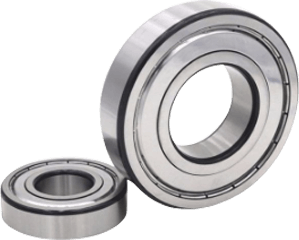
Miniaturization has become a defining trend across modern engineering sectors. Electric micro-motors, medical instruments, compact automation modules, and precision sensors all require reliable rotary components within extremely limited space envelopes. As operating speeds rise and thermal density increases, bearing performance is increasingly constrained by temperature rather than load alone. Small size temperature resistant stainless steel bearings, particularly in bore ranges from 1.5mm to 10mm, address this challenge by combining compact geometry with thermal stability and corrosion resistance.
European and North American manufacturers continue to push for smaller, lighter, and more efficient equipment. In applications such as portable medical devices, robotics, laboratory automation, and precision electronics, designers often face a trade-off between size reduction and operational reliability. Heat generation is a common side effect of higher rotational speeds, compact housings, and continuous-duty cycles.
Standard miniature bearings, while adequate at ambient conditions, can suffer from lubricant breakdown, clearance loss, and accelerated wear when exposed to elevated temperatures. This has driven steady demand for Temperature Resistant Bearings engineered specifically for small diameters. Procurement teams and design engineers increasingly view thermal capability as a baseline requirement rather than a niche feature.
Bearings in the 1.5mm to 10mm bore range operate under unique physical constraints. At such small scales, tolerances are measured in microns, and even minor thermal expansion can significantly alter internal clearance. Heat affects not only the bearing rings and rolling elements, but also the shaft, housing, and lubrication system.
Temperature resistant stainless steel bearings are designed with predictable thermal behavior in mind. Stainless steel alloys offer more stable mechanical properties at elevated temperatures compared to standard carbon steels, helping maintain functional clearance and surface integrity. In high-speed miniature applications, this stability reduces the risk of preload, excessive friction, and noise generation as temperature rises.
Structurally, small size bearings follow the conventional deep groove ball bearing layout: inner ring, outer ring, rolling elements, cage, and lubricant. However, producing this structure at miniature scale while ensuring temperature resistance requires advanced manufacturing control.
Material selection is central to performance. Stainless steel grades used in these bearings are chosen for their balance of hardness retention, fatigue strength, and resistance to oxidation. Martensitic stainless steels are commonly applied where load capacity and wear resistance are critical, while austenitic grades may be selected for environments involving moisture, cleaning agents, or mild chemicals.
Manufacturing processes must achieve exceptional precision. Raceway grinding and superfinishing minimize surface roughness, reducing friction and localized heat buildup. Rolling elements are produced with strict diameter and roundness tolerances to ensure uniform load distribution. Heat treatment is carefully managed to avoid distortion, which could otherwise compromise clearance in such small components.
Several interdependent factors determine whether a small size bearing will perform reliably at elevated temperatures:
Internal clearance design: Clearance must account for mounting fits and thermal expansion during operation.
Surface integrity: Micro-level waviness or defects can rapidly translate into vibration or premature wear.
Lubrication stability: Lubricants must retain viscosity and resist oxidation at operating temperatures.
Cage material and geometry: Cage design influences rolling element guidance and heat dissipation.
Operating environment: Thermal cycling, contamination, and vibration all affect service life.
In miniature bearings, these factors interact more strongly than in larger designs, making application-specific optimization essential.
For OEMs sourcing bearings in the 1.5mm to 10mm range, supplier capability is often more important than catalog breadth. Reliable suppliers demonstrate consistent process control, traceable raw materials, and validated inspection methods for dimensional accuracy and vibration performance.
Technical collaboration is another key criterion. Suppliers who can support clearance selection, lubrication strategy, and mounting recommendations help reduce development risk. Long-term production consistency is particularly important for medical and automation equipment, where batch-to-batch variation can affect overall system performance.
One common issue in small size high-temperature applications is lubricant degradation. Even when bearing materials perform as intended, unsuitable lubrication can lead to increased friction, noise, or contamination of nearby components. Another frequent challenge is over-constraining the bearing through tight interference fits, which becomes more problematic as temperature rises.
Engineers also sometimes underestimate the cumulative effects of thermal cycling. Repeated heating and cooling can gradually alter internal clearance and accelerate fatigue, especially in continuously operating systems.
Small size temperature resistant stainless steel bearings are widely used in medical devices such as centrifuges, diagnostic equipment, and portable instruments, where compact size and thermal resilience are essential. In robotics and automation, they support micro-actuators and joint mechanisms operating at high speed within confined spaces.
Laboratory instruments, optical systems, and precision sensors also rely on these bearings to deliver stable, low-vibration motion under controlled but thermally demanding conditions. In many assemblies, they operate alongside other High Temperature Bearings, making consistent thermal behavior across components critical.
Future development in this segment focuses on extending temperature capability without increasing bearing size. Hybrid designs combining stainless steel races with ceramic rolling elements are gaining attention for reduced centrifugal forces and lower heat generation. Advanced surface coatings and solid lubrication technologies are also being explored to further improve reliability.
At the same time, predictive maintenance is influencing bearing design priorities. Bearings that maintain stable vibration signatures over time are better suited for sensor-based diagnostics, which are increasingly integrated even into compact equipment.
Are bearings as small as 1.5mm suitable for elevated temperatures?
Yes, provided materials, clearances, and lubrication are specifically engineered for the operating conditions.
Do stainless steel bearings always perform better at high temperatures?
They generally offer better thermal stability and oxidation resistance, but performance still depends on overall design and application context.
What most often limits service life in small bearings?
Lubricant degradation and contamination are among the most common limiting factors, often intensified by thermal cycling.
Small size temperature resistant stainless steel bearings from 1.5mm to 10mm enable reliable motion in applications where space, precision, and thermal stability are equally critical. When properly specified and integrated, they support the continued evolution of compact, high-performance industrial and medical systems.

Vincent Liang

+86 137 5749 2228

liangzexi@cxbearings.cn

No.195, Dongshaobei Road, Jiangbei District, Ningbo City, Zhejiang Province, China


Copyright © Zhejiang Dacheng Precision Machinery Co., Ltd. All Rights Reserved.

