 DACHENG PRECISION MACHINERY

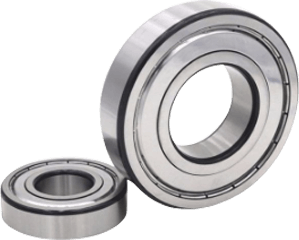
Global OEM manufacturers are under constant pressure to deliver equipment that is lighter, more compact, and more precise, while maintaining reliability across long operating cycles. This pressure is particularly visible in sectors such as industrial automation, robotics, aerospace, medical equipment, and precision machinery. In these industries, mechanical components are no longer isolated parts but integral elements of highly optimized systems. As a result, the role of a Thin Walled Bearings manufacturer has shifted from simple component supply to long-term technical partnership.
Demand is driven not only by volume but also by consistency, traceability, and the ability to meet exact design requirements. OEM customers increasingly expect bearing suppliers to understand system-level constraints such as space limitations, stiffness requirements, thermal behavior, and assembly tolerances. This evolution has reshaped both product design and manufacturing strategies within the bearing industry.
Thin walled bearings, often referred to as thin section bearings, are characterized by a reduced radial cross section relative to their bore diameter. The defining concept is geometric efficiency: maintaining load-carrying capability and rotational accuracy while minimizing envelope size and weight.
For OEM customers, the technical value lies in predictable performance. Advanced designs incorporate optimized raceway profiles, controlled internal clearance, and carefully selected rolling elements. In high-end applications, High Precision Thin Walled Bearings are used to achieve repeatable positioning and smooth motion under variable loads. These designs rely on manufacturing accuracy rather than material mass to deliver stiffness and stability.
From a structural standpoint, thin walled bearings consist of inner and outer rings, rolling elements, and a cage system, all engineered with minimal wall thickness. Despite their compact form, performance expectations remain comparable to larger conventional bearings.
Materials and Heat Treatment
High-quality bearing steel is commonly used for industrial environments, while stainless steel and special alloys are selected for corrosion resistance, vacuum conditions, or elevated temperatures. Heat treatment processes are tightly controlled to ensure hardness uniformity and fatigue resistance without compromising dimensional stability.
Performance Characteristics
Key performance indicators include low runout, consistent torque, and stable behavior under speed changes. Depending on the design, bearings may be configured for radial loads, axial loads, or combined loads using angular contact geometry. These attributes place thin-section designs within the broader category of Precision Bearings, where tolerance control is critical.
Manufacturing Discipline
Grinding accuracy, surface finishing, and inspection capability define manufacturing quality. Leading manufacturers rely on CNC grinding machines, in-process measurement, and final inspection systems capable of micrometer-level verification. Statistical process control is essential to ensure repeatability across production batches destined for global OEM programs.
Several factors determine whether a thin walled bearing performs as intended in an OEM application:
Dimensional Tolerance: Minor deviations can affect preload, noise, and service life.
Surface Integrity: Raceway finish directly influences friction and wear.
Internal Clearance Management: Incorrect clearance may lead to overheating or loss of stiffness.
Housing and Shaft Fit: Thin sections are more sensitive to distortion caused by improper fits or insufficient structural support.
OEM customers must consider these factors early in the design phase to avoid downstream issues.
Selecting a manufacturer for thin walled bearings is a strategic decision rather than a transactional one. OEMs typically evaluate suppliers based on technical capability, process transparency, and long-term reliability.
Important selection criteria include:
Proven experience with thin-section geometries
Engineering support for design review and application analysis
Material traceability and documented quality systems
Ability to manage both standard and custom specifications
Stable logistics and export compliance for international supply chains
A capable manufacturer functions as an extension of the OEM’s engineering and quality teams, reducing development risk and lifecycle cost.
One common challenge is the assumption that thin walled bearings behave identically to standard bearings. In reality, their reduced cross section makes them more sensitive to mounting errors and structural deformation. Another pain point is balancing lead time with customization, as OEM projects often require non-standard dimensions or tolerances.
Clear communication between design engineers and bearing manufacturers is essential to address these issues before production begins.
OEM customers integrate thin walled bearings into a wide range of systems:
Industrial Robotics: Joint assemblies and harmonic drive systems benefit from compact bearings with high stiffness.
Automation Equipment: Indexing tables and motion modules rely on thin designs to reduce inertia.
Medical Systems: Diagnostic and imaging equipment require smooth, quiet operation in limited space.
Aerospace Components: Weight-sensitive assemblies use thin-section designs to meet performance targets.
In each case, the bearing’s contribution extends beyond rotation to overall system accuracy and reliability.
Looking ahead, demand for thin walled bearings is expected to grow alongside automation and precision manufacturing. Digital quality monitoring, advanced materials, and surface engineering are becoming standard tools to enhance reliability. Customization is also increasing, with OEMs specifying bearings tailored to exact operating conditions rather than adapting designs to off-the-shelf components.
As systems become more compact and performance-driven, collaboration between OEMs and bearing manufacturers will continue to deepen, reinforcing the strategic importance of high-quality thin-section solutions.
Are thin walled bearings suitable for long service life?
Yes, when correctly specified and installed, they can achieve service life comparable to standard bearings.
Do OEM projects typically require custom designs?
Many do, especially when space, weight, or accuracy constraints are critical.
What is the biggest risk in application?
Improper mounting or insufficient housing stiffness is a common cause of performance issues.
By understanding manufacturing capabilities, quality drivers, and application requirements, global OEM customers can select a thin walled bearing manufacturer that supports both current projects and long-term innovation.

Vincent Liang

+86 137 5749 2228

liangzexi@cxbearings.cn

No.195, Dongshaobei Road, Jiangbei District, Ningbo City, Zhejiang Province, China


Copyright © Zhejiang Dacheng Precision Machinery Co., Ltd. All Rights Reserved.

