 DACHENG PRECISION MACHINERY

Robotics has moved well beyond isolated industrial cells into collaborative workspaces, medical environments, and high-precision manufacturing lines. As robots become faster, lighter, and more intelligent, mechanical components must meet increasingly demanding requirements. Bearings, though often overlooked, play a decisive role in determining positioning accuracy, energy efficiency, and long-term reliability. Within this context, thin section bearing solutions have gained attention as designers seek to reduce joint size and inertia without compromising stiffness or control.
Global demand for robots in logistics, electronics assembly, medical assistance, and semiconductor production has intensified the need for compact mechanical architectures. Joint modules, rotary actuators, and end-effectors all benefit from reduced envelope dimensions. This trend explains the growing adoption of thin-profile bearing designs, including High Precision Thin Walled Bearings, as a foundation for advanced robotic systems.
Thin section bearings are distinguished by a cross section that remains nearly constant across different bore diameters. This design principle allows engineers to scale robotic joints without redesigning housings or altering kinematics. In robotic applications, the core objective is not only load support but also predictable motion behavior under dynamic conditions.
High-precision variants incorporate optimized raceway geometry, controlled internal clearance, and strict tolerance limits. These features enable smooth rotation, low friction, and minimal angular error—key factors for accurate path planning and repeatable positioning. In articulated robots, thin section bearings often work in conjunction with gear reducers or direct-drive motors, where mechanical accuracy directly influences control algorithms.
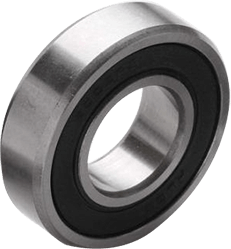
From a structural perspective, thin section bearings consist of inner and outer rings, rolling elements, and a cage, all designed with reduced wall thickness. Despite their slim form, they are engineered to deliver high stiffness and load capacity relative to size.
Materials and Heat Treatment
High-grade bearing steels remain the standard for most robotic environments due to their fatigue resistance and dimensional stability. In cleanroom or medical robots, stainless steel variants are selected to resist corrosion and facilitate cleaning. Heat treatment processes are carefully managed to achieve uniform hardness while minimizing distortion—an essential requirement for maintaining precision in thin geometries.
Performance Characteristics
Key performance metrics include low runout, stable torque, and consistent preload behavior. Many robotic joints rely on angular contact configurations to manage combined radial and axial loads. These designs fall within the broader category of Precision Bearings, where even small deviations can affect system accuracy.
Manufacturing Processes
Achieving the required precision depends on advanced grinding, superfinishing, and inspection technologies. CNC grinding machines, coupled with in-process measurement, allow manufacturers to control geometry at micrometer levels. Final inspection often includes runout measurement, surface analysis, and torque testing to verify suitability for robotic motion.
Thin section bearings used in robotics are sensitive to several application-specific factors:
Tolerance Stack-Up: Small dimensional errors can accumulate across joints, affecting overall robot accuracy.
Surface Finish: Raceway smoothness influences friction, heat generation, and noise.
Preload Selection: Insufficient preload reduces stiffness, while excessive preload increases wear and energy consumption.
Structural Support: Thin sections are more susceptible to housing deformation, which can alter internal geometry during operation.
Understanding these factors during the design phase is critical to achieving reliable performance in robotic systems.
For robotics manufacturers, selecting a bearing supplier is a strategic decision tied to product performance and development timelines. Thin section bearings are not interchangeable commodities; they require consistent manufacturing quality and technical support.
Key selection criteria typically include:
Proven experience in robotic or motion-control applications
Capability to support custom dimensions or tolerances
Transparent quality systems and traceable materials
Engineering collaboration during prototype and validation stages
Reliable global logistics for multi-site production
A supplier that understands robotic system constraints can help reduce iteration cycles and long-term maintenance risk.
One recurring challenge is the assumption that thin section bearings behave like standard bearings under all conditions. In robotics, dynamic loads, frequent reversals, and compact housings amplify the effects of misalignment or improper fits. Another pain point is balancing stiffness with friction; designers must carefully select preload and lubrication strategies to avoid compromising efficiency.
Thermal behavior is also a concern. As robots operate at higher speeds, heat generation within joints can affect bearing life and accuracy if not properly managed.
Thin section bearings are widely applied across robotic architectures:
Articulated Robots: Shoulder, elbow, and wrist joints benefit from compact bearings that reduce inertia.
Collaborative Robots: Smooth, low-friction motion supports safe human-robot interaction.
Medical Robots: Surgical and rehabilitation systems require quiet operation and precise control.
Semiconductor Handling Robots: Cleanroom-compatible designs support high-accuracy wafer positioning.
In these applications, Thin Walled Bearings enable designers to achieve compact joint layouts while maintaining performance consistency.
Robotics continues to evolve toward higher autonomy, lighter structures, and increased precision. These trends drive further demand for advanced thin section bearing solutions. Developments in surface engineering, such as low-friction coatings, and the use of digital inspection data to predict bearing behavior are shaping future designs.
Customization is becoming more common, with robot manufacturers specifying bearings tailored to specific joint loads, duty cycles, and environmental conditions. As control systems become more sophisticated, mechanical precision remains a prerequisite, reinforcing the role of thin section designs in next-generation robots. Within this landscape, High Precision Thin Walled Bearings are expected to remain a critical enabler of compact, accurate, and reliable robotic motion.
Are thin section bearings suitable for high-torque robotic joints?
Yes, when properly designed and supported, they can handle significant combined loads.
Do robotic applications require special lubrication?
Often yes, especially in cleanroom or high-speed environments where standard lubricants may be unsuitable.
What is the most common cause of failure?
Improper mounting or insufficient housing stiffness is a frequent contributor to performance issues.
By aligning bearing design, manufacturing quality, and application requirements, robotic system developers can fully leverage the advantages of precision thin section bearing technology.

Vincent Liang

+86 137 5749 2228

liangzexi@cxbearings.cn

No.195, Dongshaobei Road, Jiangbei District, Ningbo City, Zhejiang Province, China


Copyright © Zhejiang Dacheng Precision Machinery Co., Ltd. All Rights Reserved.

