 DACHENG PRECISION MACHINERY

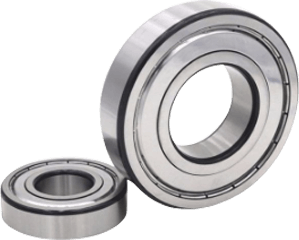
Modern industrial systems are evolving toward higher speeds, tighter tolerances, and longer service intervals. Automation equipment, electric motors, machine tools, and process machinery are all expected to operate with minimal vibration while maintaining accuracy under continuous load. In this context, bearing performance has become a critical design factor rather than a standard commodity choice. As production lines become more compact and energy efficiency targets more stringent, demand continues to grow for bearing solutions capable of supporting high rotational accuracy and stable operation across diverse industrial environments. This trend has driven wider adoption of High Precision Deep Groove Ball Bearings in sectors where reliability and consistency directly influence productivity and lifecycle cost.
Deep groove ball bearings are characterized by raceways with a curvature closely matching the ball diameter, allowing them to carry radial loads and moderate axial loads in both directions. When manufactured to higher precision classes, these bearings deliver reduced runout, lower vibration levels, and improved speed capability. Precision control is achieved through tighter dimensional tolerances, advanced surface finishing, and strict process control during manufacturing. Compared with standard designs, precision-grade bearings minimize micro-slippage and heat generation, which are common limiting factors in high-speed or high-duty-cycle applications.
The basic structure consists of an inner ring, outer ring, rolling elements, and a cage that maintains ball spacing. Performance enhancements depend heavily on material selection and manufacturing accuracy. Bearing rings are typically produced from high-purity bearing steel, heat-treated to achieve uniform hardness and fatigue resistance. For specific environments, stainless steel or hybrid ceramic designs may be selected to improve corrosion resistance or reduce centrifugal forces at high speed.
Manufacturing processes include precision forging, controlled heat treatment, and multi-stage grinding and honing. Raceway geometry is finished to micron-level accuracy, while surface roughness is tightly controlled to support stable lubricant films. Cage design also plays a role; optimized cage geometry improves lubricant flow and reduces friction, contributing to smoother operation and extended bearing life.
Several variables directly affect bearing performance in industrial use. Dimensional accuracy and internal clearance determine how loads are distributed across rolling elements. Excessive clearance can lead to vibration and noise, while insufficient clearance increases friction and operating temperature. Surface finish quality influences lubricant behavior and wear resistance, especially during high-speed operation.
Lubrication is another critical factor. The choice of grease or oil must match operating speed, temperature range, and load conditions. Improper lubrication remains a common cause of premature failure, even in high-quality Precision Ball Bearings. Installation accuracy and shaft alignment also play a decisive role; misalignment can negate the benefits of precision manufacturing by introducing uneven stress patterns.
For industrial buyers, evaluating bearing suppliers involves more than comparing specifications. Consistency of production quality, traceability of materials, and adherence to international standards are essential criteria. Reliable suppliers typically maintain documented quality control systems, including dimensional inspection, vibration testing, and life testing. Engineering support and the ability to provide application-specific recommendations are additional indicators of technical competence.
Supply chain stability is equally important. Industrial equipment manufacturers often require long-term availability of identical bearing specifications to support maintenance and spare parts programs. Suppliers with controlled production processes and stable raw material sourcing are better positioned to meet these requirements.
One of the most common challenges in industrial bearing applications is balancing performance requirements with cost constraints. Precision bearings deliver measurable performance advantages, but their benefits may be undermined by inadequate system design or improper handling. Another recurring issue is misapplication—selecting a bearing based solely on size without considering speed, load direction, or environmental factors. In harsh operating conditions, contamination and inadequate sealing can also reduce service life, even when high-quality Deep Groove Ball Bearings are used.
In industrial electric motors, precision bearings support stable rotor positioning, reducing electromagnetic noise and improving efficiency. Automation equipment relies on consistent bearing accuracy to maintain repeatable motion profiles in pick-and-place systems and conveyor drives. In pumps and compressors, precision bearings help control shaft deflection, minimizing seal wear and reducing unplanned downtime. Across these applications, the common requirement is predictable performance under continuous operation, where small improvements in bearing behavior translate into measurable gains in system reliability.
The industrial bearing sector is seeing increased integration of precision bearings into compact, high-speed systems driven by electrification and automation. There is growing interest in low-friction designs that support energy efficiency targets, as well as materials and surface treatments that extend service life under marginal lubrication conditions. Digital monitoring technologies are also influencing bearing design, with vibration and temperature data increasingly used to optimize maintenance strategies. As machinery continues to evolve, the role of precision bearing solutions will expand beyond load support to become an integral part of system performance optimization.
How do precision grades affect bearing selection?
Higher precision grades offer reduced runout and vibration, which are critical in high-speed or accuracy-sensitive applications.
Are precision bearings suitable for heavy loads?
They can support significant loads, but correct sizing and clearance selection are essential to avoid excessive stress.
What maintenance practices extend bearing life?
Proper lubrication management, clean installation procedures, and regular condition monitoring significantly improve service life.
By understanding the technical principles, application requirements, and quality factors discussed above, industrial engineers and procurement professionals can make informed decisions when specifying precision bearing solutions for demanding operating environments.

Vincent Liang

+86 137 5749 2228

liangzexi@cxbearings.cn

No.195, Dongshaobei Road, Jiangbei District, Ningbo City, Zhejiang Province, China


Copyright © Zhejiang Dacheng Precision Machinery Co., Ltd. All Rights Reserved.

