 DACHENG PRECISION MACHINERY

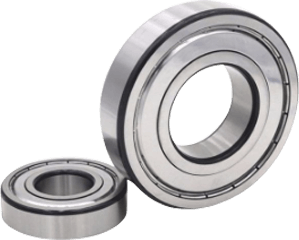
Food processing machinery operates under some of the most demanding conditions in industrial manufacturing. Equipment is exposed to frequent washdowns, high humidity, temperature variations, and aggressive cleaning agents designed to meet strict hygiene regulations. In such environments, bearing failure caused by corrosion is a common source of downtime, product contamination risk, and maintenance cost escalation.
As global food safety standards continue to tighten and production efficiency expectations increase, manufacturers are moving away from conventional bearing solutions. This shift has driven sustained demand for Corrosion Resistant Deep Groove Ball Bearings specifically engineered for food processing machinery, where reliability, cleanliness, and compliance are equally critical.
Deep groove ball bearings are widely used in food processing equipment due to their compact design, low friction, and ability to handle combined radial and axial loads. However, standard bearing designs are vulnerable to corrosion when exposed to water, steam, detergents, and sanitizing chemicals.
Corrosion resistance in this context is not limited to preventing rust. It also involves maintaining smooth rolling surfaces, stable lubrication, and seal integrity under repeated cleaning cycles. Bearings used in food machinery must resist surface degradation that could generate metal particles or compromise hygienic conditions. This is why Corrosion Resistant Bearings are designed with both environmental protection and tribological stability in mind.
Structurally, corrosion-resistant deep groove ball bearings for food processing follow the same basic configuration as standard bearings: inner and outer rings, rolling elements, cage, seals, and lubricant. The differences lie in material selection, surface treatment, and sealing systems.
Stainless steel is the most commonly used material due to its inherent resistance to moisture and chemicals. Martensitic stainless steels provide a balance between corrosion resistance and mechanical strength, making them suitable for moderate to high loads. In applications with frequent exposure to chlorides or aggressive cleaning agents, austenitic stainless steels may be selected for enhanced chemical resistance, even if load capacity is slightly reduced.
Manufacturing precision is essential. Advanced grinding and superfinishing processes reduce surface roughness, improving lubricant film stability and minimizing areas where contaminants can accumulate. Passivation treatments enhance the natural oxide layer on stainless steel, further improving resistance to corrosion.
Sealing systems are a critical component. Bearings used in food processing often employ multi-lip contact seals made from food-grade elastomers. These seals prevent water and cleaning chemicals from entering the bearing while retaining lubricant during washdowns.
Several factors directly affect how well corrosion-resistant bearings perform in food processing machinery:
Compatibility with cleaning agents: Bearings must withstand alkaline, acidic, or chlorine-based cleaners without material degradation.
Seal effectiveness: Poor sealing can lead to lubricant washout and contamination ingress, even with corrosion-resistant materials.
Lubrication selection: Food-grade lubricants must resist washout, oxidation, and emulsification while maintaining load-carrying capability.
Surface finish quality: Smooth surfaces reduce friction, corrosion initiation, and the risk of bacterial buildup.
Even high-quality Deep Groove Ball Bearings can fail prematurely if these factors are not aligned with actual operating conditions.
Selecting a suitable bearing supplier is especially important in food processing applications. Buyers should prioritize suppliers that can demonstrate material traceability, compliance with food-contact regulations, and consistent quality control. Experience serving hygienic industries is a strong indicator of reliability.
Technical support capabilities are also critical. Suppliers who can advise on material grades, sealing options, and lubricant compatibility help reduce application risk. Stable production processes and consistent lead times are essential for food machinery OEMs operating in global markets.
One common misconception is that stainless steel bearings are inherently maintenance-free. While corrosion resistance significantly improves durability, bearings in food processing machinery still require proper installation, lubrication management, and periodic inspection.
Another challenge is balancing hygiene requirements with mechanical performance. Overemphasis on corrosion resistance without considering load ratings, speed limits, or internal clearance can lead to unexpected performance limitations. Proper specification ensures that corrosion resistance supports, rather than compromises, overall system reliability.
Corrosion-resistant deep groove ball bearings are widely used across food processing machinery, including conveyors, mixers, slicers, filling machines, and packaging equipment. In conveyor systems, bearings must endure constant exposure to moisture and cleaning cycles while maintaining smooth operation. In mixers and blenders, they must support combined loads under continuous operation.
Dairy and beverage processing equipment, which often undergo daily high-pressure washdowns, relies heavily on corrosion-resistant bearing designs to maintain uptime and hygiene. Bakery and meat processing machinery also benefit from bearings that resist both moisture and organic residues without compromising performance.
The development of bearings for food processing machinery is increasingly focused on lifecycle optimization rather than isolated performance metrics. Improved seal materials, enhanced food-grade lubricants, and advanced surface finishing techniques are extending service intervals even under frequent washdowns.
Hybrid bearing designs and improved stainless steel alloys are also gaining attention, offering better wear resistance and lower friction. At the same time, condition monitoring solutions are being integrated into critical equipment to detect early signs of lubrication loss or corrosion-related degradation.
Sustainability considerations are influencing design choices as well. Longer bearing life and reduced maintenance frequency contribute to lower resource consumption and improved operational efficiency across food production facilities.
Are corrosion-resistant deep groove ball bearings suitable for high-pressure washdowns?
Yes, provided they are equipped with appropriate seals and compatible food-grade lubricants.
Do stainless steel bearings meet food safety regulations?
Material compliance depends on grade selection and supplier documentation, which should always be verified.
Is corrosion resistance necessary for all food processing equipment?
Not in every case. The need depends on exposure to moisture, cleaning frequency, and hygiene requirements.
By aligning material selection, sealing design, and lubrication strategy with real operating conditions, corrosion-resistant deep groove ball bearings provide a reliable and hygienic solution for food processing machinery operating in demanding environments.

Vincent Liang

+86 137 5749 2228

liangzexi@cxbearings.cn

No.195, Dongshaobei Road, Jiangbei District, Ningbo City, Zhejiang Province, China


Copyright © Zhejiang Dacheng Precision Machinery Co., Ltd. All Rights Reserved.

