 DACHENG PRECISION MACHINERY

Marine equipment operates in one of the most demanding mechanical environments. Continuous exposure to saltwater, high humidity, temperature fluctuations, and abrasive contaminants places exceptional stress on rotating components. Bearings used in propulsion auxiliaries, deck machinery, pumps, and onboard handling systems must deliver stable performance while resisting corrosion-induced degradation.
As global maritime regulations emphasize operational reliability and reduced maintenance intervals, shipbuilders, offshore equipment manufacturers, and port infrastructure suppliers are increasingly specifying corrosion-resistant solutions. The selection of Corrosion Resistant Deep Groove Ball Bearings has therefore become a strategic engineering decision rather than a routine component choice.
Deep groove ball bearings are widely used in marine equipment due to their ability to accommodate radial loads and moderate axial loads in both directions while maintaining low friction. However, standard carbon steel bearings are highly susceptible to corrosion when exposed to seawater or saline air.
Corrosion resistance in bearings is achieved through a combination of metallurgical design, surface engineering, sealing systems, and lubrication strategies. The objective is not only to prevent visible rust, but also to maintain surface integrity at the rolling contact points, where even microscopic corrosion can accelerate fatigue failure.
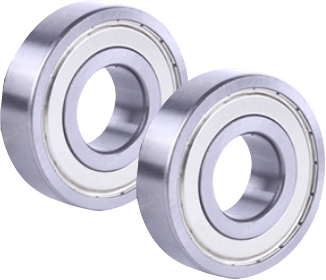
Structurally, corrosion-resistant deep groove ball bearings maintain the conventional configuration of inner and outer rings, rolling elements, cages, and seals. Performance differences arise primarily from materials and processing methods.
Stainless steel is the most common material choice for marine applications. Martensitic stainless steels offer a balance between corrosion resistance and mechanical strength, making them suitable for moderately loaded components. Austenitic stainless steels provide superior resistance to chlorides and aggressive cleaning agents but are generally limited to lighter loads due to lower hardness.
Manufacturing processes are designed to minimize surface defects that could initiate corrosion. Precision heat treatment ensures consistent hardness, while fine grinding and superfinishing reduce surface roughness and friction. Passivation processes are often applied to enhance the protective oxide layer on stainless steel components.
Several interrelated factors determine whether a bearing will perform reliably in marine service:
Material selection, which must balance corrosion resistance with load capacity
Seal design, critical for preventing seawater ingress and lubricant washout
Lubricant compatibility, particularly resistance to emulsification and salt contamination
Internal clearance, which must account for temperature variation and mounting conditions
Even within the category of Corrosion Resistant Bearings, inappropriate combinations of these factors can lead to premature failure.
For marine equipment manufacturers, bearing selection extends beyond technical specifications. Supplier reliability is equally important. Key considerations include traceability of materials, documented corrosion testing, and compliance with international quality standards.
Suppliers with experience in marine or offshore applications are better positioned to provide guidance on seal materials, lubrication options, and installation practices. Consistent production quality, stable lead times, and the ability to support customization—such as special clearances or cage designs—are essential for long-term partnerships.
A frequent challenge in marine applications is underestimating the aggressiveness of the environment. Bearings selected solely on nominal corrosion resistance may fail due to seal degradation or lubricant loss rather than material corrosion.
Another common issue is assuming all stainless steel bearings perform equally. Differences in steel grades, heat treatment, and surface finish can significantly affect service life. In some cases, standard Deep Groove Ball Bearings are upgraded without considering changes in load rating or fatigue performance, leading to unexpected operational limitations.
Corrosion-resistant deep groove ball bearings are widely used in seawater pumps, ventilation fans, winches, and auxiliary drives aboard vessels. In offshore platforms, they support handling equipment and power transmission systems exposed to salt spray and intermittent immersion.
Port and coastal infrastructure also relies on these bearings in cranes, conveyor systems, and automated handling equipment, where corrosion resistance directly impacts operational availability and safety.
The marine sector is increasingly adopting hybrid bearing designs that combine corrosion-resistant steel rings with ceramic rolling elements to reduce wear and electrical damage. Advances in seal technology and low-washout lubricants are extending maintenance intervals even in high-salinity conditions.
Environmental considerations are also influencing design trends. Longer-lasting bearings reduce replacement frequency, lowering material consumption and maintenance-related emissions. As marine equipment becomes more automated and remote monitoring expands, bearing reliability will remain a critical performance factor.
Are corrosion-resistant deep groove ball bearings suitable for full seawater immersion?
They can be, but only when material, sealing, and lubrication are specifically designed for immersion conditions.
Do corrosion-resistant bearings eliminate the need for maintenance?
They reduce maintenance frequency but do not eliminate the need for inspection and lubrication management.
Is stainless steel always the best choice for marine bearings?
Not necessarily. The optimal solution depends on load, speed, exposure level, and lifecycle requirements.
By carefully evaluating environmental conditions, material options, and supplier capabilities, engineers can select corrosion-resistant bearing solutions that support long-term reliability and performance in marine equipment applications.

Vincent Liang

+86 137 5749 2228

liangzexi@cxbearings.cn

No.195, Dongshaobei Road, Jiangbei District, Ningbo City, Zhejiang Province, China


Copyright © Zhejiang Dacheng Precision Machinery Co., Ltd. All Rights Reserved.

