 DACHENG PRECISION MACHINERY

Across global industrial sectors, equipment reliability is increasingly shaped by operating environments rather than pure load or speed requirements. Industries such as food processing, marine engineering, chemical manufacturing, renewable energy, and automated logistics often expose rotating components to moisture, chemicals, salt spray, cleaning agents, or fluctuating temperatures. In these conditions, bearing failure is frequently caused not by fatigue but by corrosion-related damage.
As production lines become more automated and downtime costs rise, manufacturers and OEMs are prioritizing components that can sustain long service intervals with minimal maintenance. This shift has driven steady demand for Corrosion Resistant Deep Groove Ball Bearings, particularly in export-oriented machinery where reliability expectations are high and service access may be limited.
Deep groove ball bearings are among the most widely used bearing types due to their simple design, high efficiency, and ability to support radial and moderate axial loads in both directions. Corrosion-resistant variants build on this design by addressing environmental degradation mechanisms such as oxidation, pitting, and chemical attack.
Corrosion resistance is achieved not through a single feature, but through a combination of material selection, surface engineering, sealing design, and lubrication strategy. These bearings aim to preserve dimensional stability, surface finish, and rolling contact integrity under conditions that would rapidly degrade standard carbon steel bearings.
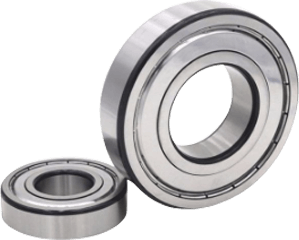
From a structural perspective, corrosion-resistant deep groove ball bearings retain the classic configuration of inner ring, outer ring, rolling elements, cage, and seals or shields. The performance differentiation lies primarily in materials and processing.
Common material choices include martensitic or austenitic stainless steels, each offering different balances of hardness, corrosion resistance, and load capacity. Martensitic grades provide higher hardness and load ratings, while austenitic grades offer superior resistance to aggressive chemicals at the expense of lower mechanical strength.
Manufacturing processes are tightly controlled to avoid inclusions or surface defects that could become corrosion initiation sites. Precision heat treatment, fine grinding, and superfinishing are used to achieve low surface roughness, reducing friction and minimizing moisture retention. In some applications, surface treatments or passivation processes further enhance resistance to corrosive agents.
Several variables directly affect the real-world performance of corrosion-resistant bearings:
Material purity and grade consistency, which influence both corrosion resistance and fatigue life
Seal design, critical for preventing ingress of water, dust, or chemicals
Lubricant compatibility, particularly when exposed to washdowns or temperature extremes
Manufacturing tolerances, which determine noise levels, efficiency, and load distribution
Even within the category of Corrosion Resistant Bearings, performance can vary significantly depending on how these factors are balanced for a specific application.
For industrial buyers and OEMs, selecting the right bearing supplier extends beyond catalog specifications. Key evaluation criteria often include traceability of raw materials, consistency of heat treatment processes, and the supplier’s ability to provide application-specific recommendations.
Certifications aligned with international standards, documented quality control procedures, and experience serving regulated industries are indicators of reliability. In global supply chains, stable lead times and clear communication on customization options—such as special clearances or seal materials—also play a critical role.
A frequent misconception is that corrosion-resistant bearings are universally interchangeable with standard designs. In reality, trade-offs exist. Some stainless steel bearings offer lower load ratings, and improper lubricant selection can negate corrosion resistance benefits.
Another common issue is premature failure due to seal incompatibility with cleaning chemicals or high-pressure washdowns. These failures are often misattributed to bearing quality rather than system-level design decisions.
Understanding these limitations helps engineers deploy Deep Groove Ball Bearings appropriately, rather than over-specifying or misapplying them.
In food and beverage processing, corrosion-resistant bearings are used in conveyors, mixers, and packaging equipment subjected to daily washdowns. In marine and offshore equipment, they support auxiliary drives exposed to salt-laden air. Renewable energy systems, such as small wind turbines or tracking mechanisms for solar panels, rely on these bearings to maintain efficiency in outdoor environments.
Automated warehouses and logistics systems also benefit, as corrosion resistance reduces the risk of unexpected stoppages in climate-controlled yet humidity-prone facilities.
The market is seeing increased interest in hybrid designs combining corrosion-resistant rings with ceramic rolling elements to further reduce wear and electrical damage. Advances in seal materials and low-washout lubricants are also extending service life in demanding environments.
From a sustainability perspective, longer-lasting bearings reduce material consumption and maintenance-related downtime, aligning with broader industrial efficiency goals. As machinery continues to operate in more aggressive and less predictable environments, corrosion resistance will remain a defining performance criterion rather than a niche requirement.
Are corrosion-resistant deep groove ball bearings maintenance-free?
They are not maintenance-free, but they typically require less frequent servicing when properly specified and installed.
Do corrosion-resistant bearings always use stainless steel?
Not always. Some designs rely on coatings or surface treatments, though stainless steel remains the most common solution.
Can these bearings replace standard bearings without redesign?
In many cases yes, but load ratings, clearances, and lubrication must be reviewed to ensure compatibility.

Vincent Liang

+86 137 5749 2228

liangzexi@cxbearings.cn

No.195, Dongshaobei Road, Jiangbei District, Ningbo City, Zhejiang Province, China


Copyright © Zhejiang Dacheng Precision Machinery Co., Ltd. All Rights Reserved.

