 DACHENG PRECISION MACHINERY

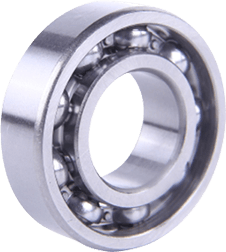
As industrial equipment continues to evolve toward compact, lightweight, and highly integrated designs, demand for thin walled bearings in small and medium bore sizes has increased significantly. In particular, bearings with bore diameters ranging from 5mm to 50mm are widely specified by OEM manufacturers in Europe and North America for applications where space constraints and motion accuracy must be balanced.
These size ranges cover the majority of precision assemblies found in robotics, medical devices, automation modules, optical systems, and semiconductor equipment. Compared with standard bearings, thin section designs allow engineers to reduce housing dimensions and system mass without compromising rotational performance or structural reliability.
Thin walled bearings—also referred to as thin section bearings—are characterized by a reduced radial cross section that remains nearly constant across different bore sizes. Within the 5mm–50mm bore range, this design approach offers predictable integration for OEM systems, enabling consistent mechanical layouts across product families.
These bearings are commonly classified within the Precision Bearings category due to their tight tolerance requirements, controlled internal clearance, and stable rotational behavior. In compact equipment, even small deviations in bearing geometry can influence system accuracy, making dimensional consistency critical.
Thin walled bearings in this category typically include:
Small bore sizes: 5mm–10mm
Used in optical instruments, sensors, miniature motors, and medical tools.
Medium bore sizes: 10mm–25mm
Common in robotics joints, automation actuators, and precision drive systems.
Larger thin-section sizes: 25mm–50mm
Applied in rotary tables, indexing units, and compact industrial assemblies.
Across this range, outer diameter and width are minimized relative to bore size, supporting lightweight structures and reduced inertia.
Despite their slim profile, thin walled bearings in the 5mm–50mm range are engineered to deliver reliable performance under demanding conditions.
Load Capability
Depending on configuration, bearings may support radial loads, axial loads, or combined loads through angular contact designs. Proper selection ensures sufficient stiffness for accurate positioning.
Rotational Accuracy
Controlled raceway geometry and tight runout limits enable smooth rotation and repeatable motion, essential for servo-driven and feedback-controlled systems.
Low Friction Behavior
Optimized surface finish and internal clearance management help reduce friction and heat generation, supporting continuous or high-speed operation.
These characteristics are also central to High Precision Thin Walled Bearings, where performance is achieved through manufacturing accuracy rather than mass.
Material selection plays a critical role in thin section bearing performance, particularly within small and medium bore sizes.
Common Materials
Bearing-grade carbon steel for controlled industrial environments
Stainless steel (such as 304 or 316) for corrosion resistance, hygiene, or cleanroom use
Manufacturing Process
Producing thin walled bearings in the 5mm–50mm range requires specialized equipment and process control:
CNC grinding of raceways to micrometer-level accuracy
Controlled heat treatment to achieve uniform hardness while minimizing distortion
Superfinishing to improve surface integrity and fatigue life
Dimensional inspection using high-precision measuring systems
These processes ensure consistency across production batches, which is essential for OEM supply programs.
Thin section bearings become increasingly sensitive to external factors as size decreases. Important considerations include:
Housing and Shaft Accuracy: Thin walls are more susceptible to deformation caused by improper fits.
Preload and Clearance Control: Incorrect settings can reduce stiffness or increase wear.
Surface Finish Quality: Especially important for low-torque or low-noise applications.
Assembly Conditions: Cleanliness and alignment directly affect service life.
Addressing these factors early in the design phase helps avoid performance issues during operation.
Thin walled bearings in this size range are widely used across precision-driven industries:
Robotics and Automation: Compact joints, harmonic drive systems, and rotary actuators
Medical Devices: Imaging systems, diagnostic equipment, and surgical tools
Optical and Measuring Equipment: Positioning stages and precision instruments
Semiconductor Machinery: Wafer handling systems and cleanroom motion platforms
Compact Industrial Machinery: Indexing tables and precision transmission units
In each case, thin section designs support compact system architecture while maintaining accuracy.
While standard sizes cover many applications, OEM projects often require customization. This may include:
Non-standard widths or diameters
Specific tolerance classes
Material or lubrication adjustments
Application-specific inspection criteria
From a supply chain perspective, OEM customers typically prioritize manufacturers with proven experience in thin section geometries, stable quality systems, and the ability to support both prototype and series production.
A frequent challenge is underestimating the importance of mounting conditions. Thin walled bearings in the 5mm–50mm range do not tolerate housing distortion as well as standard bearings. Another issue involves over-specifying tolerances without considering system-level requirements, which can increase cost without proportional benefit.
Clear communication between design engineers and bearing manufacturers helps mitigate these risks.
As equipment continues to miniaturize while demanding higher precision, thin walled bearings in small and medium sizes are expected to see continued adoption. Trends include tighter tolerance requirements, increased use of stainless materials, and greater emphasis on lifecycle performance rather than initial cost.
Within this landscape, Thin Walled Bearings covering the 5mm–50mm range remain a foundational component for next-generation precision systems.
Are thin walled bearings suitable for high-speed operation in small sizes?
Yes, when properly designed, lubricated, and mounted, they can operate reliably at high speeds.
Is customization common for 5mm–50mm bearings?
Yes. OEM projects often require tailored dimensions or tolerances to fit compact assemblies.
What is the most common cause of failure?
Improper mounting or housing distortion is a frequent contributor to performance issues.

Vincent Liang

+86 137 5749 2228

liangzexi@cxbearings.cn

No.195, Dongshaobei Road, Jiangbei District, Ningbo City, Zhejiang Province, China


Copyright © Zhejiang Dacheng Precision Machinery Co., Ltd. All Rights Reserved.

