 DACHENG PRECISION MACHINERY

Precision engineering sectors such as robotics, medical devices, optical systems, and semiconductor manufacturing are undergoing rapid evolution. Equipment is expected to deliver higher accuracy, smoother motion, and longer operational life, often within increasingly compact mechanical envelopes. In these environments, bearing performance directly affects system stability, energy efficiency, and repeatability.
Traditional bearing solutions, while robust, can introduce excessive friction, vibration, or acoustic noise when applied to precision assemblies. This has driven growing adoption of Low Friction Thin Bearings in applications where space constraints and motion quality are equally critical. Their ability to combine compact geometry with controlled friction characteristics makes them particularly well suited to high-end industrial and scientific equipment.
Beyond mechanical performance, regulatory pressure on energy consumption and lifecycle efficiency has further reinforced demand for bearing designs that minimize power loss and heat generation.
Thin bearings are defined by their reduced radial cross section relative to bore diameter. Unlike conventional bearings, they maintain a nearly constant cross-sectional profile across size ranges, enabling designers to scale shafts and housings without increasing overall system size.
Low friction performance is achieved through precise control of internal geometry. Raceway curvature, contact angle, and rolling element conformity are optimized to reduce sliding motion and micro-slip. In precision systems, even small reductions in friction torque can significantly improve positioning accuracy and dynamic response.
Closely related is noise behavior. In applications such as laboratory instruments or medical imaging equipment, vibration and acoustic output are tightly controlled. Bearings engineered for low friction often overlap with the design principles of Low Noise Bearings, as smoother rolling contact reduces excitation sources within the bearing.
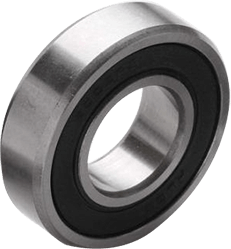
The basic structure consists of inner and outer rings, rolling elements, and a cage. For precision engineering applications, dimensional tolerances and surface finish are considerably tighter than those of general-purpose bearings.
Bearing rings are commonly produced from high-quality chrome steel for its fatigue resistance and load capacity. Stainless steel variants are selected when corrosion resistance, cleanliness, or sterilization compatibility is required. Rolling elements may be steel or ceramic; ceramic balls reduce mass and centrifugal force, contributing to stable performance at higher speeds.
Manufacturing emphasizes advanced grinding and super-finishing techniques. Raceway surfaces are polished to minimize roughness at the microscopic level, which directly influences friction and wear behavior. Cage design, often using engineered polymers or lightweight alloys, is optimized to reduce internal drag while maintaining stability.
Several interdependent factors determine whether a thin bearing performs effectively in precision engineering systems:
Internal clearance and preload control: Incorrect settings can lead to either vibration or excessive friction.
Lubrication selection: Low-viscosity greases or specialty oils are often used to balance friction reduction with wear protection.
Geometric accuracy: Roundness, runout, and raceway alignment directly affect torque consistency.
Installation conditions: Housing distortion or misalignment can negate design advantages.
Precision bearings are highly sensitive to system-level integration, making early collaboration between design engineers and bearing specialists essential.
From a procurement standpoint, thin bearings require more scrutiny than standard catalog components. Manufacturing capability, inspection processes, and traceability are central evaluation criteria. Suppliers must demonstrate consistent control over tolerances and surface finishing processes.
Equally important is technical support. Precision engineering projects often require customized clearances, lubrication strategies, or material selections. Suppliers with application engineering expertise can reduce development risk and improve long-term reliability.
Stable supply, documented quality systems, and experience with low-volume or high-mix production are additional considerations, particularly for OEMs serving specialized markets.
A frequent challenge is underestimating operating conditions, especially combined loads and dynamic duty cycles. Thin bearings selected purely on size constraints may experience premature wear if load distribution is not properly evaluated.
Noise-related issues are another concern. Even minor surface imperfections or cage instability can introduce vibration, undermining the benefits expected from Low Friction Bearings. Addressing these issues requires both precise manufacturing and careful system integration.
Lubrication compatibility also presents difficulties, particularly in clean-room or vacuum environments where conventional lubricants may be unsuitable.
In robotic joints and precision stages, thin bearings support smooth rotational motion while maintaining structural stiffness. Their compact form enables tighter packaging and reduced inertia, improving control responsiveness.
Medical imaging equipment relies on consistent, low-friction rotation to ensure image accuracy and patient comfort. Similarly, optical inspection systems benefit from stable, low-noise motion that preserves measurement integrity.
In semiconductor manufacturing, thin bearings contribute to precise wafer handling and reduced particle generation, supporting high-yield production environments.
Ongoing development focuses on hybrid material combinations, advanced surface treatments, and application-specific lubrication solutions. There is also growing interest in integrating condition-monitoring capabilities, enabling predictive maintenance in high-value systems.
As precision engineering continues to push toward higher accuracy and lower energy consumption, the role of Low Friction Thin Bearings is expected to expand. Improvements in materials science and process control will further reduce friction variability and extend operational life.
Are thin bearings suitable for high-precision systems under continuous operation?
Yes, when properly specified. Load analysis, lubrication, and installation accuracy are critical to long-term stability.
How does low friction relate to noise performance?
Reduced friction often leads to smoother rolling motion, which can lower vibration and acoustic emissions.
Can thin bearings be customized for specific applications?
Many precision applications require tailored clearances or materials, making supplier engineering support an important factor.
By aligning bearing design, manufacturing quality, and system integration, precision engineers can leverage thin bearing technology to achieve reliable, efficient, and accurate motion in demanding applications.

Vincent Liang

+86 137 5749 2228

liangzexi@cxbearings.cn

No.195, Dongshaobei Road, Jiangbei District, Ningbo City, Zhejiang Province, China


Copyright © Zhejiang Dacheng Precision Machinery Co., Ltd. All Rights Reserved.

