 DACHENG PRECISION MACHINERY

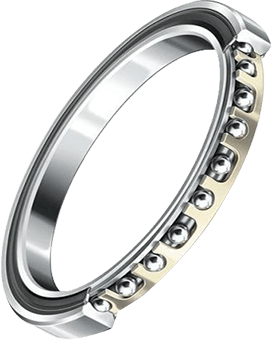
High-speed rotation has become a defining requirement in many modern systems, particularly where compact electric motors, precision spindles, and automated modules are involved. Industries such as medical technology, robotics, semiconductor equipment, and advanced instrumentation increasingly rely on miniature components that must operate at high rotational speeds without compromising accuracy or durability. In these environments, bearing performance directly affects noise levels, energy efficiency, and service life.
As equipment footprints shrink, designers face tighter constraints on space, heat dissipation, and vibration control. This has accelerated demand for miniature precision grade stainless steel bearings engineered specifically for high-speed rotation. These bearings are expected to deliver consistent performance under demanding operating conditions while maintaining resistance to corrosion and contamination.
High-speed bearing performance is governed by a combination of geometric accuracy, material behavior, and tribological stability. For miniature bearings, the margin for error is particularly small. Minor deviations in raceway geometry or surface finish can generate disproportionate increases in friction and heat at elevated speeds.
Precision grade bearings are manufactured to stricter tolerance classes, controlling parameters such as radial runout, ball diameter variation, and raceway waviness. Stainless steel is often selected for miniature high-speed applications because it offers a balanced combination of strength, corrosion resistance, and dimensional stability. When correctly processed, stainless steel can support smooth rolling contact at high rotational frequencies.
The basic structure of a miniature bearing consists of inner and outer rings, rolling elements, and a cage. However, in high-speed designs, each component is optimized to minimize mass, friction, and dynamic imbalance.
Material selection typically focuses on martensitic stainless steels capable of achieving high hardness through heat treatment. For miniature sizes, material purity is critical, as inclusions or microstructural inconsistencies can initiate fatigue under high-speed cyclic loading. Rings and balls are produced using precision machining and grinding processes, followed by superfinishing to achieve very low surface roughness.
Cage design also plays an important role. Lightweight cages with stable guidance reduce centrifugal forces acting on the rolling elements, supporting smoother operation at elevated speeds. Assembly processes often involve selective matching of components to achieve precise internal clearance, which is essential for thermal stability during operation.
Several interrelated factors determine whether a miniature bearing can operate reliably at high speed:
Geometric precision: Roundness and concentricity directly affect vibration and noise.
Surface finish: Fine raceway finishes reduce friction and help maintain a stable lubrication film.
Internal clearance: Too little clearance can cause excessive heat buildup, while too much can reduce rotational accuracy.
Lubrication selection: High-speed operation requires lubricants with appropriate viscosity and low shear resistance.
For engineers specifying High Performance Bearings, these factors must be evaluated together rather than in isolation.
Selecting a supplier for miniature high-speed bearings involves more than verifying dimensional specifications. OEMs often assess a supplier’s experience with small-bore production, process control capabilities, and inspection methods. Specialized equipment is required to measure roundness, noise, and torque at miniature scales.
Consistency across production batches is another critical consideration. In high-speed applications, even small variations can lead to measurable differences in motor behavior. Suppliers with robust quality management systems and traceable manufacturing processes are better positioned to support long-term OEM programs.
One common challenge in high-speed miniature applications is thermal management. As rotational speed increases, frictional heat can accumulate quickly, affecting lubricant performance and bearing clearance. Improper lubrication is a frequent cause of early failure, particularly when grease selection does not match speed and temperature conditions.
Another issue is acoustic performance. High-speed miniature systems are often used in environments where noise is tightly controlled, such as medical devices or laboratory equipment. Excessive vibration or tonal noise can compromise system acceptance, even if mechanical life is adequate.
Miniature precision bearings designed for high-speed rotation are widely used in:
Medical handpieces and diagnostic equipment requiring quiet, reliable operation
High-speed miniature motors in robotics and automation modules
Optical and measuring instruments where rotational stability is critical
Semiconductor handling and inspection systems operating continuously
In these applications, Precision Bearings support consistent performance and help maintain system-level accuracy over extended operating cycles.
The trend toward higher rotational speeds and smaller form factors is driving continued innovation in bearing design and manufacturing. Improvements in superfinishing techniques, advanced cage materials, and optimized lubrication systems are enabling higher speed limits without sacrificing reliability.
Hybrid configurations and enhanced inspection technologies are also gaining traction as OEMs seek more predictable performance data during qualification. As demand grows for compact systems capable of sustained high-speed operation, miniature precision grade stainless steel bearings will remain a key enabling technology.
Why are stainless steel bearings preferred for high-speed miniature applications?
They provide corrosion resistance and dimensional stability while supporting the precision required for high-speed operation.
Does higher speed always reduce bearing life?
Not necessarily. With correct design, lubrication, and clearance control, high-speed operation can be sustained reliably.
Are these bearings suitable for continuous-duty systems?
Yes, when properly specified and matched to the operating environment, they are commonly used in continuous high-speed applications.

Vincent Liang

+86 137 5749 2228

liangzexi@cxbearings.cn

No.195, Dongshaobei Road, Jiangbei District, Ningbo City, Zhejiang Province, China


Copyright © Zhejiang Dacheng Precision Machinery Co., Ltd. All Rights Reserved.

