 DACHENG PRECISION MACHINERY

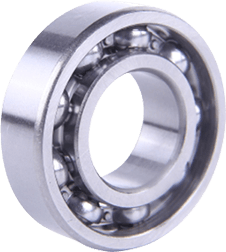
Across global manufacturing sectors, equipment is becoming more compact while performance requirements continue to rise. From miniature electric motors and medical devices to automation modules and precision instruments, engineers are expected to achieve higher accuracy, lower noise, and longer service life within increasingly constrained design envelopes. Bearings play a central role in meeting these expectations, particularly when shaft diameters range from very small to mid-sized.
This has driven sustained demand for Precision Grade Stainless Steel Bearings covering bore sizes from 1.5mm to 60mm. Such a range supports both miniature assemblies and small-to-medium industrial components, allowing OEMs to standardize designs while maintaining consistent performance. Stainless steel bearings are especially favored where corrosion resistance, cleanliness, and dimensional stability are essential.
Precision grade bearings are distinguished by their tighter control of dimensional tolerances, geometry, and surface quality compared with standard industrial bearings. For bore sizes as small as 1.5mm, even micron-level deviations can significantly affect rotational accuracy and friction. At the upper end of 60mm, maintaining consistent raceway geometry becomes critical for load distribution and vibration control.
Stainless steel introduces additional complexity. Unlike conventional bearing steel, stainless grades must balance corrosion resistance with hardness and fatigue strength. Through controlled material selection and heat treatment, manufacturers can produce bearings that meet demanding accuracy classes while retaining the environmental advantages of stainless materials.
Regardless of size, the fundamental structure of a stainless steel ball bearing includes inner and outer rings, rolling elements, and a cage. However, manufacturing methods vary significantly across the 1.5mm to 60mm bore range.
For miniature bearings, components are often machined and ground using specialized equipment designed to handle thin sections and extremely tight tolerances. Material cleanliness is critical, as inclusions or micro-defects have a proportionally greater impact on fatigue life at small scales. For mid-sized bearings, process control focuses more on heat treatment uniformity and raceway finishing to ensure stable performance under load.
Martensitic stainless steels are commonly used due to their ability to achieve high hardness after heat treatment. Precision grinding and superfinishing processes reduce surface roughness, enabling smoother rolling contact and more stable lubrication behavior. Selective assembly based on measured component dimensions further refines internal clearance control.
Several interrelated factors determine whether a bearing in this size range will meet application requirements:
Geometric accuracy: Roundness, concentricity, and raceway alignment directly influence vibration and noise.
Internal clearance: Clearance must be matched to operating speed, temperature, and load to avoid premature wear or excessive heat.
Surface integrity: Fine finishes support consistent lubrication films and reduce friction.
Material treatment: Inconsistent heat treatment can lead to dimensional instability or reduced fatigue resistance.
For engineers specifying High Performance Bearings, these parameters often matter more than nominal load ratings listed in catalogs.
Selecting a supplier capable of producing precision stainless bearings across a wide bore range requires careful evaluation. Key considerations include manufacturing specialization, inspection capability, and process traceability. Suppliers experienced with both miniature and mid-sized bearings are better positioned to maintain consistent quality standards across different product families.
Advanced inspection methods—such as roundness measurement, vibration analysis, and surface roughness testing—are indicators of process maturity. In regulated industries, documentation and batch traceability are also essential for qualification and lifecycle management.
One common challenge is assuming that performance scales linearly with size. In reality, a design approach suitable for a 10mm bore bearing may not translate directly to a 2mm or 50mm application. Miniature bearings are particularly sensitive to contamination and assembly handling, while larger sizes are more affected by load misalignment and thermal expansion.
Another issue is balancing corrosion resistance with fatigue life. While stainless steel performs well in humid or mildly corrosive environments, it requires careful specification to avoid underperformance in high-load or high-speed scenarios.
Bearings within the 1.5mm to 60mm bore range are widely used across industries:
Miniature motors and actuators in medical and laboratory equipment
Robotics joints and automation modules requiring repeatable motion
Precision instruments and measuring devices
Compact industrial machinery and electric drive systems
In these applications, Precision Bearings enable stable operation, reduced vibration, and predictable service intervals, supporting overall system reliability.
Several trends are shaping the future of precision stainless steel bearings. OEMs increasingly demand tighter tolerances and lower noise levels, driving improvements in grinding and superfinishing technology. Hybrid solutions, combining stainless steel rings with alternative rolling elements, are gaining attention for applications requiring higher speeds or reduced lubrication.
Digitalization is also influencing supplier selection. Data-driven quality control and advanced inspection records provide OEMs with greater confidence in long-term supply consistency. As equipment continues to shrink while expectations rise, precision bearing technology will remain a key enabler of innovation.
Are bearings with very small bore sizes more prone to failure?
They are more sensitive to contamination and handling, but when properly manufactured and applied, they offer reliable long-term performance.
Can one supplier cover the full 1.5mm to 60mm range consistently?
Yes, provided they have dedicated processes and inspection systems tailored to different size categories.
Is stainless steel always the best choice?
It is ideal for applications requiring corrosion resistance and cleanliness, but material selection should always be matched to load and speed requirements.

Vincent Liang

+86 137 5749 2228

liangzexi@cxbearings.cn

No.195, Dongshaobei Road, Jiangbei District, Ningbo City, Zhejiang Province, China


Copyright © Zhejiang Dacheng Precision Machinery Co., Ltd. All Rights Reserved.

