 DACHENG PRECISION MACHINERY

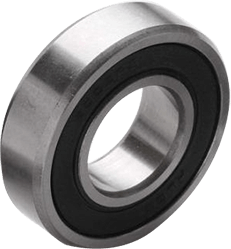
Precision machinery across sectors such as robotics, aerospace, medical equipment, and semiconductor manufacturing is evolving toward lighter structures, higher accuracy, and lower energy consumption. As system architectures become more compact, traditional bearing solutions increasingly struggle to meet space, torque, and efficiency requirements simultaneously. This shift has driven growing interest in thin section bearings engineered for reduced friction and stable motion behavior.
From a market perspective, OEMs and system integrators are under pressure to improve total system efficiency while maintaining reliability over long service intervals. Bearings, although often perceived as standard components, directly influence power loss, vibration, thermal behavior, and acoustic performance. As a result, thin section bearings with optimized friction characteristics have become a strategic design choice rather than a secondary mechanical consideration.
Thin section bearings are characterized by a small, constant radial cross section relative to their bore diameter. Unlike conventional bearings, their envelope size remains consistent across different diameters, allowing designers to increase shaft size and stiffness without expanding the overall footprint.
Low friction performance is achieved through refined internal geometry and contact mechanics. Raceway profiles are designed to promote rolling rather than sliding contact, minimizing energy loss and heat generation. In Low Friction Bearings, internal clearances are carefully controlled to balance torque reduction with load stability, particularly in applications involving frequent acceleration and deceleration.
Another important concept is friction consistency. In precision systems, variations in torque can lead to positioning errors or control instability. Thin section bearings optimized for low friction aim to deliver predictable, repeatable performance across their operating range.
The structural configuration of thin section bearings typically includes inner and outer rings, rolling elements, and a cage. Depending on load requirements, designs may be deep groove, angular contact, or four-point contact.
Material selection is a critical factor. Bearing rings are commonly manufactured from high-grade chrome steel for its fatigue strength and dimensional stability. Stainless steel options are chosen for corrosive environments or applications requiring frequent cleaning. Rolling elements may be steel or ceramic; ceramic balls reduce mass and centrifugal forces, contributing to stable performance at higher rotational speeds.
Manufacturing processes emphasize precision grinding, raceway super-finishing, and tight control of geometric tolerances. Surface roughness at the micro level has a measurable impact on friction and noise behavior. Cage design, often using engineered polymers or lightweight alloys, is optimized to reduce internal drag while maintaining rolling element guidance.
Several interconnected factors determine whether a thin section bearing achieves its intended low-friction advantage:
Internal clearance and preload: Incorrect settings can increase friction or compromise rigidity.
Surface finish and roundness: Deviations lead to torque fluctuation and increased wear.
Lubrication type and quantity: Over-lubrication can increase drag, while insufficient lubrication accelerates wear.
Mounting accuracy: Housing distortion or misalignment can negate precision manufacturing benefits.
Because thin section bearings are sensitive to system-level conditions, performance depends not only on the bearing itself but also on integration quality.
Thin section bearings are not interchangeable commodities. Supplier capability has a direct impact on performance consistency and long-term reliability. OEM buyers typically evaluate manufacturers based on process control, inspection methods, and experience with thin-section geometries.
Technical collaboration is another important factor. Many applications require customized clearances, lubrication strategies, or material combinations. Suppliers with engineering support capabilities can help optimize bearing selection during early design stages, reducing the risk of costly revisions later in the project lifecycle.
Quality documentation, traceability, and stable production capacity are also critical, particularly for industries with regulatory or certification requirements.
One recurring challenge is selecting bearings based solely on dimensional constraints without sufficient load and duty-cycle analysis. Thin bearings can support significant loads, but improper specification may lead to premature fatigue or unstable torque behavior.
Noise and vibration issues are another concern. Although thin bearings are often associated with Low Noise Bearings, achieving quiet operation depends on surface quality, cage stability, and lubrication compatibility. Small manufacturing inconsistencies can become noticeable in sensitive applications.
Additionally, environmental constraints such as vacuum conditions, clean-room requirements, or temperature extremes can complicate lubrication and material choices.
Thin section bearings with low friction are widely used in robotic joints, rotary tables, and precision positioning systems, where compact size and smooth motion are essential. Their reduced inertia supports faster response times and improved control accuracy.
In medical imaging and diagnostic equipment, consistent rotational behavior contributes to image quality and patient comfort. Optical inspection systems benefit from stable, low-friction motion that minimizes measurement drift.
In semiconductor manufacturing, thin bearings support wafer handling and alignment processes, helping maintain cleanliness and positional accuracy in high-throughput environments.
Current development trends focus on hybrid material solutions, advanced surface treatments, and application-specific lubrication systems. These innovations aim to further reduce friction variability and extend service life under demanding conditions.
There is also growing interest in integrating sensing technologies for condition monitoring, enabling predictive maintenance in high-value equipment. As systems become more compact and performance expectations increase, demand for Low Friction Thin Bearings is expected to grow steadily.
Do thin section bearings compromise load capacity?
When properly designed and specified, they can handle substantial loads relative to their size.
How does low friction relate to acoustic performance?
Reduced friction often leads to smoother rolling contact, which can lower vibration and noise levels.
Are thin bearings suitable for long service intervals?
Yes, provided lubrication, load conditions, and installation accuracy are properly managed.
By understanding the design advantages and integration requirements of thin section bearings, engineers and procurement teams can make informed decisions that support efficient, reliable, and precise mechanical systems.

Vincent Liang

+86 137 5749 2228

liangzexi@cxbearings.cn

No.195, Dongshaobei Road, Jiangbei District, Ningbo City, Zhejiang Province, China


Copyright © Zhejiang Dacheng Precision Machinery Co., Ltd. All Rights Reserved.

