 DACHENG PRECISION MACHINERY

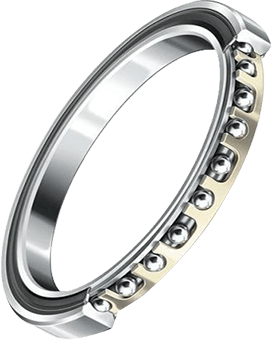
In sectors where hygiene, corrosion resistance, and reliability are non-negotiable, bearing selection becomes a strategic engineering decision rather than a routine component choice. Medical devices, laboratory automation, food and pharmaceutical equipment, and high-precision instruments increasingly operate in environments involving moisture, aggressive cleaning agents, and strict regulatory oversight. This has driven sustained demand for Surgical Stainless Steel Bearings, a specialized category designed to meet both mechanical and sanitary requirements.
Compared with general industrial bearings, these products are often specified earlier in the design phase. OEMs and engineering procurement teams prioritize lifecycle stability, material traceability, and compliance with medical or hygienic standards. As global medical device manufacturing expands and automation penetrates clean environments, demand for stainless solutions with predictable performance continues to rise.
Surgical stainless steel bearings are rolling bearings manufactured from stainless steel grades originally developed for medical and surgical applications. The term “surgical” does not imply single-use or implantable use, but rather refers to material characteristics such as corrosion resistance, cleanliness, and biocompatibility principles.
Within the broader category of Stainless Steel Bearings, surgical grades typically offer enhanced resistance to oxidation, repeated cleaning, and chemical exposure. They are engineered to operate reliably in conditions where conventional chrome steel bearings would fail prematurely due to corrosion or contamination.
From a structural standpoint, surgical stainless steel bearings follow standard bearing architectures: inner ring, outer ring, rolling elements (balls or rollers), and cages. The differentiation lies primarily in material selection and process control.
Common materials include martensitic or austenitic stainless steels tailored for bearing use. These alloys balance hardness with corrosion resistance and are heat-treated to achieve stable microstructures. Rolling elements are ground to high precision, while raceways undergo fine finishing to reduce friction and wear.
Manufacturing processes place strong emphasis on cleanliness. Controlled environments, filtered coolants, and post-processing cleaning steps help minimize inclusions and surface contamination. For applications in medical or laboratory equipment, additional inspection stages may be applied to ensure dimensional consistency and surface integrity.
Several variables directly influence the operational performance of surgical stainless steel bearings:
Material grade selection: Different stainless alloys offer trade-offs between hardness, corrosion resistance, and fatigue life.
Surface finish: Fine surface roughness reduces friction, noise, and particle generation.
Heat treatment stability: Proper heat treatment ensures dimensional stability under thermal cycling and repeated sterilization.
Lubrication compatibility: Bearings may need to operate with food-grade lubricants, dry lubrication, or minimal lubrication depending on the application.
Ignoring any of these factors can lead to premature wear, increased noise, or reduced service life, especially in high-hygiene environments.
For OEMs and distributors, sourcing medical-grade bearings involves more than comparing dimensions and prices. Supplier evaluation typically includes:
Consistency of material sourcing and documentation
Manufacturing process control and inspection capability
Experience with medical or hygienic applications
Ability to support long-term supply with stable specifications
Traceability and process transparency are increasingly valued, particularly for customers integrating bearings into regulated equipment. In this context, Medical Bearings are often procured from manufacturers with established quality systems and application-specific expertise.
Despite their advantages, surgical stainless steel bearings are not without challenges. A frequent misconception is that higher corrosion resistance automatically implies superior load capacity or fatigue life. In reality, stainless steels often have lower hardness than chrome steel, requiring careful load analysis during design.
Another common issue is over-specification. Using surgical grades where standard stainless would suffice can increase costs without measurable performance benefits. Engineers must balance environmental requirements with mechanical demands rather than relying on material labels alone.
Surgical stainless steel bearings are widely used in:
Medical and dental equipment, such as imaging systems, handpieces, and pumps
Laboratory automation and analytical instruments
Food and pharmaceutical processing machinery
Cleanroom automation and inspection systems
In these applications, resistance to washdown, disinfectants, and humidity is critical. Bearings may be exposed to frequent cleaning cycles or operate in enclosed systems where lubricant leakage and particle generation must be minimized.
Current development trends focus on extending service life while maintaining hygiene standards. Improvements in surface engineering, such as optimized raceway finishes and advanced cage materials, are helping reduce wear and noise. There is also growing interest in hybrid designs that combine stainless steel rings with ceramic rolling elements for enhanced speed capability and corrosion resistance.
From a market perspective, demand is shifting toward application-specific solutions rather than generic catalog items. Suppliers capable of supporting customization, documentation, and engineering collaboration are likely to gain a competitive advantage as equipment complexity increases.
Are surgical stainless steel bearings suitable for high-load applications?
They can handle moderate loads effectively, but load capacity should be evaluated carefully against operating conditions and material properties.
Do these bearings require special maintenance?
Maintenance depends on the environment. In many cases, proper lubricant selection and periodic inspection are sufficient, even under frequent cleaning cycles.
Are they mandatory for all medical devices?
Not necessarily. Material choice depends on exposure conditions, regulatory requirements, and performance expectations rather than industry labels alone.

Vincent Liang

+86 137 5749 2228

liangzexi@cxbearings.cn

No.195, Dongshaobei Road, Jiangbei District, Ningbo City, Zhejiang Province, China


Copyright © Zhejiang Dacheng Precision Machinery Co., Ltd. All Rights Reserved.

