 DACHENG PRECISION MACHINERY

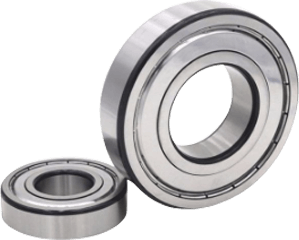
Electric motors are becoming smaller, faster, and more efficient across a wide range of industries. From automation systems and medical devices to HVAC units and robotics, compact motor designs are now expected to deliver high power density while maintaining low noise and long service life. As a result, demand has increased for small size bearings that can operate reliably under high rotational speeds and tight spatial constraints.
In European and North American markets, motor manufacturers face growing pressure from energy efficiency regulations, customer expectations for quiet operation, and reduced maintenance cycles. These factors have elevated the role of High Precision Deep Groove Ball Bearings in motor design. In compact motors, even minor deviations in bearing geometry or surface quality can translate into vibration, acoustic issues, or premature wear, making precision no longer optional but essential.
Small size deep groove ball bearings are typically defined by bore diameters below 20 mm, often significantly smaller in applications such as servo motors, fans, and micro-drives. While their basic geometry aligns with standard designs, precision grades such as P5 or P4 introduce tighter tolerances on dimensions, runout, and internal geometry.
Within the category of Deep Groove Ball Bearings, small precision variants are valued for their ability to handle radial loads and moderate axial loads in both directions, while maintaining low friction. Their symmetrical raceway design supports smooth rotation, which is critical for motors operating at high speeds or under frequent start-stop conditions.
From a system perspective, higher precision reduces internal excitation forces. This directly contributes to lower vibration levels, improved efficiency, and more predictable motor behavior over time.
The fundamental structure of small precision bearings includes inner and outer rings, rolling elements, a cage, and optional seals or shields. What differentiates high-precision products is not the structure itself, but the materials used and the level of manufacturing control applied.
Bearing-grade chrome steel remains the most common material due to its fatigue strength and wear resistance. For specialized motor environments, such as medical or food-processing equipment, stainless steel alternatives may be selected to address corrosion concerns. Heat treatment processes are carefully controlled to ensure dimensional stability, which is especially important at small scales where thermal distortion has a proportionally larger impact.
Manufacturing processes involve precision grinding and superfinishing of raceways to achieve extremely low surface roughness and minimal waviness. Ball diameter variation is tightly controlled, and cages are designed to reduce mass and friction. These attributes align small motor bearings with the broader expectations of Precision Ball Bearings used in demanding electromechanical systems.
In compact motor applications, bearing performance is highly sensitive to several key factors:
Internal clearance: Small bearings are more affected by incorrect clearance selection, which can lead to excessive preload or instability at speed.
Lubrication: Grease type, viscosity, and fill quantity must match speed and temperature conditions; over-lubrication is a common issue in small motors.
Surface quality: Raceway finish directly influences noise and efficiency.
Thermal effects: Limited heat dissipation in compact housings can accelerate lubricant degradation.
Mounting precision: Shaft and housing tolerances must be consistent with bearing accuracy to avoid distortion.
Because of the small size, tolerances in surrounding components often have as much impact on performance as the bearing itself.
Selecting suppliers for small high-precision bearings requires attention to process capability rather than catalog availability. Many suppliers can produce small bearings, but consistent precision production demands advanced grinding equipment, clean manufacturing environments, and detailed inspection procedures.
Motor manufacturers often look for suppliers that provide noise testing, runout measurement, and traceability of materials. Long-term consistency is particularly important in OEM motor programs, where performance variations between batches can affect product certification and customer satisfaction. Supply chain reliability, including stable lead times and repeatable quality, is a critical evaluation criterion.
One of the most common issues reported in small motor applications is unexpected noise increase after initial operation. This is frequently linked to improper grease selection or contamination during assembly. Another challenge is premature bearing wear caused by electrical currents passing through motor shafts, which can be more damaging in small bearings due to limited contact area.
Engineers also face trade-offs between sealing and speed. While seals protect against contamination, they introduce additional friction and heat, which may not be acceptable in high-speed compact motors.
Small size high precision deep groove ball bearings are widely used in servo motors, brushless DC motors, cooling fans, and precision actuators. In robotics, they support smooth and repeatable motion in joints and end-effectors. In medical devices, their low noise and stable performance contribute to user comfort and regulatory compliance.
In HVAC and ventilation systems, compact motors equipped with precision bearings operate continuously at high speed, where reduced friction and extended service life translate into lower energy consumption and maintenance costs. These applications highlight the strategic role of precision bearings in modern motor-driven systems.
The future of small motor bearings is closely tied to trends in electrification, automation, and miniaturization. Higher rotational speeds and increased power density will place greater demands on bearing materials, surface engineering, and lubrication systems. Developments in low-noise cage designs and advanced greases are already supporting these requirements.
At the same time, predictive maintenance and condition monitoring are becoming more common, even in smaller motors. Consistent bearing behavior will be essential for reliable data interpretation. Within this evolving landscape, small size High Precision Deep Groove Ball Bearings are expected to remain a key enabling component, supporting motor designs that balance efficiency, durability, and compactness without compromising performance.

Vincent Liang

+86 137 5749 2228

liangzexi@cxbearings.cn

No.195, Dongshaobei Road, Jiangbei District, Ningbo City, Zhejiang Province, China


Copyright © Zhejiang Dacheng Precision Machinery Co., Ltd. All Rights Reserved.

