 DACHENG PRECISION MACHINERY

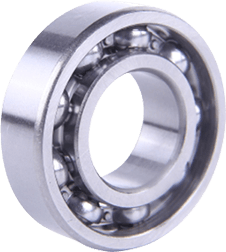
As mechanical systems become smaller and faster, the role of bearing technology has shifted from a supporting component to a performance-defining element. Devices such as micro motors, medical tools, and precision instruments operate at rotational speeds that were once reserved for much larger machinery. Within this landscape, High Speed Miniature Ball Bearings are engineered to meet demanding requirements for speed, accuracy, and reliability while maintaining a compact form factor.
Across industrial automation, healthcare, electronics, and aerospace, designers are under constant pressure to reduce size without sacrificing performance. Compact rotating systems often operate at tens or even hundreds of thousands of revolutions per minute. Conventional bearing designs can generate excessive heat, vibration, or wear under such conditions. This has driven sustained demand for specialized Miniature Ball Bearings capable of stable operation at high speed, particularly in applications where downtime or precision loss is unacceptable.
A ball bearing reduces friction by replacing sliding motion with rolling contact between balls and raceways. In high-speed miniature designs, this principle is refined to minimize centrifugal forces and heat generation. As rotational speed increases, the mass of each rolling element becomes a critical factor. Reducing ball weight, improving surface finish, and controlling internal geometry allow the bearing to maintain smooth motion even under extreme rotational conditions.
The “high-speed” designation is not defined solely by RPM. Engineers evaluate limiting speed based on bearing size, load, lubrication, and thermal balance. In miniature formats, these parameters are tightly interrelated, requiring careful design optimization.
High-speed miniature bearings consist of four primary elements: inner ring, outer ring, rolling elements, and cage. While this structure appears simple, performance depends on microscopic precision.
Rings are typically produced from through-hardened bearing steel or stainless steel, depending on load and environmental requirements.
Rolling elements may be steel or ceramic; ceramic balls reduce inertia and are often used in hybrid High Precision Bearings.
Cages are engineered to guide the balls with minimal friction, often using polymer or reinforced phenolic materials.
Manufacturing involves precision turning, heat treatment, grinding, and superfinishing. Surface roughness and roundness are controlled at the micron or sub-micron level. Each process step directly affects noise, vibration, and service life at high speed.
Several technical factors determine whether a bearing can perform reliably at high rotational speeds:
Internal clearance: Too tight and the bearing may overheat; too loose and stability suffers.
Lubrication strategy: Oil provides superior cooling at very high speeds, while specialized greases are used where maintenance-free operation is required.
Thermal behavior: Material expansion must be predictable to avoid preload changes.
Precision class: Tighter tolerances improve accuracy but increase manufacturing complexity.
Failure to balance these factors often results in premature wear or unexpected downtime.
Selecting a supplier is not simply a matter of dimensional compatibility. For high-speed applications, consistency and process control are essential. Qualified suppliers provide traceable materials, validated manufacturing processes, and documented inspection data. Engineering support—such as assistance with clearance selection or lubrication choice—can significantly reduce development risk, especially in custom or high-volume projects.
A recurring issue is the assumption that any miniature bearing can operate at high speed if the RPM rating appears sufficient. In practice, installation quality, lubrication cleanliness, and operating environment have a major impact on performance. Another challenge is noise and vibration control in compact devices, where even minor bearing imperfections become noticeable at high speed.
High-speed miniature bearings are widely used in dental turbines, high-speed spindles, optical scanners, and laboratory equipment. In robotics and automation, they enable compact actuators with rapid response times. In each case, the bearing’s ability to maintain accuracy and low friction directly affects system performance and user experience.
Future development is focused on higher speed capability, longer service life, and improved energy efficiency. Hybrid designs with ceramic rolling elements continue to gain acceptance, while advances in lubrication chemistry support cleaner and more stable operation. At the same time, digital simulation and advanced metrology are helping manufacturers refine designs before physical testing, reducing development cycles.
What makes a miniature bearing suitable for high-speed use?
Optimized geometry, controlled clearance, suitable materials, and proper lubrication all contribute.
Are high-speed miniature bearings more sensitive to installation errors?
Yes. Precision bearings require careful handling and alignment to achieve their designed performance.
Can standard bearings be used as replacements?
In high-speed applications, standard bearings often lack the thermal and dynamic stability required.

Vincent Liang

+86 137 5749 2228

liangzexi@cxbearings.cn

No.195, Dongshaobei Road, Jiangbei District, Ningbo City, Zhejiang Province, China


Copyright © Zhejiang Dacheng Precision Machinery Co., Ltd. All Rights Reserved.

