 DACHENG PRECISION MACHINERY

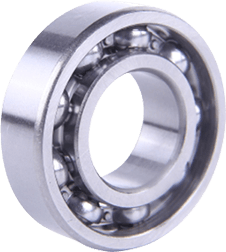
Abrasion resistant stainless steel ball bearings are increasingly specified in industrial systems where mechanical wear, corrosion, and operational continuity intersect. For B2B manufacturers, procurement managers, and equipment owners in Europe and North America, these bearings are no longer niche components but risk-mitigation tools that directly affect uptime, compliance, and lifecycle cost. Understanding how abrasion resistance is engineered—and where its limits lie—is essential for making informed sourcing and design decisions.
Modern production environments operate under tighter tolerances and higher duty cycles than ever before. Industries such as food processing, packaging automation, wastewater treatment, marine equipment, and chemical handling expose bearings to abrasive particles, frequent cleaning, and corrosive agents simultaneously. Traditional carbon steel bearings often fail prematurely in such environments, while standard stainless steel options may resist corrosion but struggle with wear.
This gap has driven market demand for abrasion resistant stainless steel ball bearings—components designed to maintain surface integrity and dimensional accuracy even when contamination, micro-particle ingress, or boundary lubrication conditions are unavoidable. Regulatory pressures related to hygiene and environmental safety further reinforce this trend, particularly in regulated sectors.
Abrasion resistance refers to a bearing’s ability to withstand material loss caused by hard particles, sliding contact, or surface fatigue over time. In stainless steel ball bearings, this property is not inherent but engineered. Standard austenitic stainless steels offer excellent corrosion resistance but low hardness, making them unsuitable for abrasive conditions.
Abrasion resistant stainless steel ball bearings rely on martensitic or nitrogen-alloyed stainless steels, optimized heat treatment, and controlled surface finishes. The objective is to increase hardness and fatigue strength without compromising corrosion resistance or dimensional stability. Abrasion resistance must be evaluated as a system property, not a single material attribute.
Most abrasion resistant stainless steel ball bearings adopt deep groove or angular contact designs to balance load capacity and motion stability. Raceway geometry is carefully controlled to minimize stress concentrations, which can accelerate abrasive wear under contaminated conditions.
Common material choices include:
Martensitic stainless steels (e.g., 440C) for higher hardness and wear resistance
Nitrogen-strengthened stainless steels for improved fatigue performance
Hybrid configurations, combining stainless steel rings with ceramic balls to reduce surface interaction
Each option represents a trade-off between wear resistance, corrosion protection, and cost.
Manufacturing quality has a direct impact on abrasion performance. Key processes include:
Precision machining to achieve tight tolerances
Controlled atmosphere heat treatment for consistent hardness
Superfinishing of raceways to reduce micro-asperities
Passivation or specialized surface treatments to stabilize corrosion behavior
Inadequate control at any stage can negate the intended abrasion-resistant properties.
Several operational and design factors determine real-world performance:
Particle Contamination
Abrasive particles accelerate wear if sealing and cleanliness are insufficient.
Lubrication Regime
Boundary or intermittent lubrication increases metal-to-metal contact, raising abrasion risk.
Load Distribution
Misalignment or improper fits concentrate stress on limited contact zones.
Surface Finish Consistency
Variations in roughness significantly affect wear initiation.
Thermal Stability
Temperature fluctuations influence hardness retention and lubricant behavior.
Understanding these factors helps procurement and engineering teams align bearing specifications with actual operating conditions.
For OEMs and end users, supplier selection extends beyond catalog specifications. Reliable suppliers of abrasion resistant stainless steel ball bearings should demonstrate:
Material traceability and metallurgical transparency
Repeatable heat treatment and inspection processes
Application engineering support rather than generic recommendations
Compliance with relevant ISO and industry standards
Stable long-term supply capabilities
Low-cost sourcing without process visibility often leads to inconsistent performance and higher downstream costs.
Despite their benefits, these bearings are frequently misapplied. Typical issues include:
Assuming corrosion resistance implies abrasion resistance
Underestimating the role of surface finish in wear behavior
Using seals unsuitable for fine abrasive environments
Selecting bearings based solely on static load ratings
These misjudgments can result in unexpected downtime and premature replacement.
Abrasion resistant stainless steel ball bearings are commonly used in:
Food and beverage conveyors exposed to sugar, salt, or cleaning agents
Wastewater treatment equipment with suspended solids
Marine deck machinery subject to sand and saltwater
Packaging lines operating at high speeds with dust generation
Chemical processing equipment handling particulate media
In these applications, reduced wear translates directly into longer service intervals and predictable maintenance planning.
Several trends are shaping the future of abrasion resistant stainless steel ball bearings:
Increased adoption of hybrid and ceramic-assisted designs
Development of advanced nitrogen-alloyed stainless steels
Growing demand for low-maintenance or grease-free solutions
Integration of condition monitoring to detect early wear patterns
As total cost of ownership becomes a central purchasing metric, abrasion resistance will continue to influence bearing design and procurement strategies.
Are abrasion resistant stainless steel ball bearings maintenance-free?
No. They reduce wear but still require appropriate lubrication and contamination control.
Can they replace carbon steel bearings in all applications?
Not universally. High-load, non-corrosive environments may still favor carbon steel.
Is higher hardness always better for abrasion resistance?
Not necessarily. Excessive hardness can reduce toughness and increase fracture risk.
Conclusion
Abrasion resistant stainless steel ball bearings address a specific but growing set of industrial challenges. Their performance depends on material engineering, manufacturing discipline, and correct application selection. For B2B buyers and decision-makers, a clear understanding of these factors is essential to achieving reliable operation and long-term value in abrasive and corrosive environments.

Vincent Liang

+86 137 5749 2228

liangzexi@cxbearings.cn

No.195, Dongshaobei Road, Jiangbei District, Ningbo City, Zhejiang Province, China


Copyright © Zhejiang Dacheng Precision Machinery Co., Ltd. All Rights Reserved.

