 DACHENG PRECISION MACHINERY

Our products are mainly used in electric motors, covering traditional fields such as machinery manufacturing, automobile industry, medical equipment and various household appliances, and we have also made achievements in emerging fields such as robot bearings.
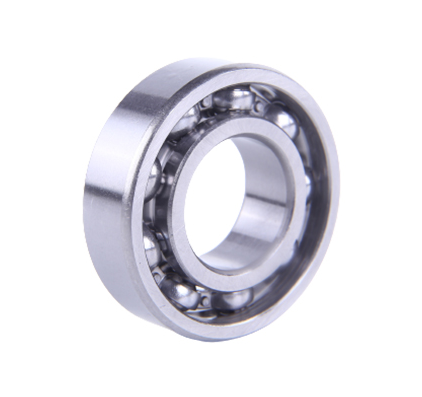
Category:Medical Machinery Bearing
 Consult immediately

 Description
Medical machinery bearings are crafted from high-performance materials like stainless steel, to ensure durability and biocompatibility.They function across a range of speeds, from prosthetic joints to high-speed surgical drills often over 10,000 rpm, Since the raw materials for our medical machinery bearings are imported from Japan, they have high wear resistance, low friction, precision, low vibration, and corrosion resistance, which are vital for the reliability of medical equipment.
Medical (Surgical) Stainless Steel Bearings: Precision Components for Critical Healthcare Applications
Medical (surgical) stainless steel bearings are specialized mechanical components designed to operate reliably in environments where precision, cleanliness, and safety are non-negotiable. Unlike standard industrial bearings, these bearings must meet stringent medical regulations while delivering consistent motion under repeated sterilization and demanding duty cycles. For OEMs, medical device manufacturers, and procurement decision-makers in Europe and North America, understanding how these bearings are engineered and evaluated is essential for product performance, compliance, and long-term risk management.
The global medical device industry continues to expand, driven by aging populations, minimally invasive surgical techniques, and increasing automation in healthcare facilities. Surgical robots, powered instruments, imaging systems, and diagnostic equipment all rely on motion components that must perform flawlessly in controlled but harsh conditions. Frequent sterilization, exposure to bodily fluids, and strict hygiene standards place unique demands on bearing design.
Medical (surgical) stainless steel bearings have become a critical solution where corrosion resistance, smooth operation, and material biocompatibility intersect. Regulatory frameworks such as FDA, ISO 13485, and EU MDR have further raised expectations for traceability, material consistency, and long-term reliability, directly influencing bearing selection and supplier qualification.
At their core, medical (surgical) stainless steel bearings are engineered to deliver controlled motion while maintaining structural and chemical stability. The primary technical challenge lies in balancing corrosion resistance with wear resistance and dimensional accuracy.
Key technical concepts include:
Corrosion stability under repeated sterilization (steam, chemicals, or plasma)
Low and consistent friction to support precise manual or automated motion
Material cleanliness and biocompatibility
Dimensional stability over long service life
Unlike bearings used in industrial automation, medical bearings often operate at moderate loads but require exceptionally smooth and predictable behavior.
Medical applications commonly use deep groove ball bearings, miniature bearings, and thin-section designs to accommodate compact device geometries. In surgical tools, bearings must support high rotational speeds with minimal vibration, while in imaging or positioning systems, smooth low-speed motion is often the priority.
Sealed or shielded configurations are frequently specified to prevent contamination and retain lubrication throughout the device’s lifecycle.
Material choice is central to performance. Typical materials include:
Martensitic stainless steels (e.g., 440 series) for higher hardness and wear resistance
Austenitic stainless steels for superior corrosion resistance in non-load-critical applications
Hybrid designs using ceramic rolling elements to reduce friction and improve longevity
All materials must meet strict cleanliness and traceability requirements to ensure suitability for medical environments.
Precision manufacturing is essential. Processes often include:
Fine grinding and superfinishing of raceways
Controlled heat treatment for uniform hardness
Passivation to enhance corrosion resistance
Cleanroom-level assembly for critical applications
These steps ensure consistent torque, low noise, and repeatable performance.
Several factors directly affect the reliability of medical (surgical) stainless steel bearings:
Sterilization Compatibility
Bearings must withstand repeated autoclave or chemical sterilization without degradation.
Lubrication Stability
Medical-grade lubricants must remain effective while being non-toxic and non-migratory.
Surface Finish Quality
Micro-level surface imperfections can increase wear and particle generation.
Dimensional Precision
Tight tolerances are required to maintain alignment in compact assemblies.
Cleanliness Control
Residual contaminants from manufacturing can compromise both performance and compliance.
Supplier selection is particularly critical in the medical sector. Qualified suppliers of medical (surgical) stainless steel bearings typically demonstrate:
ISO 13485–aligned quality management systems
Full material traceability and batch documentation
Consistent process validation and inspection protocols
Experience supporting regulated medical device programs
Long-term supply continuity and change management control
Price competitiveness is secondary to reliability, documentation, and regulatory support.
Despite careful specification, manufacturers often encounter challenges such as:
Bearings failing prematurely after repeated sterilization cycles
Inconsistent friction due to lubricant breakdown
Limited availability of medical-grade documentation
Over-specification leading to unnecessary cost increases
Addressing these issues requires close collaboration between design engineers, quality teams, and bearing suppliers early in the development process.
Medical (surgical) stainless steel bearings are widely used in:
Surgical handpieces and powered instruments
Robotic-assisted surgery systems
Diagnostic imaging equipment
Patient positioning and rehabilitation devices
Laboratory automation and analytical instruments
In each case, bearing reliability directly impacts device safety, precision, and user confidence.
Several trends are shaping the future of medical bearing technology:
Increased adoption of hybrid and ceramic-assisted designs
Demand for lubrication-free or lifetime-lubricated solutions
Expansion of robotic and minimally invasive surgical systems
Greater emphasis on sustainability and lifecycle documentation
As medical devices become more compact and sophisticated, bearing performance margins continue to narrow, elevating the importance of specialized engineering.
Are medical stainless steel bearings different from standard stainless bearings?
Yes. They are designed for sterilization resistance, cleanliness, and regulatory compliance, not just corrosion resistance.
Can these bearings be re-sterilized repeatedly?
Properly specified medical bearings are designed to withstand repeated sterilization, but limits depend on materials and lubrication.
Is ceramic hybrid technology suitable for surgical tools?
In many cases, yes, especially where reduced friction and extended service life are required.
Medical (surgical) stainless steel bearings are mission-critical components within healthcare technology. Their performance depends on careful material selection, precision manufacturing, and rigorous quality control. For B2B buyers and technical decision-makers, understanding these factors is essential to achieving compliance, reliability, and long-term device performance in an increasingly demanding medical landscape.
Abrasion-resistant Stainless Steel Ball Bearing For Industry Equipment
High-speed Miniature Ball Bearings For Small Mechanisms
Quiet-running Deep Groove Ball Bearings For Noise-sensitive Areas
Precision-grade Stainless Steel Bearings For Exacting Standards
Low-friction Thin Bearings For High-speed Machinery
High-precision Deep Groove Ball Bearings For Precision Instruments

Vincent Liang

+86 137 5749 2228

liangzexi@cxbearings.cn

No.195, Dongshaobei Road, Jiangbei District, Ningbo City, Zhejiang Province, China


Copyright © Zhejiang Dacheng Precision Machinery Co., Ltd. All Rights Reserved.

