 DACHENG PRECISION MACHINERY

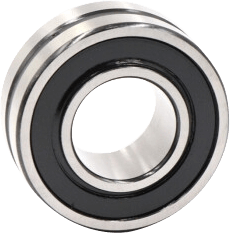
The global machine tool industry has undergone significant transformation over the past decade, driven by demand for higher machining accuracy, shorter cycle times, and improved surface quality. CNC spindles sit at the core of this evolution. As spindle speeds increase and tolerances tighten, bearing performance has become a decisive factor in overall machine capability. This has led to growing demand for P4-grade High Precision Deep Groove Ball Bearings in applications where rotational accuracy, stiffness, and thermal stability must be tightly controlled.
Unlike conventional industrial machinery, CNC equipment operates under combined loads, high rotational speeds, and frequent start-stop cycles. European and North American machine tool builders increasingly specify P4 tolerance bearings to meet customer expectations for repeatability and long-term dimensional consistency, especially in aerospace, automotive, and high-end mold manufacturing.
P4 tolerance class represents one of the highest standardized accuracy levels defined under ISO and DIN systems. Compared with P5 or normal grades, P4 bearings feature significantly reduced dimensional variation, radial runout, and axial runout. These improvements directly affect spindle behavior at high speed.
Within the broader category of Deep Groove Ball Bearings, P4 designs offer a unique balance. They provide lower friction and simpler installation than angular contact bearings while still delivering sufficient precision for certain CNC spindle configurations, particularly auxiliary or motor-side spindle positions. Their ability to accommodate radial loads with limited axial loads in both directions simplifies mechanical design and alignment.
From a system perspective, P4 accuracy reduces excitation sources that contribute to vibration, chatter, and thermal instability—key concerns in precision machining environments.
Structurally, P4 deep groove ball bearings consist of the same fundamental elements as standard bearings: inner and outer rings, rolling elements, cage, and optional sealing. Performance differentiation lies in material selection, surface quality, and manufacturing discipline.
High-purity bearing steel with controlled inclusion content is typically used to ensure fatigue resistance under high-speed conditions. Heat treatment processes are tightly regulated to achieve uniform hardness and dimensional stability. Raceway grinding and superfinishing are performed using multi-step processes that minimize waviness and surface roughness, enabling stable lubricant films at high rotational speeds.
Cage design is optimized to reduce mass and centrifugal forces. Depending on speed and temperature requirements, machined brass or high-performance polymer cages are common. These manufacturing characteristics align P4 products with the expectations placed on Precision Ball Bearings used in advanced machine tools.
Several interconnected factors determine whether a P4 bearing performs reliably in a CNC spindle:
Internal clearance or preload: Incorrect preload selection can result in excessive heat generation or insufficient stiffness.
Thermal behavior: Material expansion and lubrication viscosity changes must be considered at operating speed.
Surface accuracy: Raceway waviness and ball diameter variation have a direct impact on vibration levels.
Lubrication strategy: Oil-air and oil-mist systems require bearing surfaces compatible with thin-film lubrication.
Installation conditions: Shaft roundness and housing geometry must match P4 tolerance requirements.
Failure to control these variables often leads to premature noise increase or spindle accuracy loss, even when high-grade bearings are used.
For CNC spindle applications, bearing sourcing decisions extend beyond dimensional specifications. OEMs and system integrators typically assess a supplier’s process control capability, traceability, and inspection methods. Consistent production of P4 bearings requires stable grinding processes, controlled environments, and advanced metrology for runout and noise testing.
Supply chain reliability is equally important. CNC machine builders often require long-term consistency across production batches to maintain spindle performance across multiple machine series. Documentation, material certificates, and repeatability data play a critical role in supplier qualification.
One frequent issue encountered in CNC spindle service is unexpected temperature rise during high-speed operation. In many cases, this is traced to preload miscalculation rather than bearing defects. Another common concern is vibration at specific speed ranges, often linked to system resonance amplified by insufficient bearing accuracy.
A recurring question among engineers is whether P4 deep groove bearings can fully replace angular contact bearings. While they are suitable for certain spindle positions, they are not universally interchangeable, particularly in applications requiring high axial stiffness.
P4 deep groove ball bearings are commonly used in motor-side spindle supports, auxiliary spindles, tool changers, and high-speed rotary units. In these roles, they contribute to smoother rotation and reduced acoustic emission without introducing excessive complexity into the spindle layout.
In multi-axis machining centers, such bearings support secondary rotational elements where precision and reliability are critical but extreme axial loading is not dominant. These applications illustrate the continued relevance of Deep Groove Ball Bearings in high-precision machine tool systems.
Looking ahead, CNC spindle technology is trending toward higher speeds, increased energy efficiency, and digital monitoring. Bearing development is following this direction through improved surface engineering, cleaner steels, and optimized cage dynamics. Integration with condition monitoring systems places new demands on consistency and predictability, reinforcing the importance of high-grade manufacturing.
As machining tolerances continue to tighten, P4 deep groove designs are expected to remain an essential option within the broader family of Precision Ball Bearings, supporting spindle architectures that balance precision, durability, and mechanical simplicity.

Vincent Liang

+86 137 5749 2228

liangzexi@cxbearings.cn

No.195, Dongshaobei Road, Jiangbei District, Ningbo City, Zhejiang Province, China


Copyright © Zhejiang Dacheng Precision Machinery Co., Ltd. All Rights Reserved.

