 DACHENG PRECISION MACHINERY

In the food machinery industry, hygiene, durability, and high precision are of utmost importance. Precision Grade Stainless Steel Bearings have become the go-to option for food machinery manufacturers due to their superior performance. This article will delve into the advantages of Precision Grade Stainless Steel Bearings in food machinery and use charts for comparison to help you better understand their significance.
Precision Grade Stainless Steel Bearings are typically made from AISI 304 or AISI 316 stainless steel, which offers excellent corrosion resistance. These materials can maintain stability in humid and acidic or alkaline environments, effectively preventing rust and ensuring long-term operation of food machinery in harsh conditions.
Precision Grade Stainless Steel Bearings are manufactured with high-precision processes, ensuring that each component meets extremely high standards for size and shape accuracy. This high-precision manufacturing not only enhances the bearing’s operational efficiency but also extends its service life.
Thanks to their high precision and corrosion resistance, Precision Grade Stainless Steel Bearings require less maintenance during operation. This not only reduces equipment downtime but also lowers maintenance costs.
In cutting and mixing equipment, Precision Grade Stainless Steel Bearings can withstand high loads and frequent starts and stops. Their corrosion resistance ensures stable operation in humid environments, reducing maintenance needs.
Molding equipment requires bearings with low dust emission and easy maintenance. The smooth surface of Precision Grade Stainless Steel Bearings is easy to clean, meeting the hygiene standards of food machinery.
In conveying and transport equipment, Precision Grade Stainless Steel Bearings can effectively prevent dust and water ingress, ensuring long-term stable operation. Their low maintenance requirements reduce downtime and increase production efficiency.
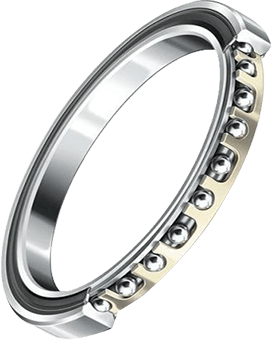
To more intuitively demonstrate the advantages of Precision Grade Stainless Steel Bearings, we can use the following chart for comparison:
| Feature | Precision Grade Stainless Steel Bearings | Standard Stainless Steel Bearings | Ordinary Carbon Steel Bearings |
|---|---|---|---|
| Corrosion Resistance | High | Medium | Low |
| Precision Grade | ABEC-7 | ABEC-5 | ABEC-3 |
| Maintenance Requirements | Low | Medium | High |
| Application Scenarios | Food machinery, medical equipment | General equipment | Low-demand equipment |
As shown in the table above, Precision Grade Stainless Steel Bearings excel in corrosion resistance, precision grade, and maintenance requirements, making them particularly suitable for food machinery and other applications with high hygiene and durability requirements.
Choosing the right material is crucial for ensuring bearing performance. AISI 304 and AISI 316 stainless steel are widely used in food machinery due to their excellent corrosion resistance and durability.
High-precision bearings can provide smoother operation and lower noise levels, making them suitable for food machinery with high precision requirements.
Choosing the right lubrication method can further extend the bearing’s service life. For example, using food-grade lubricants can reduce maintenance needs.
Regularly check the bearing’s operating condition to identify potential issues early. Inspection should include wear, lubrication, and seal integrity.
Maintaining bearing cleanliness is key to long-term stable operation. Regularly clean dust and debris around the bearing to prevent ingress.
Regularly replenish or replace lubricants based on equipment usage. Using the right lubricant can reduce wear and noise.
Avoid operating equipment beyond the bearing’s rated load, which can cause bearing damage and increased noise.
A food processing plant’s cutting equipment was noisy and required frequent maintenance. After evaluating the situation, the plant decided to replace the cutting equipment’s bearings with Precision Grade Stainless Steel Bearings. The upgrade significantly reduced noise levels, decreased maintenance needs, and improved production efficiency.
The application of Precision Grade Stainless Steel Bearings in food machinery can significantly enhance equipment operational efficiency and hygiene standards. By selecting the right bearing materials, precision grades, and lubrication methods, as well as conducting regular maintenance and care, you can ensure long-term, low-noise, and high-precision operation of equipment. We hope this article helps you better understand and apply Precision Grade Stainless Steel Bearings to support the efficient operation of food machinery.

Vincent Liang

+86 137 5749 2228

liangzexi@cxbearings.cn

No.195, Dongshaobei Road, Jiangbei District, Ningbo City, Zhejiang Province, China


Copyright © Zhejiang Dacheng Precision Machinery Co., Ltd. All Rights Reserved.

